

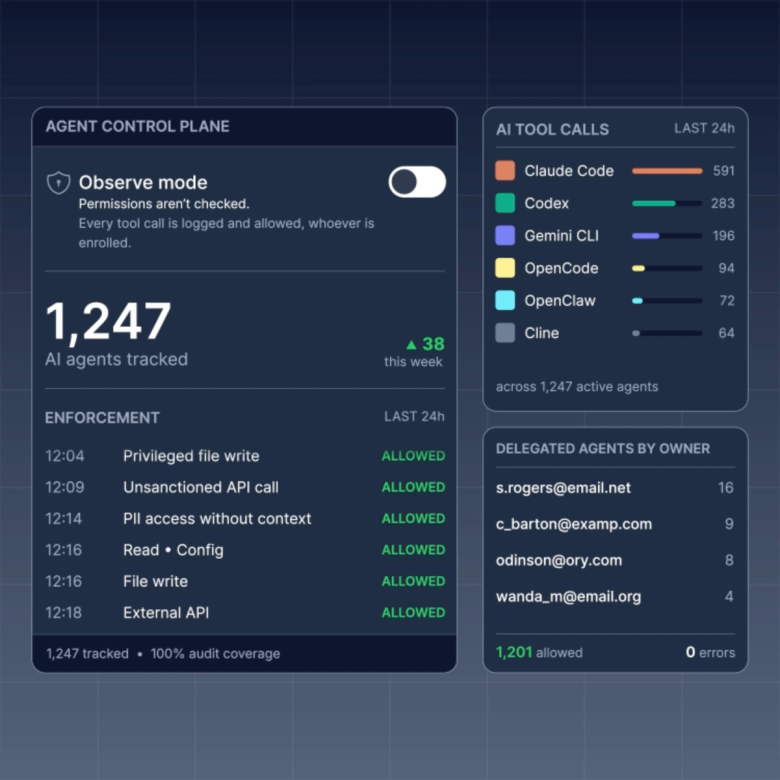
Agent Security Security at the point of execution.

Make agentic AI safe to scale AI agents are moving fast. Do you know what yours are doing? Ory brings visibility, identity, and control to agent behavior, helping you understand their actions, enforce policies at runtime, and scale with confidence. Start by observing agent activity at no cost. Add enforcement when you're ready.
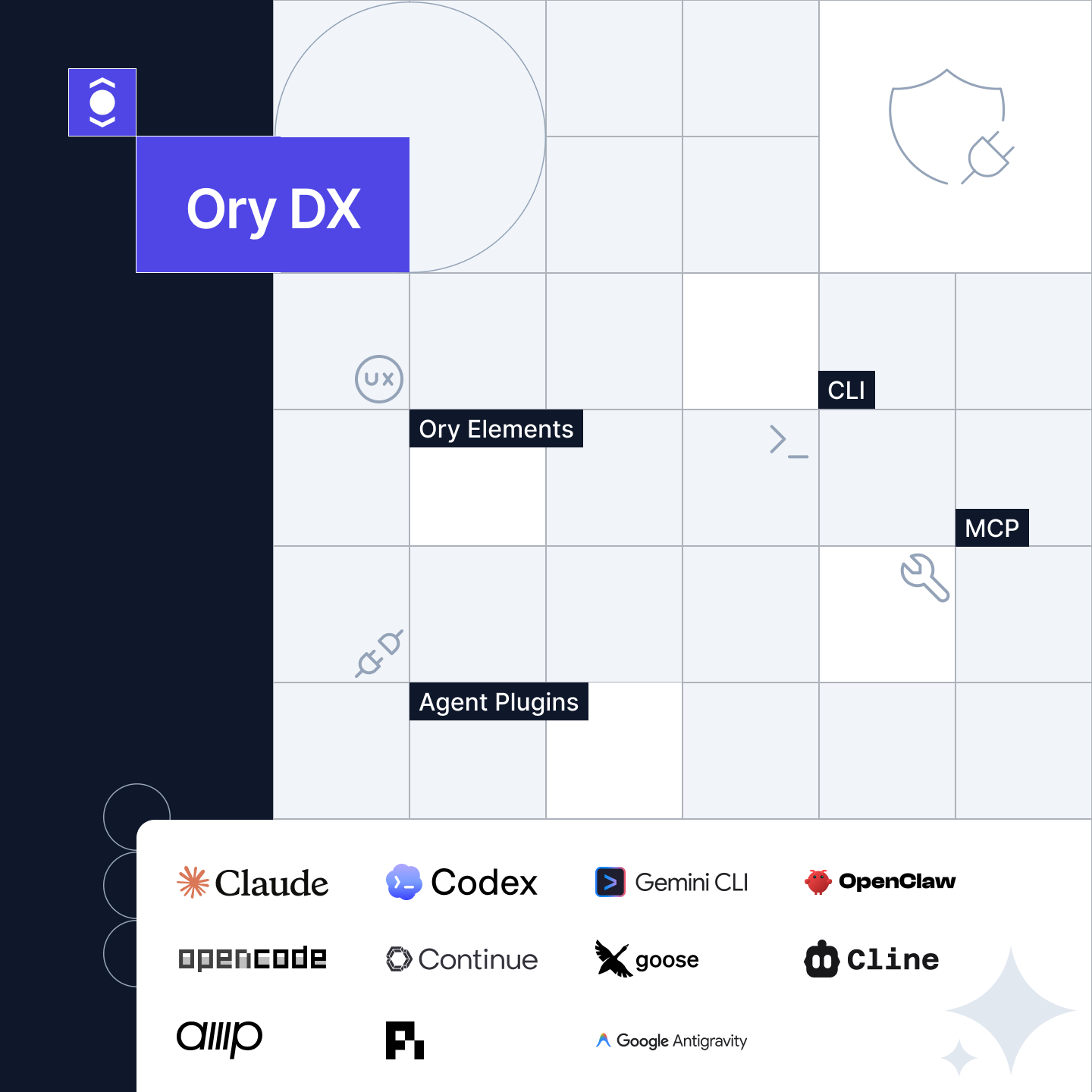
Works with the agents, frameworks, and deployment methods you already use


Your agents have credentials. But who's really in control?
AI agents act with legitimate access, often inherited from people and systems. But valid credentials don't necessarily mean an action is appropriate or authorized. Without visibility, organizations may not even know what agents are doing. Agents are relentless. The identity gap is where agent risk becomes business risk.
Invisible Activity
Agents and sub-agents operate across tools and systems with limited oversight.
Borrowed Authority
Agents may inherit permissions that exceed what their tasks require.
Uncontrolled Actions
Approved tools and valid credentials can still enable harmful activity.

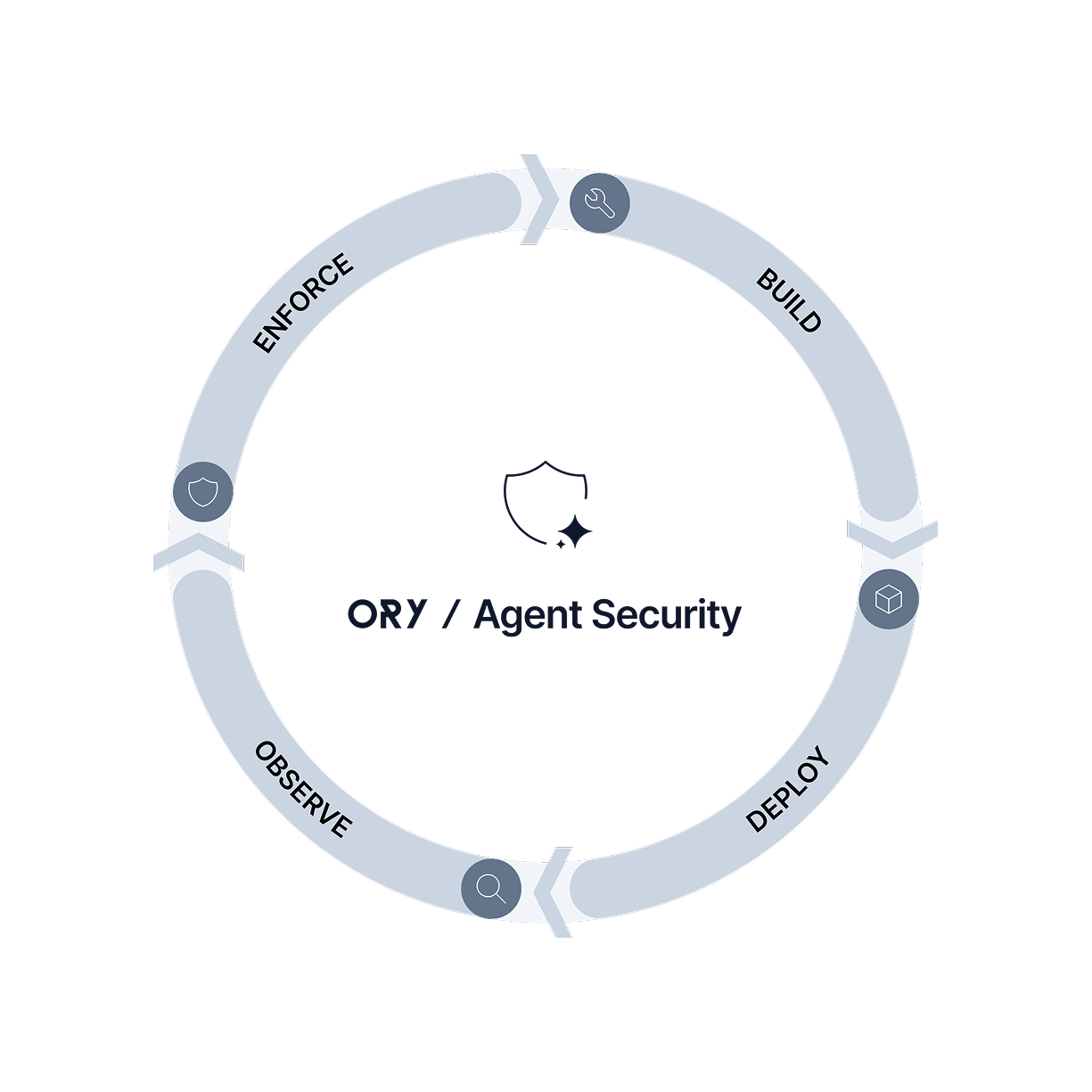
Four interconnected capabilities. One continuous lifecycle.
All available TODAY.
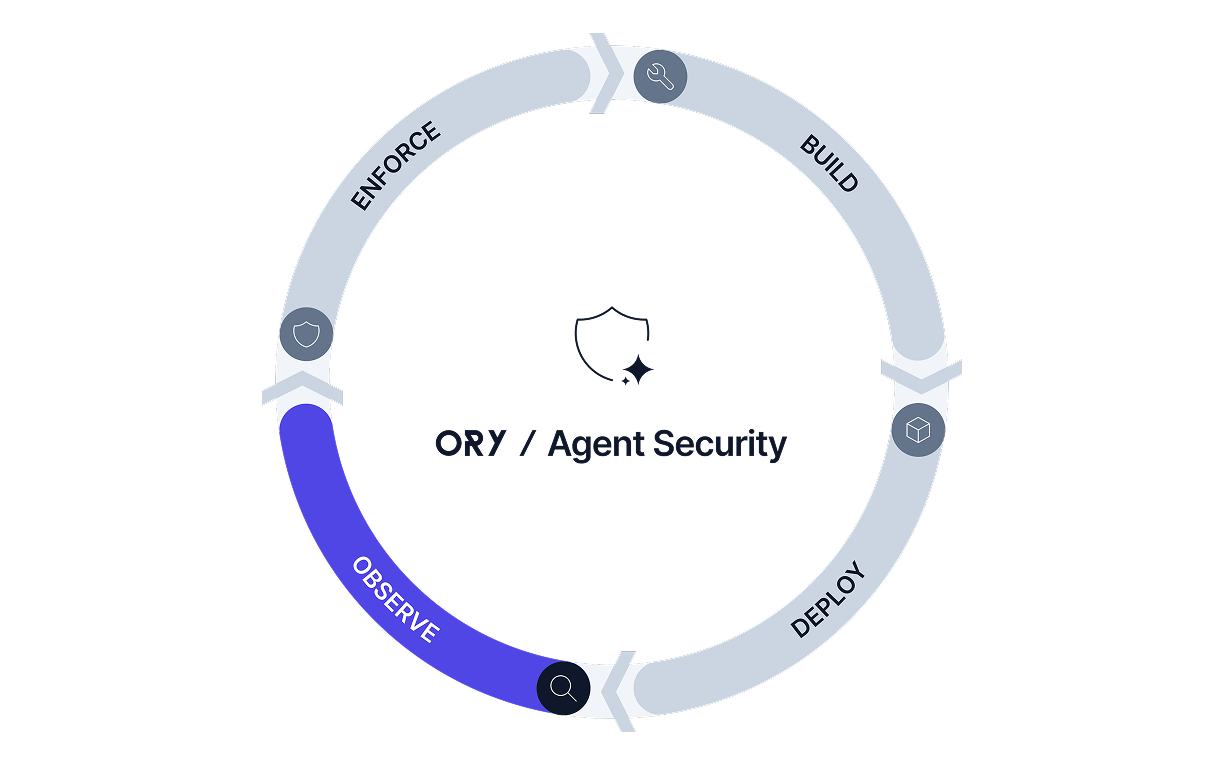
Observe
Turn on the lights.
Discover what agents do, whose authority they inherit, and which actions they attempt.
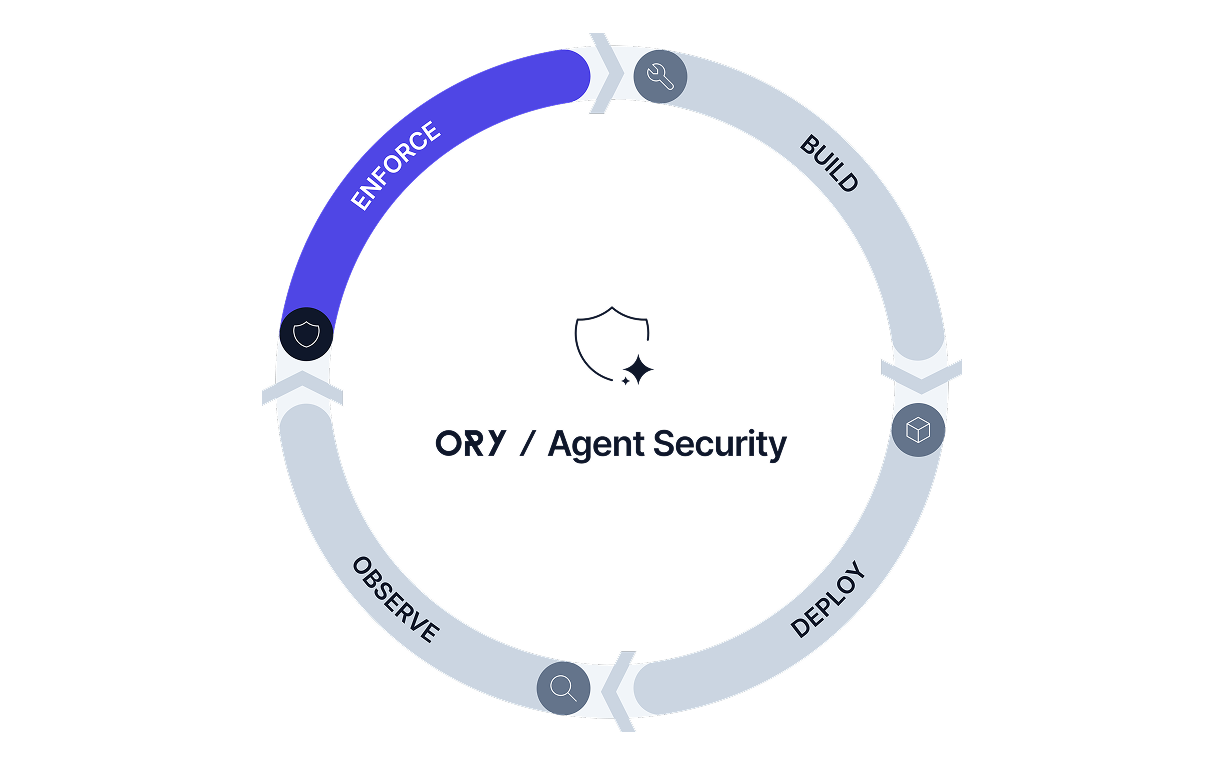
Enforce
Deterministic control for probabilistic systems.
Apply fine-grained, identity-aware controls before supported agent actions execute.
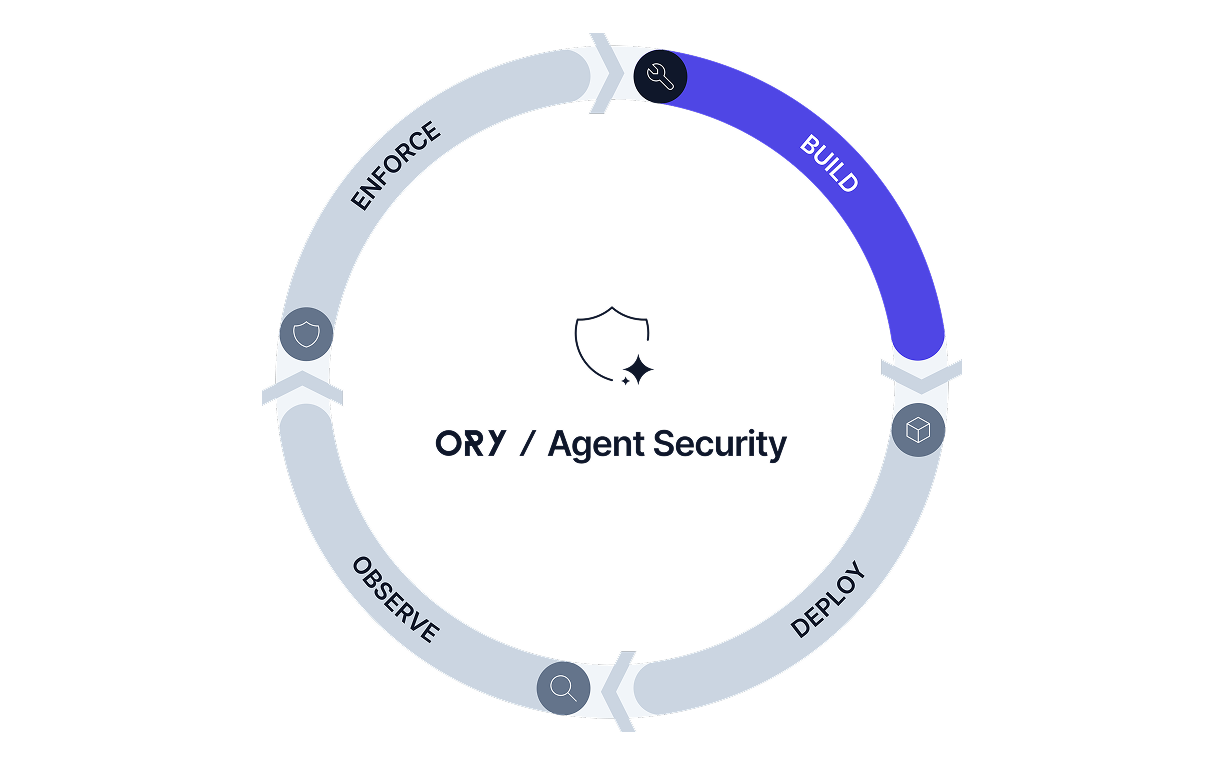
Build
Make security part of the agent.
Embed identity, permissions, and guardrails into agents using APIs, SDKs, and plugins.
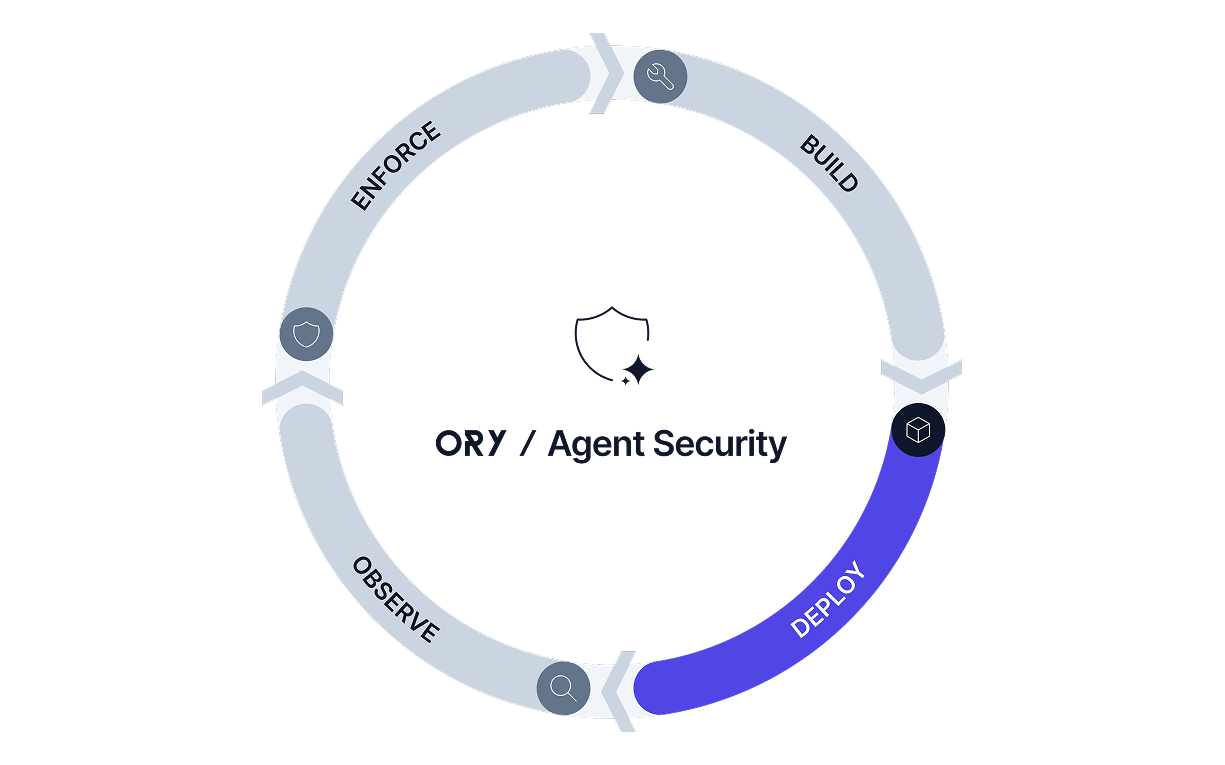
Deploy
Give agents the ability to scale. Safely and under control.
Extend consistent security across growing agent deployments, environments, and workflows.
How Ory's agent security works
- Authenticate agent identities — Ory resolves the agent’s identity inside the harness, whether it was started by a human, another agent, or a headless process. Each agent gets its own credentials and audit attribution, so teams can see which agent acted, where it ran, and how it was delegated.
- Apply fine-grained authorization — Before an agent action runs, Ory checks the requested tool against Ory Keto (Permissions). Shell commands, file writes, web fetches, and other harness tools can be enforced through the same Zanzibar-style permission model used for application access.
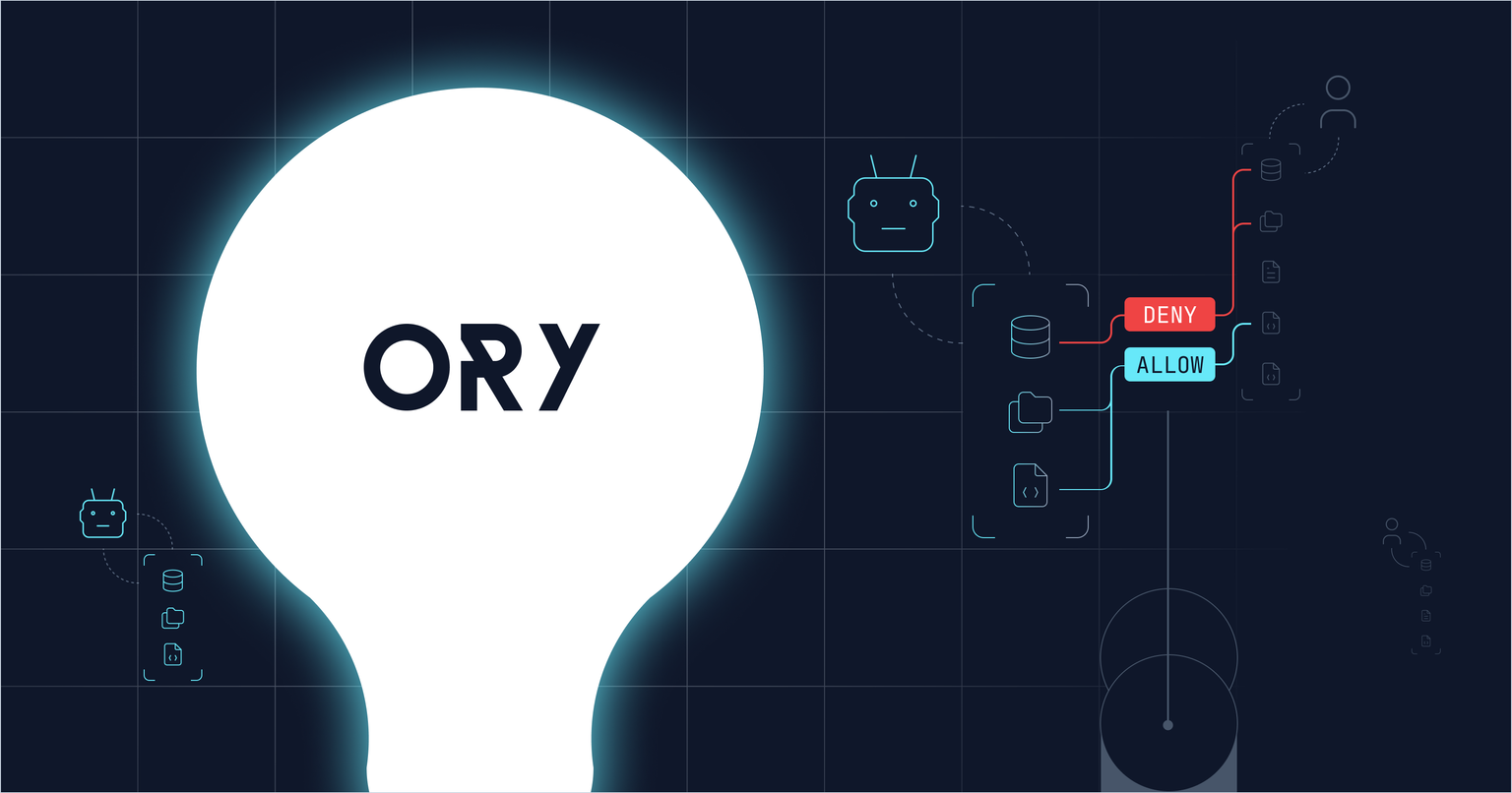
- Enforcement that fits your risk tolerance — Every agent action hits a decision point before it runs. Observe first, enforce when ready — by category or down to the command. Cut off any agent instantly.
- Observability across agent activity — Every permission check, tool call, and sub-agent start is recorded: who started the session, which agent acted, what it attempted, and which policy decided.



Partnering with Ory allows us to deliver real, deterministic agent security today, not just future roadmap promises.
Building agents? Running them in production?
Ory Agent Security gives every agent its own identity, scoped to what it actually needs and revocable. Early adopters run it on Ory Network at no cost. Free coverage for a limited time.
Authenticated
Every agent and sub-agent authenticates with its own credentials before acting. The delegation chain back to the user or upstream agent is recorded before any tool runs.
Authorized
Ory applies fine-grained authorization to shell commands, file writes, MCP tools, and API calls — the same policy model that governs human access.
Accountable
Every action is recorded and exported through OpenTelemetry to your SIEM. The delegation chain outlives the token, so the trail holds even after credentials expire.
Get started with your preferred deployment method

Jamf Pro Delivery Target
Jamf Pro is an Apple device management platform that IT teams use to deploy software, enforce configuration, and secure Macs, iPhones, and iPads across an organization.

Claude Code
Claude Code is an agentic AI coding tool developed by Anthropic that operates directly in your terminal, enabling developers to navigate codebases, build features, debug issues, and automate routine tasks using natural language commands.

Temporal Runtime Target
Temporal is an open-source durable execution platform that keeps long-running workflows reliable through automatic retries, state persistence, and failure recovery.
Anthropic Claude Agent SDK
The Anthropic Claude Agent SDK is a developer framework by Anthropic that enables the programmatic creation and deployment of autonomous AI agents capable of multi-turn reasoning, executing code, and interacting with file systems and external tools.
Frequently asked questions
Ory Security Agent Resources
Want to go deeper? Please explore
More on agent security
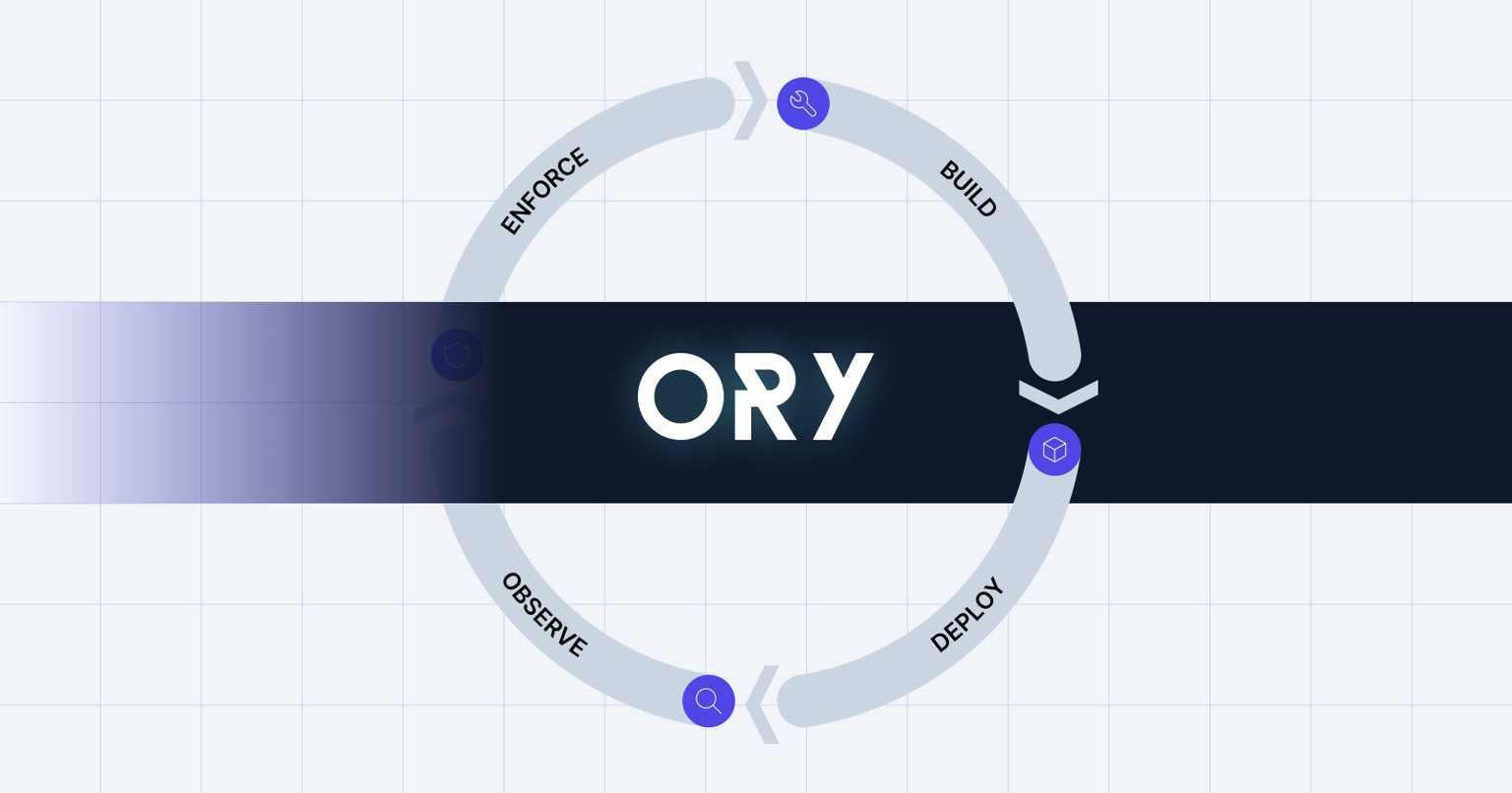
Ory Powers The New Agent Security Lifecycle

Ory's new Build and Deploy capabilities complete the AI agent security lifecycle, bringing visibility, identity, and control together in one platform.
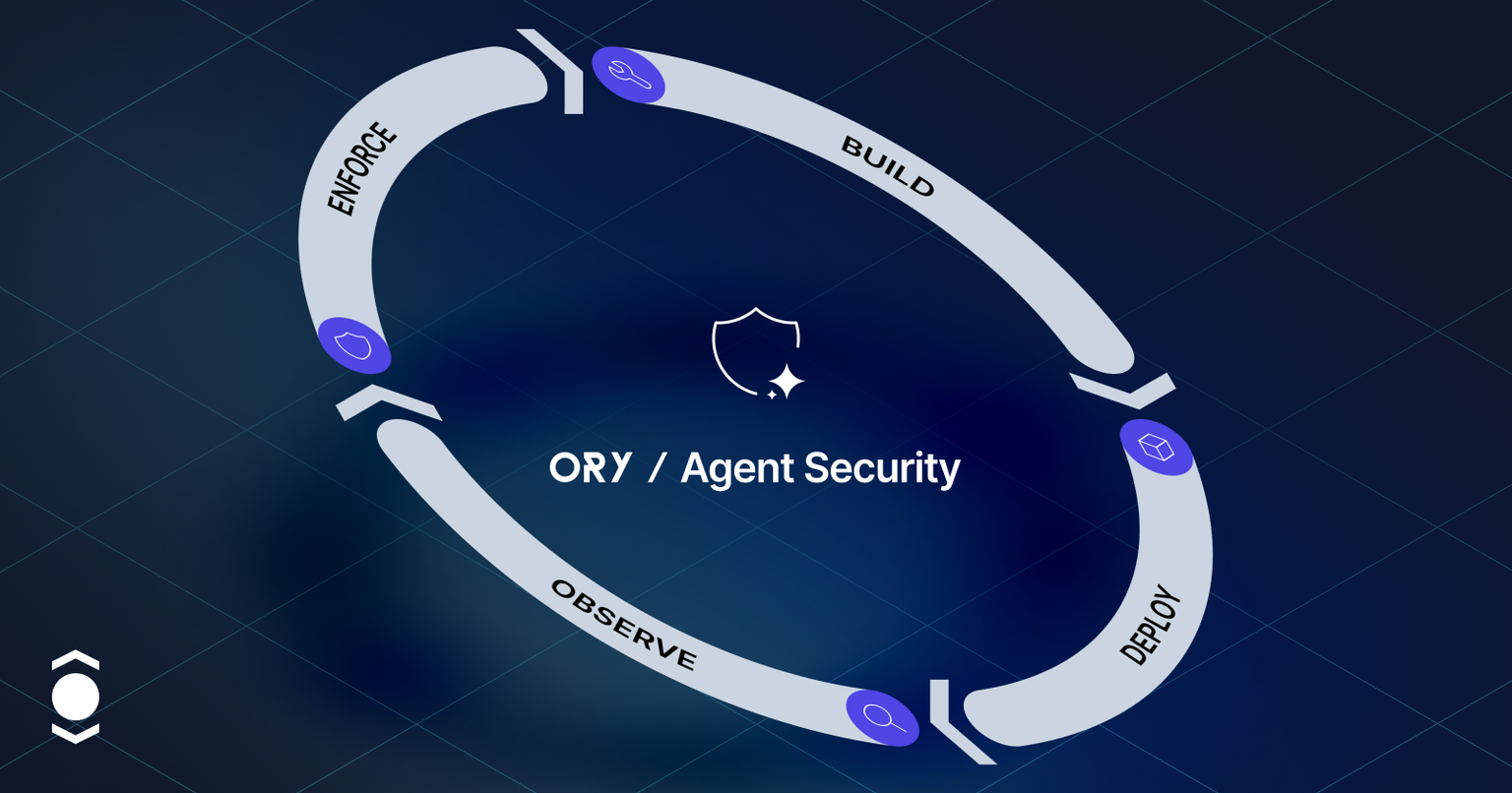

Learn how to govern AI agents in production. Use the 4-stage lifecycle, Observe, Enforce, Build, and Deploy, to apply least-privilege security at the tool boundary.
A technical deep dive into Ory Agent Security Build and Deploy, from SDK interception and delegation to runtime identity, deployment packages, CI automation, and revocation.