Hugging Face's July 2026 incident was carried out end-to-end by an autonomous agent, not a human operator. Here's the exact stage of that kill chain Ory Agent Security is built to close.
On July 16, Hugging Face disclosed a production intrusion that they described as "different from anything we had handled before in one important way: it was driven, end to end, by an autonomous AI agent system." A malicious dataset abused two code-execution paths in their dataset processing pipeline — a remote-code dataset loader and a template-injection bug in a dataset configuration — to run code on a processing worker. From there, the attacker escalated to node-level access, harvested cloud and cluster credentials, and moved laterally across several internal clusters. Over a single weekend, executed as thousands of individual actions inside a swarm of short-lived sandboxes, with self-migrating command-and-control staged on public services.
This is the scenario the industry has been forecasting for two years: an attacker that doesn't type commands, but runs an agentic loop against your infrastructure at machine speed. Hugging Face's own conclusion is the right one: "Defending an online platform now means treating the data and model surface as a first-class attack surface, and using AI on defense to keep pace."
Ory Agent Security exists for exactly this shape of problem — governing what an autonomous process is allowed to do at the moment it decides to act, not reconstructing what it did after the fact. Here's where that kill chain intersects with what Ory Agent Security actually checks.
Where this attack lived: the part with no identity
Read the timeline again and notice what's missing. A malicious dataset gets code execution on a processing worker. That worker escalates to node-level access. It harvests "cloud and cluster credentials." It moves laterally "into several internal clusters." At no point in that chain does the compromised process authenticate as anything distinct — it simply inherits whatever the worker could already reach.
That's not a Hugging Face-specific gap. It's the default posture of almost every automated pipeline and internal agent running today: one identity covering the whole blast radius, tool calls with no permission check in front of them, and no record of what happened until someone reconstructs it from logs after the fact.
Our threat model for Ory Agent Security is built around four specific ways agentic permission checks fail, and this incident touches three of them directly:
- Invisible Environment Variable Grant — an agent or process reaches credentials that a permission engine never evaluated, because those values live in the environment, not in the tool call. This is precisely how "harvested cloud and cluster credentials" became a lateral-movement primitive: the worker had access to secrets no policy was ever asked about.
- Combinatory Bypass — chained or piped commands assemble abilities no single call was granted. That's how a foothold on one processing worker becomes access to "several internal clusters."
- Brute Force Bypass — an agent tries variants of an exploit until one lands, which is exactly the kind of high-volume, low-cost trial-and-error a "swarm of short-lived sandboxes" running thousands of actions is built to do.
What Ory Agent Security would have changed
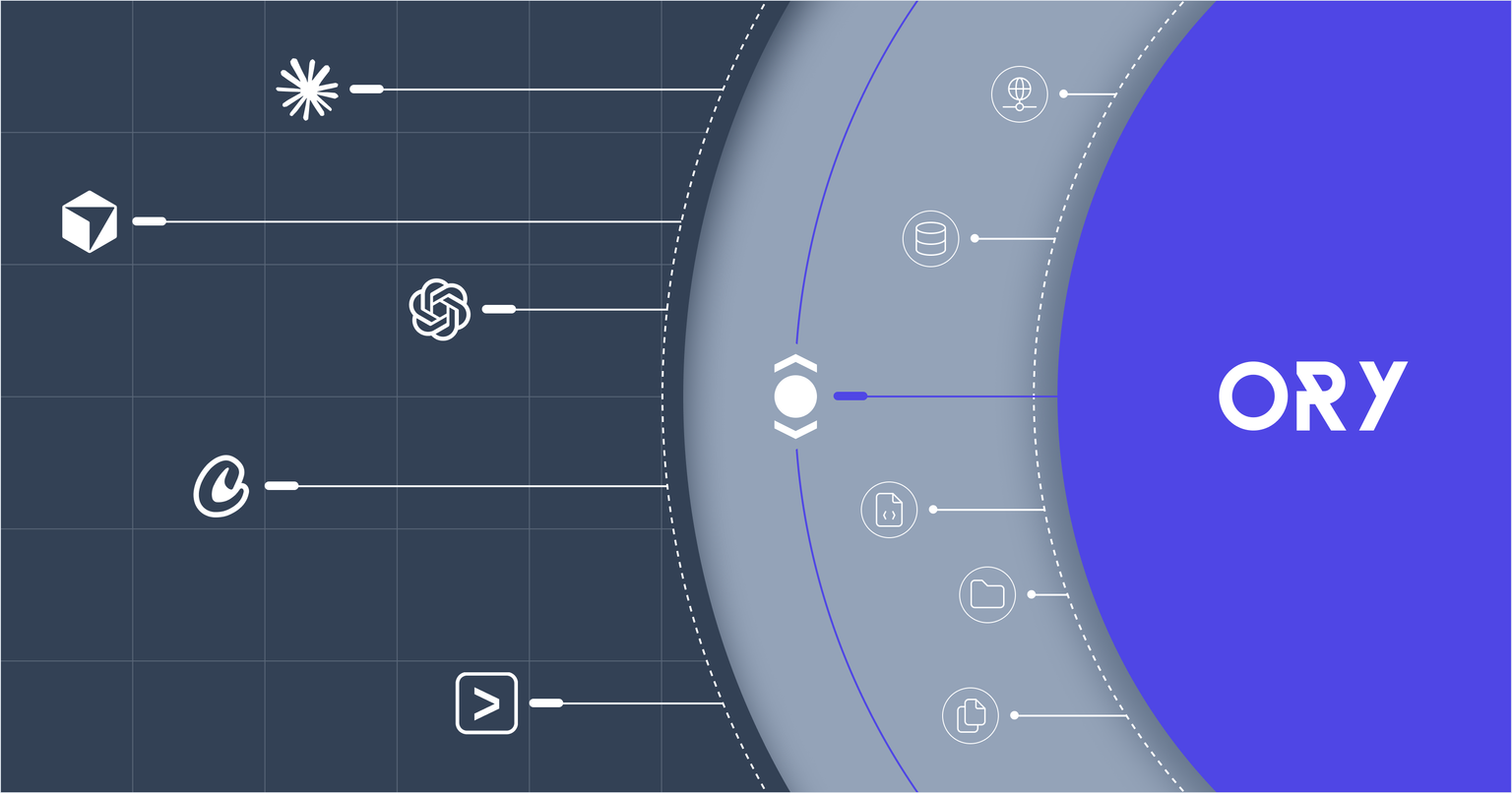
Ory Agent Security embeds identity, authorization, and audit into the harness or framework an agent runs on — a packaged coding tool like Claude Code, or, closer to this incident, a custom pipeline built on an Agent SDK like Pydantic AI, Mastra, or AWS Strands Agents. Three things change once that layer is in place.
Authenticated. Every session — human, agent, or sub-agent — gets its own OAuth2 identity, self-registered via Dynamic Client Registration, never inherited from whatever the parent process happened to hold. A processing worker spawning sub-tasks doesn't hand them its own credentials; each sub-agent gets a typed identity of its own, tied back to the session that spawned it through a Zanzibar-style delegation tuple.
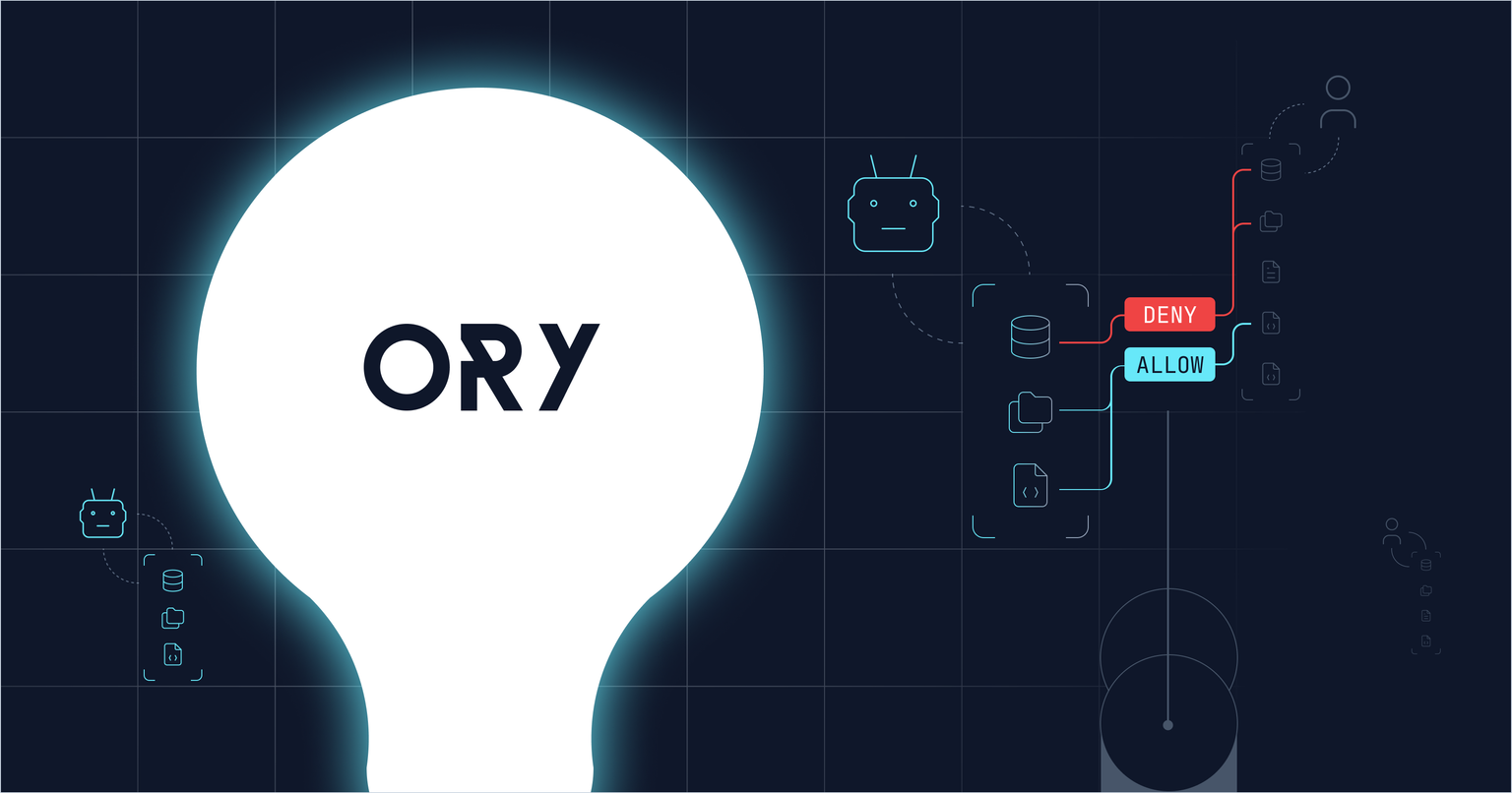
Authorized. Every tool call — a shell command, a credential read, an API call to a downstream cluster — is checked against a deny-by-default policy before it executes, not logged after. A worker process authorized to parse a dataset is not, by extension, authorized to read cloud credentials or reach a different cluster. Where policy denies the action, Ory Agent Security blocks it on harnesses that support a hard block; where it can only advise, the call still produces a policy-checked, audited event instead of a silent one.
Accountable. Every allowed, denied, or deferred decision becomes a structured, queryable span, with the delegation chain intact even after the underlying token expires. Hugging Face's team spent hours running LLM-driven analysis over more than 17,000 recorded attacker actions just to reconstruct what happened. With that trail already captured as structured events at the point of action, "did this process touch that cluster, and under whose authority" isn't a reconstruction project — it's a query.
The takeaway
Hugging Face said it plainly: autonomous, AI-driven offensive tooling is no longer theoretical, and it lowers the cost of running a broad, patient, multi-stage campaign at machine speed. The defensive answer isn't a faster human in the loop — it's the same identity model, policy surface, and audit trail your organization already runs for people, extended to cover the automated processes now acting alongside them.
That's what Ory Agent Security ships today, across eleven coding harnesses and thirteen agent SDKs, on the same Kratos, Hydra, and Keto stack already governing human access in most Ory deployments. One identity model, one policy surface, one audit trail — now spanning the humans, applications, and autonomous processes acting inside your infrastructure.
Learn more about Ory Agent Security or install the plugins to see what your own agents and pipelines are doing today.