

Your MCP servers don't know who's calling. Ory does.
MCP servers can't tell your engineers or agents apart. Ory Agent Security enforces per-user, per-agent permissions on every MCP tool call.
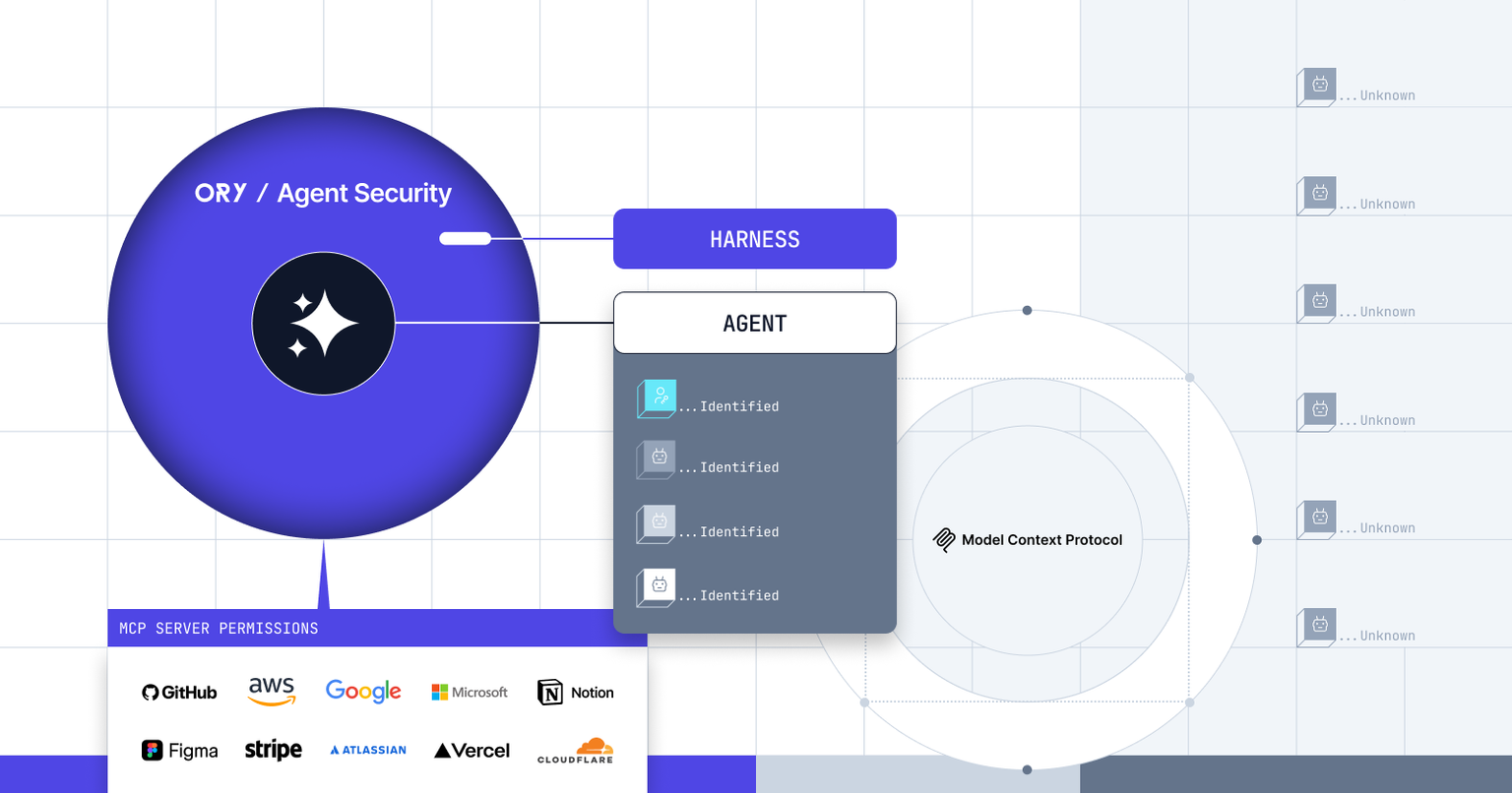

Every MCP server your agents connect to is a new path into production systems. Most cannot tell your engineers apart, and coding harnesses govern them one organization at a time.
Ory Agent Security closes both gaps. It brings identity security into the agent and the coding harness, and it makes that security simple to manage and visible across the enterprise.
The MCP server sees a token, not a person
The Model Context Protocol (MCP) lets agents call tools on external servers. Most servers authenticate the connection once, and every tool call inherits that access.
The GitHub MCP server is typical. One connection exposes pull_request_read next to merge_pull_request and delete_file. Whoever holds that connection can call any of them, whether the agent works for a staff engineer or a contractor in their first week.
Built-in harness controls stop at the organization-level
Harnesses such as Claude Code and OpenAI Codex let administrators approve servers and deny specific tools. Those rules live in configuration deployed per device or across the organization, so every user and every agent gets the same answer.
That leaves admins with either the choice to turn a server on for the whole company, or off for the whole company. Finer rules mean tracking every tool name on every server manually, and GitHub alone has 22 toolsets.
MCP gateways only govern the calls routed through them
Routing MCP traffic through a gateway is the other common solution. A gateway can block tool calls, but only the ones sent to it. Every agent's MCP configuration has to point at the gateway instead of the server, and any server an agent connects to directly is out of its reach.
The bigger gap is identity. By the time a tool call reaches the gateway, it has already left the harness. The gateway may know which user signed in, but not which agent or sub-agent is acting for them. Unless that context travels with every call, a gateway cannot tell a "code review agent" and a "release agent" apart when both work for the same engineer.
Identity security, inside the harness
Ory Agent Security enforces where every agent action passes through: inside the harness, after the model proposes a tool call and before it executes.
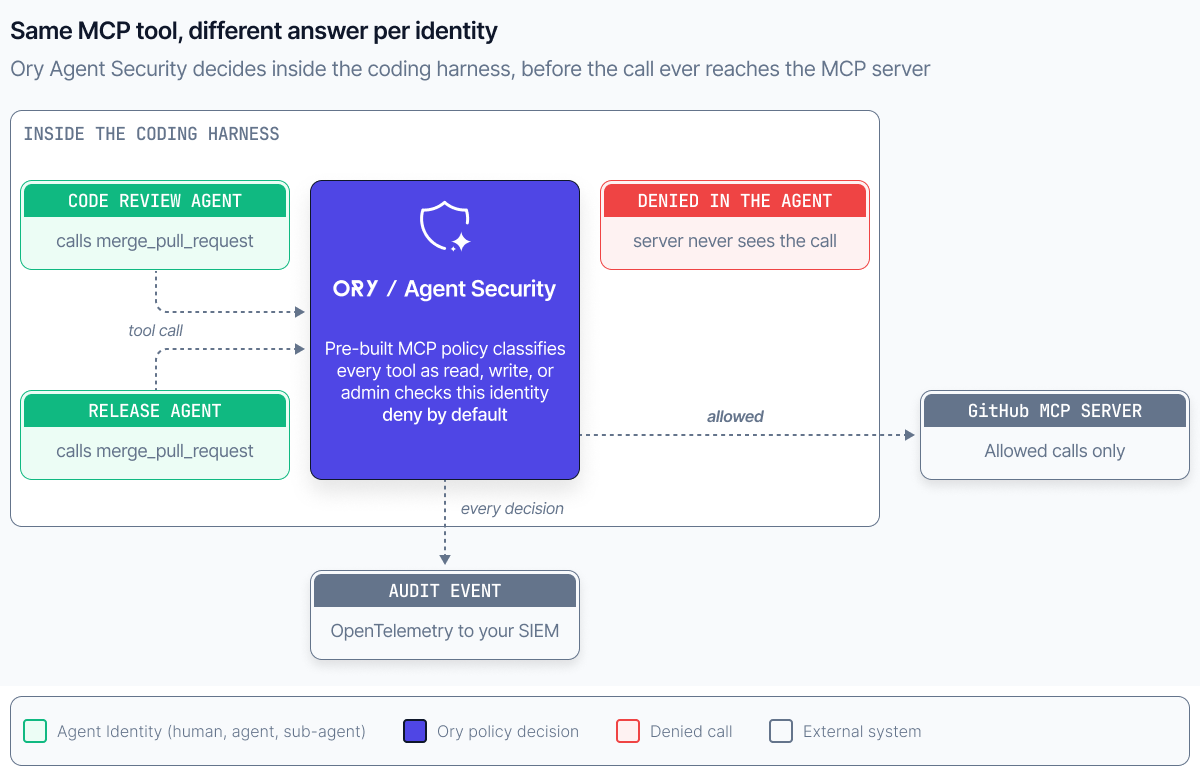
Figure 1: The same tool call gets a different answer depending on who is calling.
When an agent calls an MCP tool, Ory resolves who is behind it: the human, the agent acting for them, and any sub-agent. It checks the tool's classification against that identity's permissions, and denies it by default. A denied call stops inside the agent, which learns it cannot act.
Because the decision happens on the agent's side, a blocked call never reaches GitHub or Stripe, so there is nothing to roll back and no gateway to deploy in front of your servers. Many MCP servers have no concept of individual users, and Ory supplies that identity layer without changing the servers.
Consider Stripe, where 12 of the 38 tools in Ory's configuration are administrative. A finance agent can read and write payment data with all 12 administrative tools blocked, while an engineer's coding agent stays read-only on the same server.
Simpler to manage, visible by default
The hard part of granular permissions has always been mapping what every tool does per MCP server. Ory now does that work for you. Each supported server comes with a pre-built permission configuration that classifies every tool as read, write, or admin. Security teams assign those categories to users, teams, and agent types instead of maintaining tool lists by hand.
The classification also shows where your exposure is. Across Ory's catalog of more than 4,700 tools, over four in ten write or perform administrative actions. Every allow and deny decision streams to your SIEM through OpenTelemetry, with the human, agent, and action attached.
Depth and breadth where agents work
The catalog covers more than 80 industry-leading MCP servers, with more on the way. It goes deep where stakes are highest: Google Cloud's configuration classifies 878 tools, Azure's 660, and Atlassian's 300.
It spans code (GitHub, JetBrains), cloud (AWS, Cloudflare, Vercel), observability (Grafana, Sentry), collaboration (Linear, Notion, Slack), and payments and CRM (Stripe, HubSpot), plus tools built into the harnesses, such as Claude computer use. Uncatalogued servers carry their own policy, so an unreviewed server can stay blocked.
What this means for your security posture
For security leaders, least privilege finally extends to agents, and MCP servers stop being an all-or-nothing approval.
For engineering leaders, agents keep the tools that make them productive, without exception requests or blanket bans.
For both, one policy covers every harness. Ory Agent Security works across 11 coding harnesses and 14 agent SDKs, so adopting a new one does not restart the security review. Ory governs what agents do, not their prompts, so it complements prompt-injection defenses.
Start by seeing what your agents already do
Begin in observe mode. Ory records every tool call without blocking anything, and within minutes you know which agents use which MCP servers, on whose behalf. Then apply a pre-built policy and enforce it on your own schedule.
Learn more about Ory Agent Security.
Further reading
Ory Powers The New Agent Security Lifecycle

Ory's new Build and Deploy capabilities complete the AI agent security lifecycle, bringing visibility, identity, and control together in one platform.
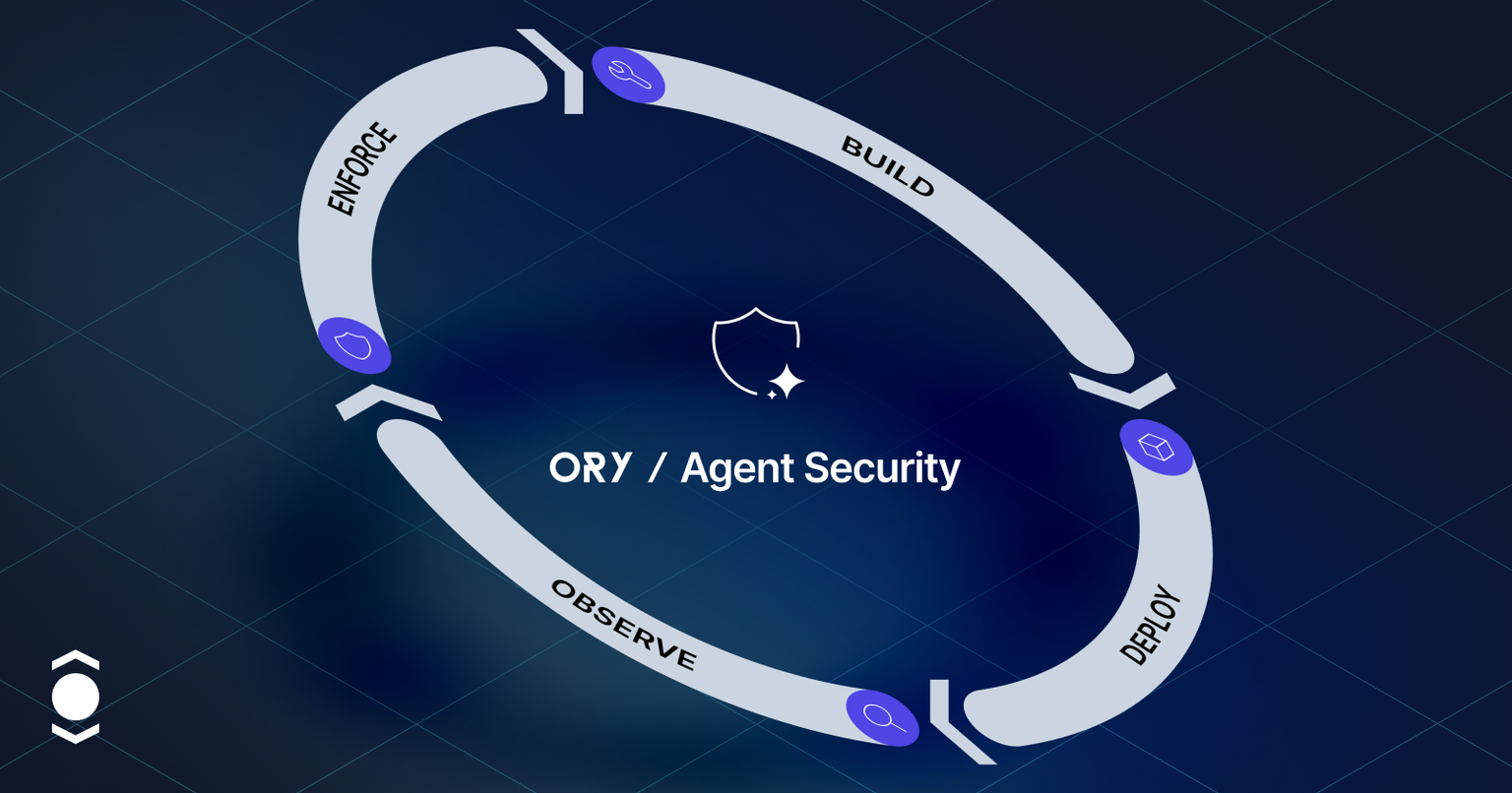

Learn how to govern AI agents in production. Use the 4-stage lifecycle, Observe, Enforce, Build, and Deploy, to apply least-privilege security at the tool boundary.
A technical deep dive into Ory Agent Security Build and Deploy, from SDK interception and delegation to runtime identity, deployment packages, CI automation, and revocation.
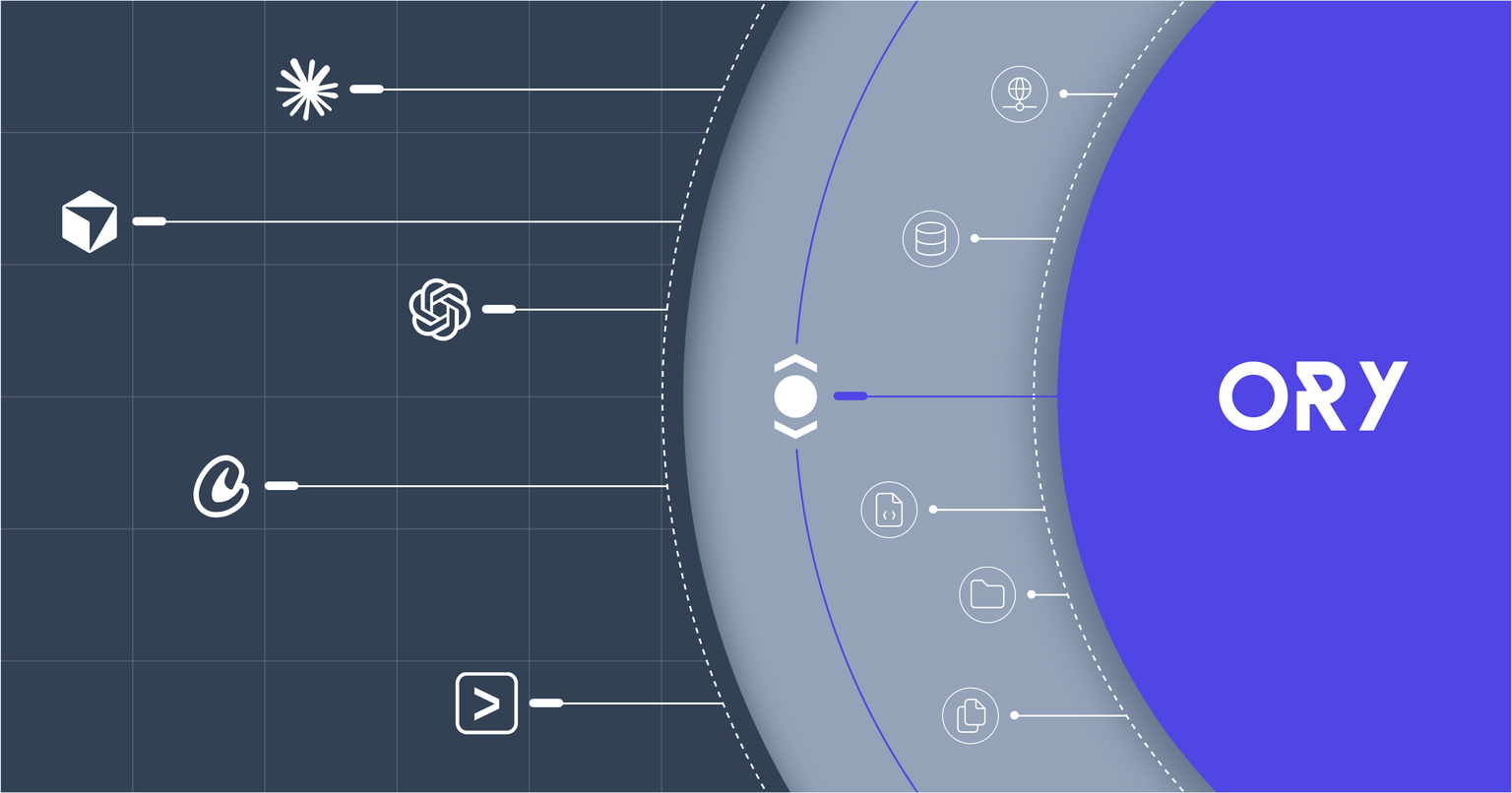

Stop managing parallel identity stacks. Discover how Ory enforces agent security directly inside the runtime event loop using your existing identity infrastructure.