Your agents are already calling APIs, moving data, and triggering workflows without asking anyone first. The question governance answers is simple and uncomfortable: who authorized that? Traditional AI governance never had to answer it, because a model that only predicts cannot wire money or drop a table. An agent can.
Agentic AI governance is the discipline of controlling what autonomous systems are allowed to do. Which APIs they call, which data they touch, and which actions they take with no human in the loop. It sits on top of identity for agentic AI and decides, in real time, whether a given action was ever permitted. This guide covers why that matters now, the specific ways ungoverned agents fail, and a framework you can implement across the agent lifecycle.
Key Takeaways
- Agentic governance is about action risk, not output risk. Model accuracy and bias controls do nothing to stop an agent from calling an API it was never scoped for.
- Treat every agent as a first-class identity. Shared or static credentials make it impossible to trace which agent did what, and impossible to revoke one without breaking the rest.
- Policy has to be enforced at runtime, at the API boundary, not documented in a wiki. Enforcement that lives outside the agent's reasoning survives a compromised agent.
- OAuth and scopes get an agent through the door. Fine-grained, relationship-based authorization decides what it can touch once inside. You need both layers.
- Governance is continuous, not a launch checklist. Agents accumulate integrations and permissions over time, so baseline behavior, watch for drift, and keep a kill switch ready.
What Is Agentic AI Governance
Agentic AI governance is the practice of controlling what autonomous AI systems are allowed to do. Traditional AI oversight asks whether a model produces accurate, unbiased output. Agentic governance asks a different question entirely: what actions can this agent take, and who authorized them?
The distinction is not academic. Agentic systems do not just generate text. They act. They call APIs, modify databases, send email, and run multi-step workflows without waiting for approval at each stage. The moment an agent inherits a credential and hits a payment endpoint, governance is what determines whether that call was ever allowed.
So what makes a system “agentic”? Three capabilities set these systems apart:
- Planning and reasoning: the agent breaks a goal into subtasks and decides how to complete them on its own.
- Tool use: the agent calls external services, queries databases, and interacts with APIs.
- Workflow execution: the agent runs multi-step processes end to end, often with no human checkpoint.
Governance means putting guardrails around all three. It keeps delegated authority inside its bounds.
Why Agentic AI Governance Matters Now
Teams are shipping autonomous agents faster than they are building the controls around them. Legacy customer identity and access management was designed for humans clicking through screens, not for machine-speed decisions across dozens of connected systems. The tooling assumption is wrong from the start.
The risk is not hypothetical. Picture a customer service agent wired into your CRM, your payment processor, and your email. Without hard boundaries, it might issue a refund it was never authorized to approve, pull payment details it did not need, or send an external message that breaks a compliance policy. You find out when a customer complains or an auditor asks a question, which is the worst possible time.
The question shifts from “is the model accurate?” to “who is accountable when the agent acts?” Governance answers that before you need it to.
How Agentic AI Governance Differs From Traditional AI Governance
Traditional and agentic governance solve different problems. The first grades model quality before deployment. The second enforces boundaries in real time, while the agent acts.
| Aspect | Traditional AI Governance | Agentic AI Governance |
|---|
| Primary focus | Output risk (accuracy, bias) | Action risk (authorization) |
| Review cycle | Pre-deployment, periodic | Real-time, continuous |
| Oversight model | Manual human review | Automated enforcement plus escalation |
| Data controls | Training data quality | Identity-first access controls |
You may already have model governance in place. That is worth keeping. It just will not stop an agent from calling an API it was never meant to reach. Agentic governance fills that gap.
Key Risks of Autonomous AI Agents
Design controls against real failure modes, not abstractions. Here are the ones governance is built to stop. The wider agentic AI security picture covers the threat model these map onto in more depth.
Unauthorized Tool and API Invocation
An agent calls a tool outside its intended scope. A support agent reaches a payment endpoint because the API was reachable and the agent decided it would help finish the task. The agent is not malicious. It is optimizing for a goal with no concept of your org chart.
Privilege Escalation
Agents accumulate permissions no single grant intended. Chain access across systems, each handing over one small permission, and you end up with an agent that can do far more than anyone approved. The accumulation is quiet, and it rarely shows up until something breaks.
Data Leakage and Misuse
Agents with access to sensitive data leak it through prompts, logs, or outbound API calls. They do not understand data classification. PII and public docs look identical unless you constrain them. One verbose log line can push customer data into a system that was never supposed to see it.
Loss of Execution Control
With no runtime guardrail, an agent finishes an irreversible action before any human can review it. Deleting records, moving funds, changing a production config. Speed is the point of agentic AI, and it is also the risk when nothing sits between intent and consequence.
Multi-Agent Emergent Behavior
Put agents together and behavior gets unpredictable. One agent's output becomes another's input, and effects cascade in ways no single policy anticipated. Testing agents in isolation tells you nothing about what happens when they collaborate.
Accountability Diffusion
When an agent acts on its own, responsibility blurs. The developer who built it? The operator who deployed it? The organization that owns the system? Governance draws the accountability line before an incident forces the argument.
98% have deployed or planning to deploy AI agents, but 79% of those organizations lack written policies for governing them.
Core Components of an Agentic AI Governance Framework
A complete framework rests on five pillars. Each covers a different dimension of control, and they only work together.
Agent Identity and Authentication
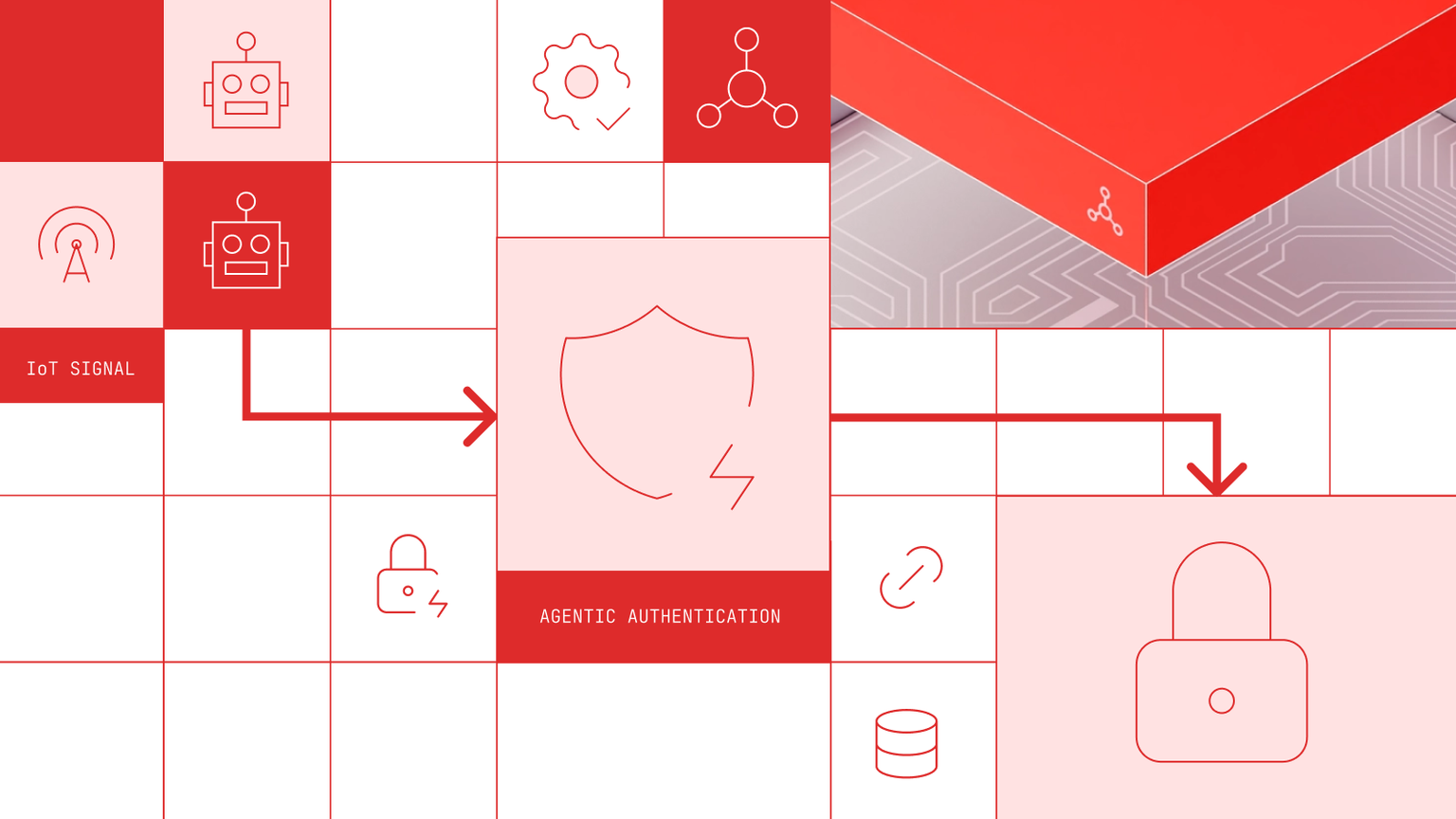
Every agent needs a unique, verifiable identity. Treat agents as first-class identities, the way you treat employees or service accounts, and you get precise tracking and control. Open standards like OAuth 2.0 and OpenID Connect are the foundation for machine identity, letting you scope, rotate, and revoke credentials independently. Ory Hydra issues that kind of agent credential and plugs into existing identity infrastructure. If you are still deciding where the two protocols fit, our guide on when to use OAuth 2.0 and OpenID Connect covers the core decisions.
Fine-Grained Authorization and Least Privilege
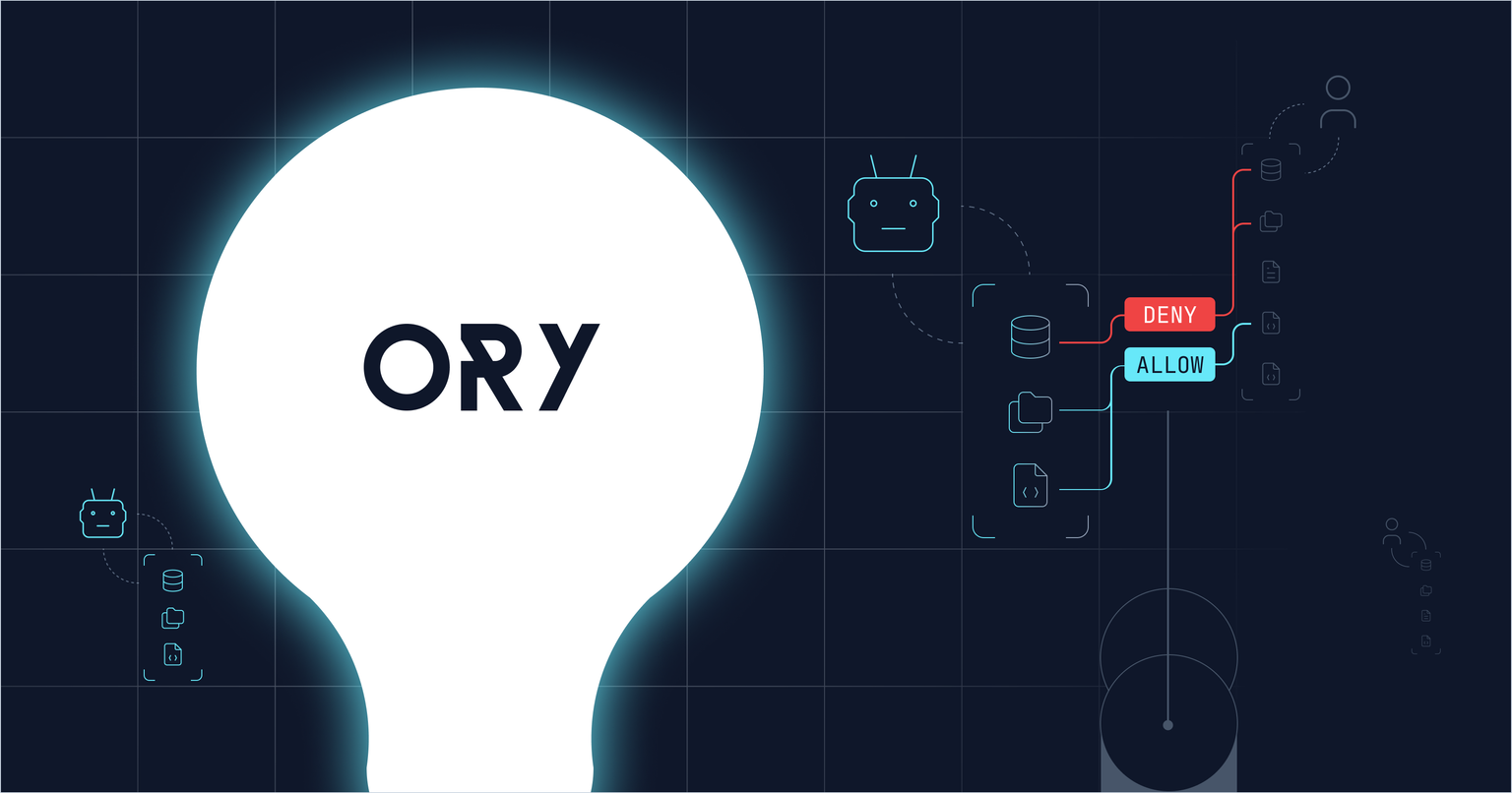
Give an agent only the permissions its task requires, nothing more. Relationship-based access control, modeled on Google's Zanzibar, expresses granular permissions across resources. Instead of assigning broad roles, you define exactly which agent can reach which resource under which conditions. Ory Keto implements that Zanzibar-style model, and the Ory Permission Language explains how relationship tuples work in practice.
Policy Definition and Enforcement
Write explicit rules for what agents can and cannot do: which tasks, which tools, which data, at what autonomy level. What matters is enforcement at runtime, not documentation. A policy sitting in a wiki stops nothing. Enforce it at an identity-aware proxy or authorization layer, in front of your services, so the decision does not depend on the agent behaving.
Human-in-the-Loop Oversight
High-risk or irreversible actions escalate to a human. Set the threshold by impact: a financial transaction over some amount, access to sensitive data, an external communication. The goal is not to review everything. It is to review what matters and let the rest run.
Continuous Monitoring and Audit Trails
Replace one-time approval gates with always-on oversight. Log every agent action with full traceability: who authorized it, which identity was used, what data was touched, and when. Those logs serve forensic investigation after an incident and compliance reporting the rest of the time.
See how Ory secures autonomous agents
How to Implement Agentic AI Governance
Implementation runs in sequence. Each step depends on the one before it, so order matters.
- Define the Agent Scope and Delegated Authority
Document exactly what tasks, tools, workflows, and autonomy level each agent is authorized for. This scope is the foundation for everything after it. You cannot enforce a boundary you never drew.
- Assign Every Agent a First-Class Identity
Issue each agent a unique identity with verifiable credentials. OAuth 2.0 client credentials or a service-account pattern work well. Never share an identity across agents. Shared credentials make it impossible to trace which agent took which action.
- Map Access Boundaries With Least-Privilege Permissions
Working from the scope definition, grant only the minimum an agent needs. For agents that touch multiple systems, fine-grained, relationship-based permissions beat broad role assignments every time.
- Enforce Runtime Policies at the API Boundary
Put controls in a layer that runs independently of the agent's reasoning. Policy enforced at the API gateway or authorization layer gives you defense in depth: if the agent's code is compromised or goes off-script, external enforcement still holds.
- Instrument Logging and End-to-End Traceability
Capture a full audit trail for every action: identity used, action taken, data accessed, authorization decision, timestamp. Incomplete logs are blind spots you will discover during an incident, which is exactly when you cannot afford them.
- Set Human Oversight Thresholds
Define decision boundaries by impact and reversibility. Write escalation rules for transactions over a threshold, access to PII, and anything that cannot be undone. Document the thresholds so they stay consistent and auditable.
- Plan Incident Response and Kill Switches
Prepare for the day it goes wrong. Build immediate revocation, the ability to kill an agent instantly. Write incident-response playbooks specific to agents, because the response differs from a user-based incident in both speed and scope.
- Monitor for Drift and Re-Evaluate Continuously
Governance is not a one-time setup. Baseline behavior, detect anomalies, and re-evaluate permissions as the business changes. An agent scoped correctly six months ago may have quietly picked up new integrations that widened its real access.
Standards and Regulations Shaping Agentic AI Governance
Several frameworks give governance programs structure, even where regulation is not mandatory yet.
The EU AI Act requires human oversight for high-risk AI systems under Article 14, and agentic AI in regulated industries will likely land in that category. The NIST AI Risk Management Framework offers voluntary guidance that maps cleanly onto a governance program in the US. ISO 42001 is an international standard for AI management systems you can certify against. And the OWASP Top 10 for LLM and agentic applications names the security risks specific to autonomous agents, which is a practical starting point for threat modeling.
Governing Multi-Agent Systems at Machine Scale
When agents talk to each other, risk compounds. Privilege-escalation chains, cascading errors, and emergent behavior all show up in ways single-agent deployments never do.
Multi-agent governance adds a few requirements:
- Agent inventory: keep a central catalog of every agent, its tools, and its connected APIs.
- Communication boundaries: define which agents can talk to which, and through what channels.
- Cascading authorization: make sure one agent cannot grant permissions to another.
- Observability: trace a request across a multi-agent workflow for debugging and audit.
The Model Context Protocol is becoming the standard for agent-to-application calls, and OAuth slots directly into its authorization model. Underneath all of it, identity for agentic AI has to authenticate agents at high volume and low latency, which is what matters once you are running hundreds or thousands of agent identities at once.
Build a Foundation for Trustworthy AI Agents With Ory
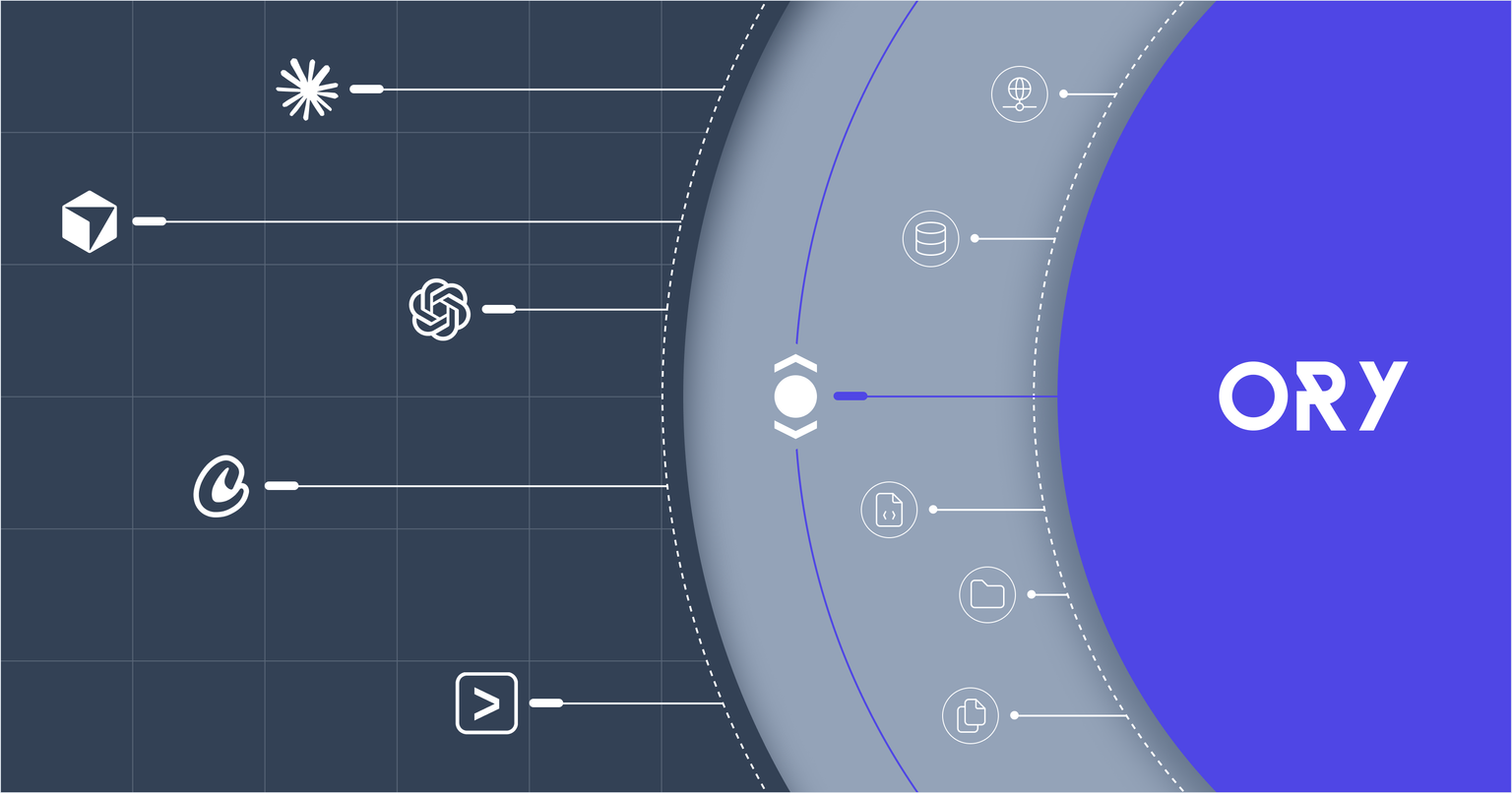
Agentic governance depends on identity infrastructure that treats agents as first-class citizens. Ory gives you that foundation through open standards, as a composable set of services rather than a monolithic platform. Ory Kratos handles identity and authentication, Keto handles Zanzibar-style authorization, and Ory Polis covers SCIM and SAML for enterprise provisioning. The core is open source, with deployment across self-hosted and fully managed options, so you can start on your own infrastructure and move to Ory Network without re-architecting.
Whether you are securing your first autonomous agent or scaling to thousands, the principles hold: unique identities, least privilege, runtime enforcement, and full traceability.
Explore Ory's identity for agentic AI.
For CISOs building the readiness case, download EMA's Agentic AI Identity Security Readiness whitepaper
Frequently Asked Questions About Agentic AI Governance
How Is an AI Agent Identity Different From a User Identity?
An agent identity represents an autonomous system, not a person. It authenticates with machine credentials like OAuth 2.0 client credentials instead of a password, and it is scoped to specific tasks rather than broad roles. Agent credentials also tend to have shorter lifetimes and tighter permission sets.
Can Existing IAM Systems Govern Autonomous AI Agents?
Most legacy IAM was built for human users and cannot handle the scale, speed, or granularity agents demand. You typically need modern, API-first identity built for machine identities to absorb the volume of authentication requests agents generate.
Who Is Accountable When an AI Agent Causes Harm?
Accountability usually falls on the organization that deployed the agent. That is the whole reason governance exists: to establish ownership, audit trails, and human-oversight thresholds for high-risk actions before an incident, not during the scramble after one.
Agentic governance is not a feature you bolt on after launch. It is the identity layer that decides whether an autonomous action was ever allowed, and it either exists before your first agent reaches production or it does not. Give every agent its own identity, scope it to the task, enforce policy at runtime, and log everything. The teams that do this now avoid the identity rewrite the rest of the industry is about to pay for. For the CISO view of the readiness gap, the Agentic AI Identities webinar is a good next step.