As Ory has grown from a set of open source projects to a complete identity infrastructure platform, we've been listening to how teams use our products in production. One theme came up consistently: teams wanted a simpler way to track releases across the Ory stack.
Today, Ory powers identity for organizations at global scale with over 1.2 billion identities managed across our open source ecosystem and more than 1 billion identities managed through Ory Enterprise License and the Ory Network. By choosing Ory, teams are building on the world’s leading open identity platform—one that combines open source innovation with enterprise-grade reliability, security, and scale.
If you've been working with Ory's open source products, you may’ve seen version numbers such as:
- Hydra v2.3.0 (January 2025)
- Kratos v1.3.1 (October 2024)
- Keto v0.14.0 (March 2025)
- Oathkeeper v0.40.9 (January 2025)
These version numbers worked well for individual projects, but as more organizations adopted multiple Ory products together, we saw an opportunity to make operations easier. With a unified versioning scheme, planning upgrades, tracking compatibility, and managing multi-product deployments becomes more straightforward.
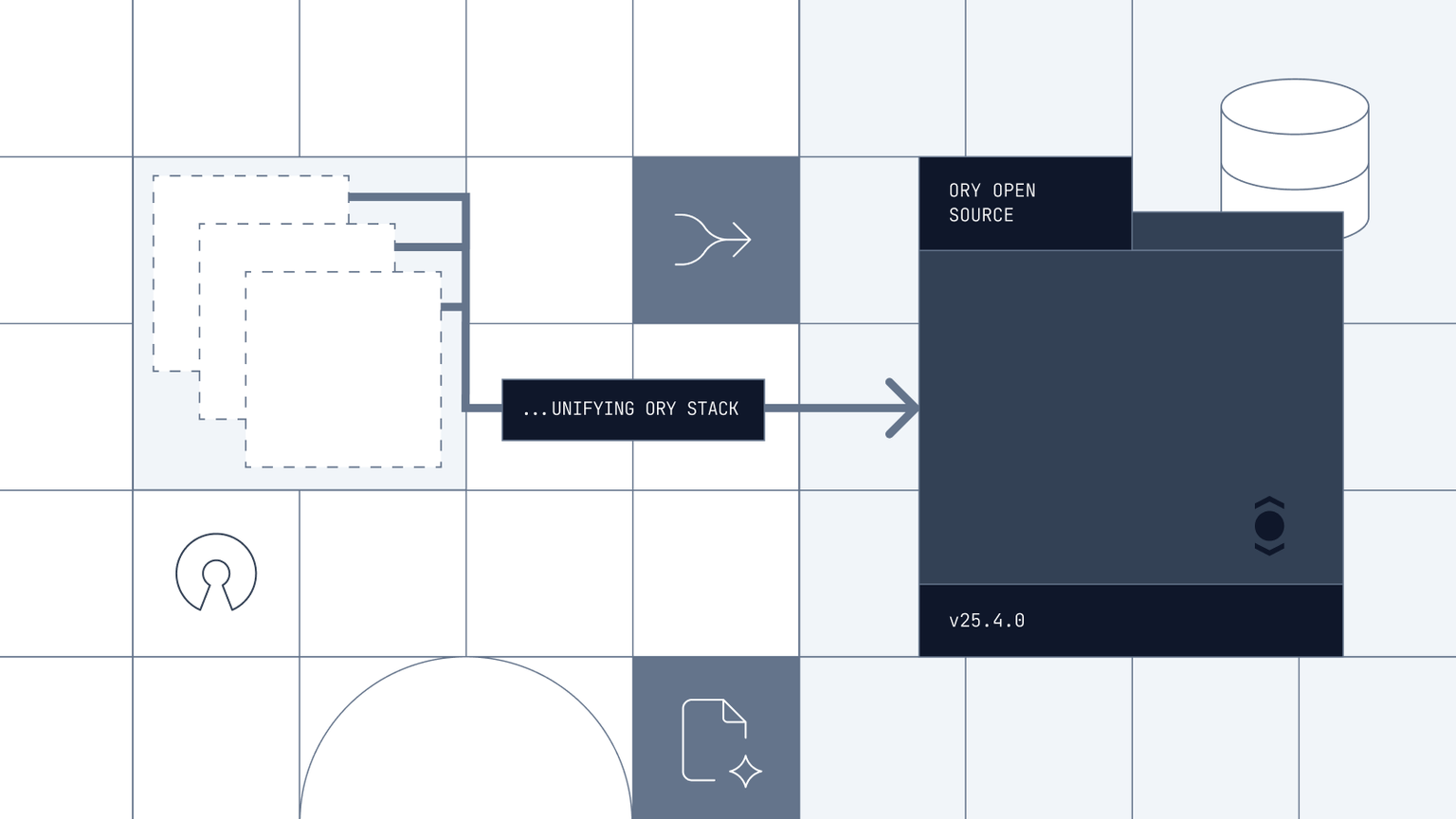
Today, we're introducing calendar-based versioning across all Ory products. It’s a system designed to give teams running identity infrastructure in production clear, predictable release information at a glance.
What the new versioning enables
Ory's continuous delivery model means new features, security patches, and performance improvements ship frequently. This velocity keeps you ahead of evolving security threats and compliance requirements.
Our new versioning scheme:
- Standardizes version numbers across all Ory products
- Distinguishes open source releases from enterprise builds
- Preserves backwards compatibility across patch and minor versions
- Makes upgrade paths transparent and predictable
- Surfaces version information directly in Ory Console and APIs
The new format
We've adopted calendar versioning with a format designed for operational clarity: YY.Q.B[-TAG]
- YY – Year (two digits, e.g., 25 for 2025)
- Q – Quarter (1–4)
- B – Build number, incremented with every enterprise release
- TAG – Optional pre-release marker (alpha, beta, rc)
Version examples
| Version | Type | Deployment options |
|---|
25.2.0 | Open source release (Q2 2025) | OSS + Enterprise |
25.2.1 | Enterprise patch release | Enterprise only |
25.3.0-rc.1 | Release candidate for 25.3.0 | Enterprise early access |
Open source releases are always published as .0 builds (e.g., 25.2.0). Enterprise customers receive continuous patch releases to ensure access to security updates and stability improvements as they're validated.
Release policy at a glance
Open Source (OSS)
- Only
.0 versions are promoted
- Distributed via GitHub and Docker Hub
- Always signed, multi-platform binaries
Ory Enterprise License (OEL)
- Every internal release gets a version (YY.Q.B)
- Always backwards compatible
- Distributed through private registries
Pre-releases
alpha, beta, and rc builds for testing and staged rollout
All versions are visible in Ory Console and exposed through APIs and CLI.
New releases coming this week
Stay tuned as we announce new OSS versions of Hydra, Kratos, Keto, and Oathkeeper in the following days. Each release will follow the new versioning format with clear upgrade documentation.
Join us for a live walkthrough on Thursday, November 13th where we'll dive into the updates made to the Ory stack, demonstrate the new versioning, and answer your questions about the newly released OSS features and upgrade. Register now to secure your spot.
Why Ory Enterprise License matters
Open source releases give you powerful identity infrastructure. However, mission-critical production environments often need continuous security patches, enterprise features that support compliance requirements, and updates that keep pace with your infrastructure demands.
Ory Enterprise License (OEL) provides continuous releases with the latest security patches and advanced enterprise features between open source releases.
For teams running identity infrastructure that needs to stay secure, compliant, and performant at scale, OEL delivers the update cadence and enterprise capabilities that production environments require.
Evaluating Ory for web-scale production? Learn more about OEL.
Questions about the new versioning? Join us in Ory Community Slack or GitHub Discussions.