"AI agent" and "agentic AI" get used interchangeably in most marketing copy, but they describe fundamentally different things. An AI agent is a single autonomous unit that handles one task. Agentic AI is the orchestration layer that coordinates multiple agents into complex workflows.
The distinction matters when you're building systems, assigning permissions, or trying to figure out why your AI infrastructure just did something unexpected. This guide walks through the seven concrete differences, when each approach actually fits, and the identity and security considerations for agentic AI that show up the moment these systems scale beyond a demo.
Key Takeaways
- An AI agent is a single autonomous unit that handles one well-defined task. Agentic AI is the orchestration layer that coordinates many agents into a complete workflow.
- The two are complementary layers, not competing approaches. Agentic AI deploys and manages AI agents to accomplish goals neither could handle alone.
- Every agent operating in your infrastructure carries a unique identity. At enterprise scale, that's thousands of machine identities to register, govern, and audit.
- Prompt injection is the new top risk for LLM-driven systems. Least-privilege scoping and human-in-the-loop checks limit the blast radius when an agent's reasoning is compromised.
- Legacy IAM wasn't built for ephemeral agents that spin up, act, and vanish in seconds. Standards-based authentication (OAuth 2.0, OIDC) and fine-grained authorization are the foundation modern agent stacks rely on.
What Is an AI Agent?
An AI agent is software that perceives its environment, makes decisions, and takes actions to achieve a specific goal. The word "agent" here means exactly what it sounds like: something that acts on your behalf. A scheduling agent books meetings. A support agent answers customer questions. A data extraction agent pulls information from documents.
What separates an AI agent from regular software is autonomy. You give it a goal, and it figures out how to accomplish that goal without you guiding every step. The scope stays narrow, though. One agent, one task.
Core Characteristics of an AI Agent
Five traits define whether something qualifies as an AI agent:
- Perception: The agent receives inputs from its environment, whether user messages, sensor data, or API responses.
- Reasoning: It processes inputs to determine what action makes sense next.
- Action: The agent executes tasks based on that reasoning, like sending an email or updating a record.
- Goal orientation: Every action moves toward a defined objective rather than producing random outputs.
- Autonomy: Once deployed, the agent operates independently within its boundaries.
What Is Agentic AI?
Agentic AI is the system that coordinates multiple AI agents, data sources, and tools to execute complex workflows. If an AI agent is a specialist handling one task, agentic AI is the project manager assigning work, tracking progress, and making sure everything connects.
This distinction matters because real-world problems rarely fit into a single task. Preparing a quarterly report involves gathering data, analyzing trends, writing summaries, and scheduling presentations. Agentic AI breaks that goal into subtasks, assigns each to the right agent, and orchestrates the handoffs.
Core Characteristics of Agentic AI Systems
Agentic AI systems share several defining features:
- Multi-agent coordination: Managing several agents that each handle a different subtask.
- Workflow orchestration: Sequencing tasks across systems in the correct order.
- Adaptive planning: Adjusting the approach when intermediate results change the situation.
- Cross-system integration: Connecting to APIs, databases, CRMs, and enterprise tools dynamically.
- Persistent context: Maintaining memory across extended interactions and sessions.
How Generative AI, AI Agents, and Agentic AI Relate
Generative AI creates content. AI agents act on goals. Agentic AI orchestrates agents into workflows. The three represent different layers of capability, not competing alternatives.
| Generative AI | AI Agent | Agentic AI |
|---|
| Primary function | Content creation | Task execution | Workflow orchestration |
| Autonomy level | Responds to prompts | Acts on single goals | Coordinates multiple agents |
| Scope | Single output | Single task | Multi-step processes |
ChatGPT by itself is generative AI. ChatGPT with plugins that browse the web, run code, and take actions starts behaving like an AI agent. A system that deploys multiple specialized ChatGPT instances to collaborate on a complex project is agentic AI.
7 Key Differences Between AI Agents and Agentic AI
The fundamental distinction is scope: an AI agent handles a single task while agentic AI coordinates many agents into complete workflows. The practical differences go deeper than that.
1. Scope of Task and Goal Orientation
AI agents target narrow, well-defined tasks. An agent might schedule a meeting or summarize a document.
Agentic AI tackles broad objectives spanning multiple tasks. Managing an entire project timeline, for instance, involves scheduling, communication, resource allocation, and status tracking, all working together.
2. Autonomy and Decision Making
AI agents make decisions within constrained boundaries. They're autonomous within their lane but don't decide which lane to be in.
Agentic AI makes higher-order decisions about which agents to deploy, when to deploy them, and how to handle dependencies between them.
3. Reasoning and Planning Capabilities
AI agents typically use reactive reasoning for immediate tasks. Input arrives, agent responds.
Agentic AI employs multi-step planning: it breaks complex goals into subtasks and determines the optimal sequence before execution begins.
4. Memory and Context Handling
AI agents usually have short-term, task-specific memory. Once the task completes, the context often disappears.
Agentic AI maintains long-term context across sessions and agent interactions, remembering what happened in step one when executing step ten.
5. Tool Use and API Access
AI agents may access one or a few tools to complete their task. A calendar API. A database query. A single integration.
Agentic AI integrates across many tools, APIs, and data sources dynamically, selecting the right tool for each subtask as the workflow progresses.
6. Coordination and Multi-Agent Orchestration
AI agents work independently. Agentic AI coordinates multiple agents, managing handoffs, dependencies, and parallel execution.
When one agent's output becomes another agent's input, the agentic layer handles that transition seamlessly.
7. Identity, Permissions, and Governance Footprint
AI agents require individual credentials and access controls. Agentic AI requires centralized identity governance across all coordinated agents.
Each agent operating within an agentic system carries its own identity, permissions, and audit trail. When you're orchestrating dozens of agents, that's dozens of identities to manage, track, and secure.
How AI Agents and Agentic AI Work Together
AI agents and agentic AI aren't competing approaches. They're complementary layers. Agentic AI deploys and orchestrates AI agents to accomplish goals neither could achieve alone.
Take a concrete example. An agentic AI system receives a request to prepare a quarterly business review. The system coordinates a research agent to gather sales data, a writing agent to draft the narrative, an analysis agent to generate charts, and a scheduling agent to book the presentation meeting.
Each agent handles its specialty. The agentic layer ensures they work in sequence and share context appropriately. The research agent finishes before the writing agent starts. The analysis agent receives the same data the writer used. The scheduler knows when the document will be ready. Each handoff is also an identity boundary, which is where security usually starts to slip. For a practical look at the economic side of this pattern, see enabling the agentic economy with Ory and Skyfire.
When to Use AI Agents vs Agentic AI
The right choice depends on what you're trying to accomplish and how much complexity you're willing to manage.
When an AI Agent Is the Right Fit
AI agents work well for:
- Automating repetitive, well-defined tasks like data extraction or form processing.
- Single-function use cases such as customer inquiry routing or appointment scheduling.
- Situations where simplicity and predictability matter more than flexibility.
If you can describe the task in one sentence and the inputs are consistent, an AI agent is probably enough.
When Agentic AI Is the Right Fit
Agentic AI makes sense for:
- Complex workflows requiring multiple steps across different systems.
- Dynamic environments where plans might adapt mid-execution.
- Enterprise processes spanning departments, such as employee onboarding or incident response.
If accomplishing the goal requires coordination between multiple tools, data sources, or decision points, agentic AI provides the orchestration layer.
Identity and Access Challenges for AI Agents and Agentic AI Systems
As agents and agentic systems scale, so does the identity surface. Every agent that can take action also represents a potential security risk if credentials are compromised or permissions are misconfigured. Unauthorized agent access can lead to data breaches, compliance violations, or runaway automation that's difficult to stop. The full picture lives in Ory's agentic AI security solution page.
Machine Identity at Scale
Every agent operating in your infrastructure carries a unique identity. At enterprise scale, organizations may manage thousands of machine identities, each requiring registration, credential management, and lifecycle governance.
Without proper controls, agents become ungovernable shadows. You can't revoke access you don't know exists. You can't audit actions you can't attribute.
Least Privilege and Zero Trust for Autonomous Agents
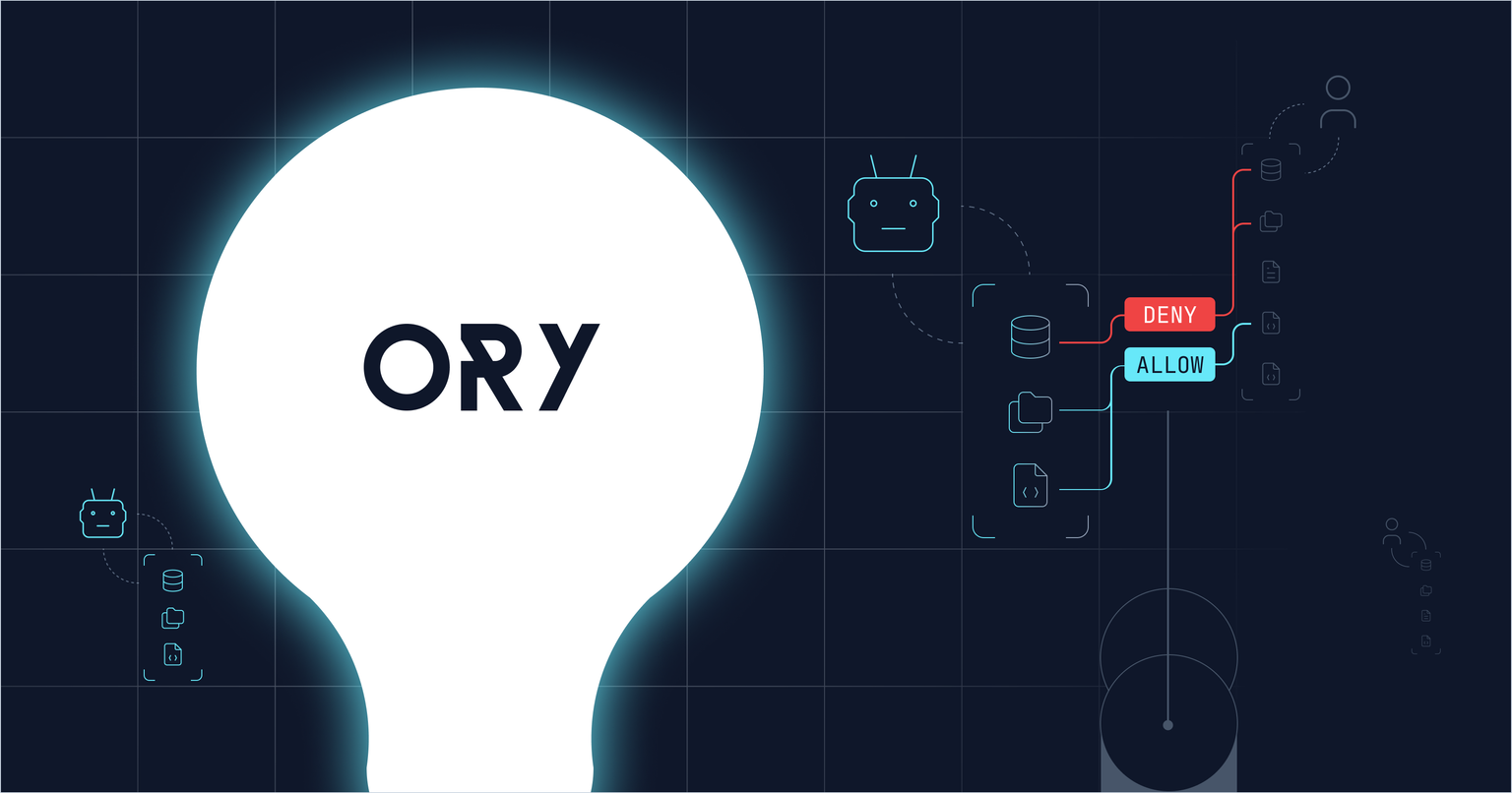
Least privilege means agents access only what they need for their specific task. Nothing more. Zero trust means verifying every agent action rather than assuming trust based on network location or prior authentication.
Consider an agent with excessive permissions: it's supposed to read customer records, but it can also write to them. A prompt injection attack turns that read-only agent into a data modification tool. Constraining permissions limits the blast radius when something goes wrong, and with LLM-driven agents, something will go wrong.
Auditability and Traceability of Agent Actions
Every agent action benefits from logging and attribution. Compliance teams want to know what happened. Security teams want to investigate incidents. Engineering teams want to debug failures.
Without traceability, you can't answer the fundamental question: "what did this agent do and why?" That question becomes urgent during security incidents, compliance audits, and any production debugging session that involves an LLM.
Standards and Protocols Including OAuth 2.0, OpenID Connect, and MCP
Standards-based authentication prevents vendor lock-in and ensures interoperability across systems:
- OAuth 2.0: Token-based authorization for API access.
- OpenID Connect: Identity layer for authentication built on OAuth 2.0.
- SCIM: Provisioning and deprovisioning identities at scale.
- MCP (Model Context Protocol): Emerging protocol for agent-to-agent and agent-to-tool communication.
Adopting established standards means your agent infrastructure can integrate with existing identity systems rather than requiring custom solutions for every connection. For deeper coverage of how MCP and OAuth fit together for agentic systems, see agentic AI security with MCP and OAuth and the MCP server authentication with Ory Hydra integration guide.
Securing Agentic AI With Modern IAM
Legacy IAM systems were designed for human users logging into applications. They weren't built for machine-scale identity, and they definitely weren't built for the dynamism of autonomous agents that spin up, execute tasks, and spin down in seconds.
Modern IAM treats AI agents as first-class identities with granular, enforceable permissions governed by least-privilege principles. The authorization model draws from approaches like Google's Zanzibar, which handles fine-grained permissions at massive scale.
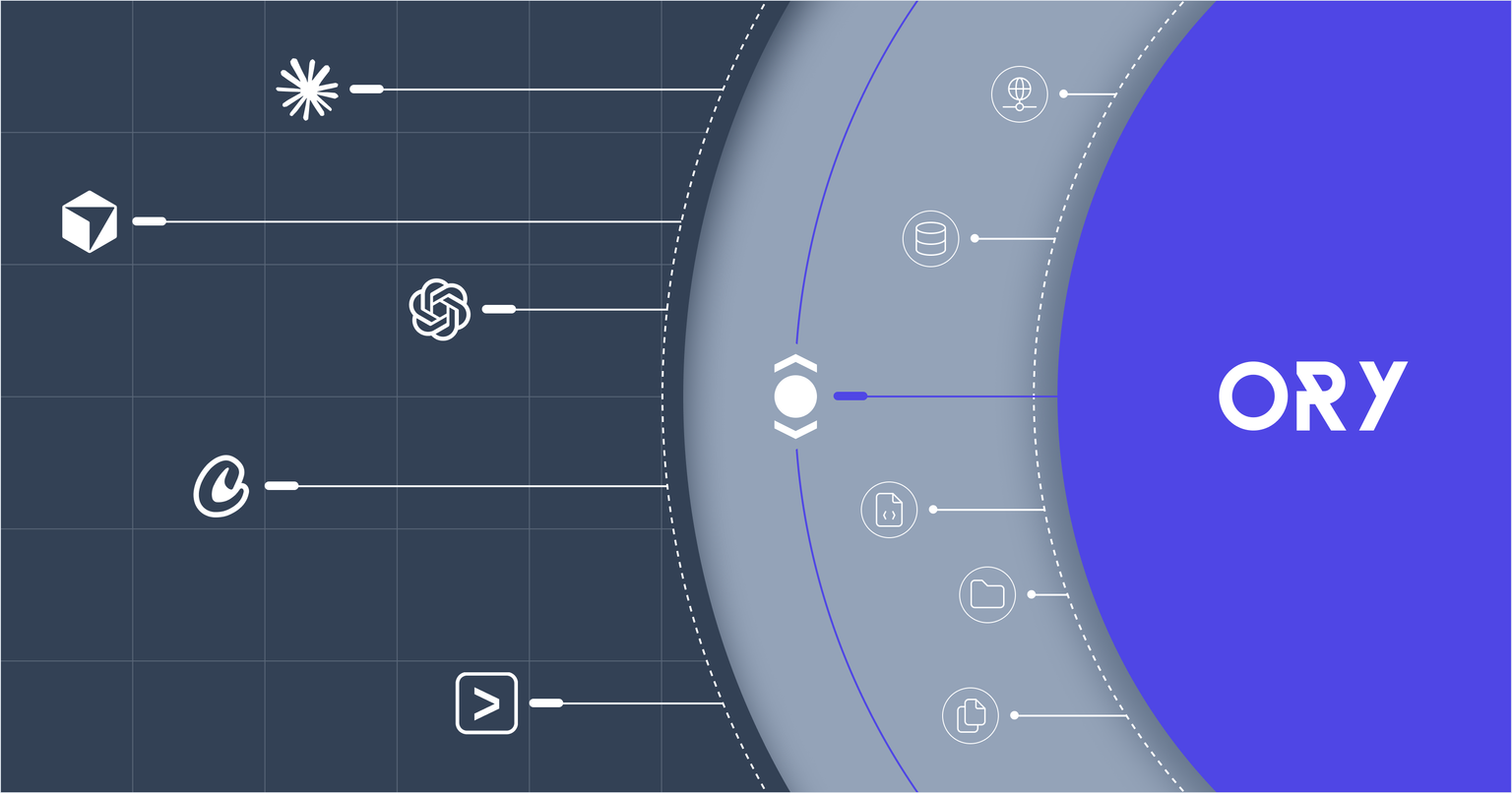
Ory's products, designed for identity for agentic AI at machine scale, provide the building blocks for securing agentic AI systems. Ory Hydra handles OAuth 2.0 and OpenID Connect. Ory Kratos manages identity and authentication. Ory Keto provides fine-grained authorization. Ory Oathkeeper acts as an identity-aware proxy. Whether you're running self-hosted, using an enterprise license, or deploying on Ory Network, the architecture supports high-volume agent registrations, granular authorization, and full auditability.
Learn how Ory secures agentic AI infrastructure
Frequently Asked Questions About AI Agents and Agentic AI
What Are the 5 Types of AI Agents?
The five types are simple reflex agents, model-based reflex agents, goal-based agents, utility-based agents, and learning agents. Each represents increasing sophistication in how agents perceive their environment, reason about actions, and adapt over time.
Is ChatGPT Generative AI or Agentic AI?
ChatGPT is primarily generative AI because it creates text responses to prompts. It exhibits agent-like behavior when extended with tools and plugins that allow it to browse the web, execute code, or take actions beyond text generation.
Are AI Agents Part of Agentic AI?
Yes. AI agents are the building blocks of agentic AI. Agentic AI systems coordinate and orchestrate multiple AI agents to complete complex, multi-step workflows that no single agent could handle alone.
Who Are the Big 4 AI Agents?
The term isn't standardized, but it usually refers to prominent AI assistant platforms from OpenAI, Google, Microsoft, and Anthropic. Each company offers agent-capable systems with varying degrees of autonomy and tool integration.
The takeaway: AI agents are the actors and agentic AI is the production. Both need identity, both need authorization, and both fail in expensive ways when those layers are bolted on after the fact. Teams that treat agent identity as a first-class concern from day one avoid the worst of the operational pain that the rest of the industry is about to learn the hard way. For the deeper take on how identity infrastructure has to evolve for agents, see the future of identity for agentic AI and the Agentic AI Identity Security Readiness whitepaper. The broader customer identity and access management covers the full picture.