Agentic AI Security Solutions: Types, Features, and Top 12 Solutions
The three types of agentic AI security solutions, the capabilities to look for, and how 12 leading options compare.
Summary: Agentic AI security solutions verify AI agent identities, control which tools and data agents can use, and record what they do. Ory is best for standards-based agent authentication and tool-level authorization, Microsoft Entra Agent ID for Microsoft environments, Okta for AI Agents for workforce agent governance, and Zenity for agent runtime security.
What Are Agentic AI Security Solutions?
Agentic AI security solutions are tools and platforms designed to protect autonomous AI agents, the systems they interact with, and the data they access. Unlike traditional AI applications that primarily generate responses, agentic AI systems can independently plan tasks, make decisions, invoke external tools, access APIs, and execute actions on behalf of users. These capabilities introduce security risks such as prompt injection, unauthorized tool execution, excessive permissions, credential exposure, and the misuse of sensitive information.
Agentic AI security solutions address these risks by combining agent identity management, runtime monitoring, and policy enforcement. They help organizations verify the identities of AI agents, control which resources and actions agents can access, secure interactions with Model Context Protocol (MCP) servers, and maintain audit trails of agent activities. Advanced solutions can enforce least-privilege access, evaluate authorization in the context of delegated user permissions, and require human approval for sensitive operations.
Agentic AI Security Solutions at a Glance
The table below summarizes the key differences between the agentic AI security solutions covered in this guide. We explore each solution in more detail in the sections that follow.
Why Agentic AI Requires a Different Approach to Security
Agentic AI introduces security risks that extend beyond those associated with traditional AI applications. Unlike systems that primarily generate content or answer questions, AI agents can independently plan tasks, interact with external tools, access enterprise data, and execute actions across multiple systems. This autonomy expands the attack surface and creates opportunities for attackers to manipulate not only what an AI system produces, but also what it does.
Several characteristics of agentic AI require organizations to rethink traditional application security approaches.
Autonomous Agents Can Access Sensitive Data and Execute Actions
Traditional AI applications generally respond to requests by generating text, images, or other outputs. Agentic AI systems go further by performing actions such as querying databases, modifying files, executing code, accessing cloud resources, or initiating financial transactions. These capabilities introduce additional risks because an agent's decisions can directly affect enterprise systems and sensitive information.
For example, an AI agent responsible for processing customer orders might access unrelated customer records, modify incorrect transactions, or expose confidential information through an external integration. An error in the agent's reasoning or an unexpected tool response could trigger actions that were never intended by the user. Because agents can perform multiple operations without human intervention, mistakes can propagate through entire workflows before they are detected.
Organizations must therefore consider the consequences of agent actions, not only the accuracy of their outputs. Security mechanisms need to account for the resources agents can reach, the operations they can perform, and the potential business impact of autonomous decisions.
Prompt Injection Can Manipulate Agent Behavior
Prompt injection is particularly dangerous in agentic AI environments because malicious instructions can influence real-world actions rather than simply alter generated responses. Attackers can embed instructions in websites, documents, emails, repository files, or API responses that agents encounter while completing legitimate tasks.
For example, a research agent summarizing a webpage might encounter hidden instructions directing it to retrieve confidential company files and send them to an external server. If the agent treats this untrusted content as authoritative instructions, it could perform the attacker's requested actions using its legitimate access privileges.
These attacks exploit the difficulty AI systems can have distinguishing trusted instructions from external data. Unlike conventional application vulnerabilities, prompt injection does not necessarily require exploiting a software defect. It can manipulate the agent's interpretation of information and its subsequent decision-making.
Third-Party Tools and Integrations Expand the Attack Surface
AI agents frequently rely on external APIs, plugins, Model Context Protocol (MCP) servers, and other tools to interact with enterprise systems. Each integration introduces dependencies on external software, services, and data sources that may have different security controls and trust levels.
A compromised MCP server, malicious tool definition, or vulnerable third-party integration could expose sensitive information or influence the agent's behavior. Attackers may also use tool poisoning techniques to insert malicious instructions into tool descriptions or responses, encouraging agents to invoke unauthorized functionality or send data to attacker-controlled destinations.
These risks are compounded when agents dynamically discover tools or connect to services that have not undergone security review. Traditional software supply chain concerns therefore extend into agentic AI, where both the code behind an integration and the instructions it presents to an agent can become attack vectors.
What Is AI Agent Integration and How to Choose the Right Approach

AI agent integration connects agents to data and actions. Compare custom, iPaaS, MCP, and unified-API approaches, and the identity controls that keep them safe.
Agent Identity and Delegated Access Introduce New Security Challenges
AI agents often act on behalf of human users while interacting with applications, databases, and other agents. Traditional identity and access management (IAM) systems can authenticate users and service accounts, but may not fully represent the relationships between an individual agent, its assigned task, the user who authorized it, and the resources it accesses.
For example, a customer service agent might legitimately retrieve order information but should not automatically receive permission to issue refunds, modify payment details, or access unrelated accounts. When agents use shared service accounts or long-lived credentials, excessive privileges can enable unauthorized operations and make it difficult to attribute actions to individual agents.
Agentic AI security therefore involves more than verifying an agent's identity. Organizations must also consider delegated authority, task-specific permissions, credential exposure, and whether an agent's actions remain consistent with the authority granted by its human user.
Best IAM Solutions for Corporate Security
Compare the best IAM solutions for corporate security, from Okta and Entra ID to Ory and Keycloak, and learn how to evaluate the right fit for your stack.
Persistent Memory and Context Can Be Poisoned
Some AI agents maintain memory across interactions, allowing them to retain user preferences, previous decisions, task histories, and information collected from external sources. While this improves continuity and efficiency, it creates opportunities for attackers to manipulate the information that influences future agent behavior.
Memory poisoning occurs when malicious or misleading information is introduced into an agent's stored context. For example, an attacker could cause an agent to remember an unauthorized payment destination, a fabricated company policy, or incorrect instructions for handling sensitive data. The agent might later use this information when making decisions, even after the original malicious interaction has ended.
Persistent memory also introduces data security concerns. Sensitive information retained longer than necessary could be exposed through unauthorized access, compromised storage, or subsequent agent interactions. These risks make stored context an additional security boundary that traditional stateless AI applications may not have.
Multi-Agent Workflows Can Amplify Security Failures
Agentic AI systems increasingly use multiple specialized agents to complete complex tasks. A primary agent might delegate research, analysis, and execution to separate agents that communicate through APIs, shared memory, messaging systems, or MCP servers. This creates interconnected workflows in which one agent's output can influence another agent's decisions.
A compromised research agent, for example, could provide manipulated information to a more privileged execution agent, causing it to modify production data or disclose sensitive information. Even when individual agents have restricted capabilities, attackers may exploit interactions between them to achieve outcomes that no single agent could perform independently.
Multi-agent systems can also make incidents harder to investigate. Actions may be distributed across several agents, tools, and environments, making it difficult to reconstruct how a malicious instruction entered the workflow or which agent initiated a particular operation. As the number of interconnected agents grows, so does the complexity of maintaining visibility, accountability, and secure trust boundaries.
Autonomous Decision-Making Creates Unpredictable and Cascading Failures
AI agents rely on probabilistic models to interpret information, select tools, and determine subsequent actions. Unlike conventional applications that follow predefined execution paths, agents may generate unexpected plans, misinterpret instructions, or choose inappropriate actions even when no attacker is involved.
For example, an infrastructure management agent attempting to resolve a performance issue might repeatedly restart services, change resource configurations, or scale cloud infrastructure beyond reasonable limits. A financial operations agent could similarly retry a failed transaction multiple times, resulting in duplicate payments or other unintended consequences.
These failures can be particularly damaging in long-running workflows where agents execute chains of dependent actions. A single incorrect assumption may influence subsequent decisions, increasing the operational, financial, and security impact. Organizations must account for unpredictable agent behavior and the possibility that individually reasonable actions can produce harmful outcomes when combined.
3 Types of Agentic AI Security Solutions
Agentic AI security solutions address different risks associated with autonomous agents, from identity management and access control to runtime monitoring and governance. Although these categories often overlap, each focuses on a different aspect of protecting agents, enterprise resources, and automated workflows.
Agent Identity and Authorization Platforms
Agent identity and authorization platforms establish verifiable identities for AI agents and control which resources, tools, and actions they can access. Unlike traditional identity systems that primarily manage human users and service accounts, these platforms account for agents operating autonomously or on behalf of users across multiple applications and services.
These solutions support agent authentication, fine-grained permissions, and secure delegation of authority. They can enforce access policies based on an agent's identity, assigned task, requested action, and target resource. Common capabilities include role-based and relationship-based access control, OAuth-based authorization, short-lived credentials, and permission checks for API calls and MCP tools.
For example, an AI coding agent might be authorized to read source code and create pull requests but prohibited from modifying production databases. By enforcing authorization at the individual action level, these platforms reduce the risks of excessive privileges, unauthorized tool execution, and compromised agent credentials.
Run your own OAuth2 Server

Run a free OAuth2 Server and OpenID Connect (OIDC) server using open source software in under 10 minutes, and become an OAuth2 provider like Google.
Enterprise Agent Identity Governance and Privileged Access
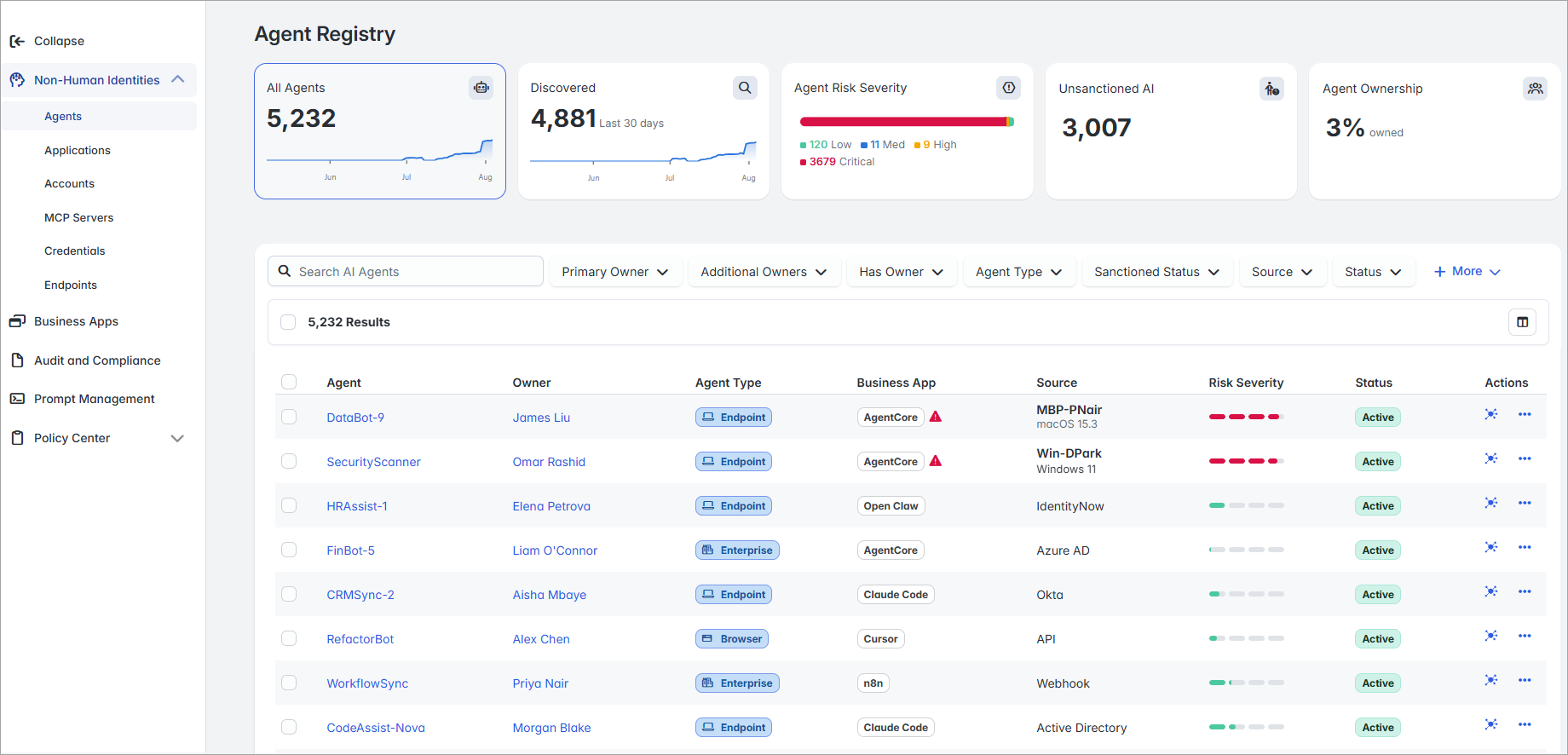
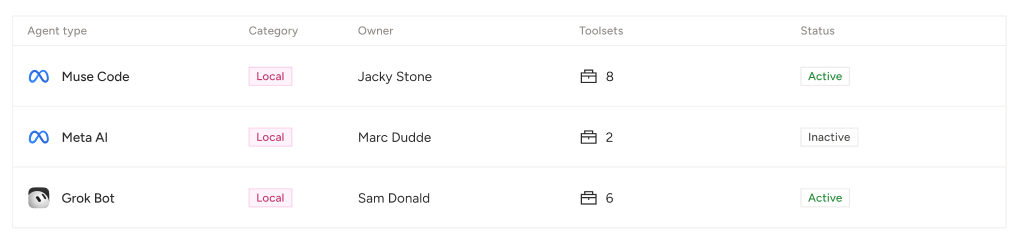
Enterprise agent identity governance and privileged access platforms focus on managing AI agents as non-human identities throughout their lifecycle. As organizations deploy hundreds or thousands of agents, security teams need visibility into which agents exist, who owns them, what permissions they hold, and whether their access remains necessary.
These platforms typically provide centralized agent discovery, identity inventories, access reviews, credential lifecycle management, and privileged access controls. They can help organizations identify orphaned agents, excessive permissions, shared credentials, and agents with access to sensitive enterprise systems. Privileged access capabilities may include just-in-time access, approval workflows, automated credential rotation, and immediate access revocation.
For example, an enterprise might discover that a retired automation agent still has administrative access to cloud infrastructure. An identity governance platform can identify the unused identity, flag its excessive privileges, and support access removal. This category is particularly relevant to enterprises managing large agent populations across multiple departments, cloud environments, and business applications.
AI Agent Runtime Security and Governance Platforms
AI agent runtime security and governance platforms monitor and control agent behavior while agents execute tasks. Rather than focusing primarily on identity and permissions, these solutions examine how agents interact with prompts, external content, tools, APIs, and sensitive information to identify malicious activity or unsafe behavior.
Common capabilities include prompt injection detection, tool-call inspection, sensitive data protection, behavioral monitoring, and policy enforcement. Some platforms can block suspicious actions, restrict access to untrusted MCP servers, detect abnormal agent activity, or require human approval before high-risk operations. They may also provide audit trails and security telemetry to support incident investigation and compliance.
For example, a customer support agent might encounter a malicious instruction embedded in an external document directing it to export customer records. A runtime security platform could detect the suspicious instruction or unauthorized tool request and block the operation before sensitive information is exposed. These solutions help organizations address threats that identity controls alone cannot prevent, including prompt injection, tool misuse, data leakage, and unexpected autonomous behavior.
Key Capabilities of Agentic AI Security Solutions
Agentic AI security solutions provide capabilities for protecting autonomous agents, controlling their access to enterprise resources, and monitoring their behavior throughout execution. Different solutions focus on identity and authorization, enterprise-wide governance, or runtime protection against threats such as prompt injection, malicious tools, and data leakage.
Organizations should evaluate capabilities across all three categories rather than assuming a single solution provides comprehensive coverage.
Agent Identity and Authorization Platforms: Key Capabilities
Agent identity and authorization platforms establish trusted identities for AI agents and enforce access policies when agents interact with users, applications, APIs, and tools. These solutions help organizations ensure agents operate within their assigned permissions, particularly when performing tasks on behalf of human users.
Enterprise Agent Identity Governance and Privileged Access: Key Capabilities
Enterprise agent identity governance and privileged access solutions help organizations manage AI agents as non-human identities across their entire lifecycle. They provide centralized visibility, ownership, access oversight, and privileged access controls for agents operating across departments, cloud environments, and enterprise applications.
AI Agent Runtime Security and Governance Platforms: Key Capabilities
AI agent runtime security and governance platforms protect agents during task execution by monitoring their behavior, inspecting interactions with external tools and data, and enforcing security policies. These solutions focus on threats that traditional access controls may not detect, including prompt injection, malicious tool responses, data leakage, memory poisoning, and unsafe autonomous actions.
Notable Agentic AI Security Solutions Compared
How we selected these tools: We shortlisted agentic AI security solutions based on agent identity and authentication, fine-grained authorization for tools and MCP servers, credential management, runtime monitoring and enforcement, and audit capabilities.
Agent Identity and Authorization Platforms
1. Ory Agent Security

Best for: Teams securing AI agents and MCP servers with standards-based IAM
Strengths: Per-agent identity, tool-level authorization, OAuth 2.1 for MCP
Things to consider: While a SaaS version is available, organizations opting for self-hosted services will require integration work
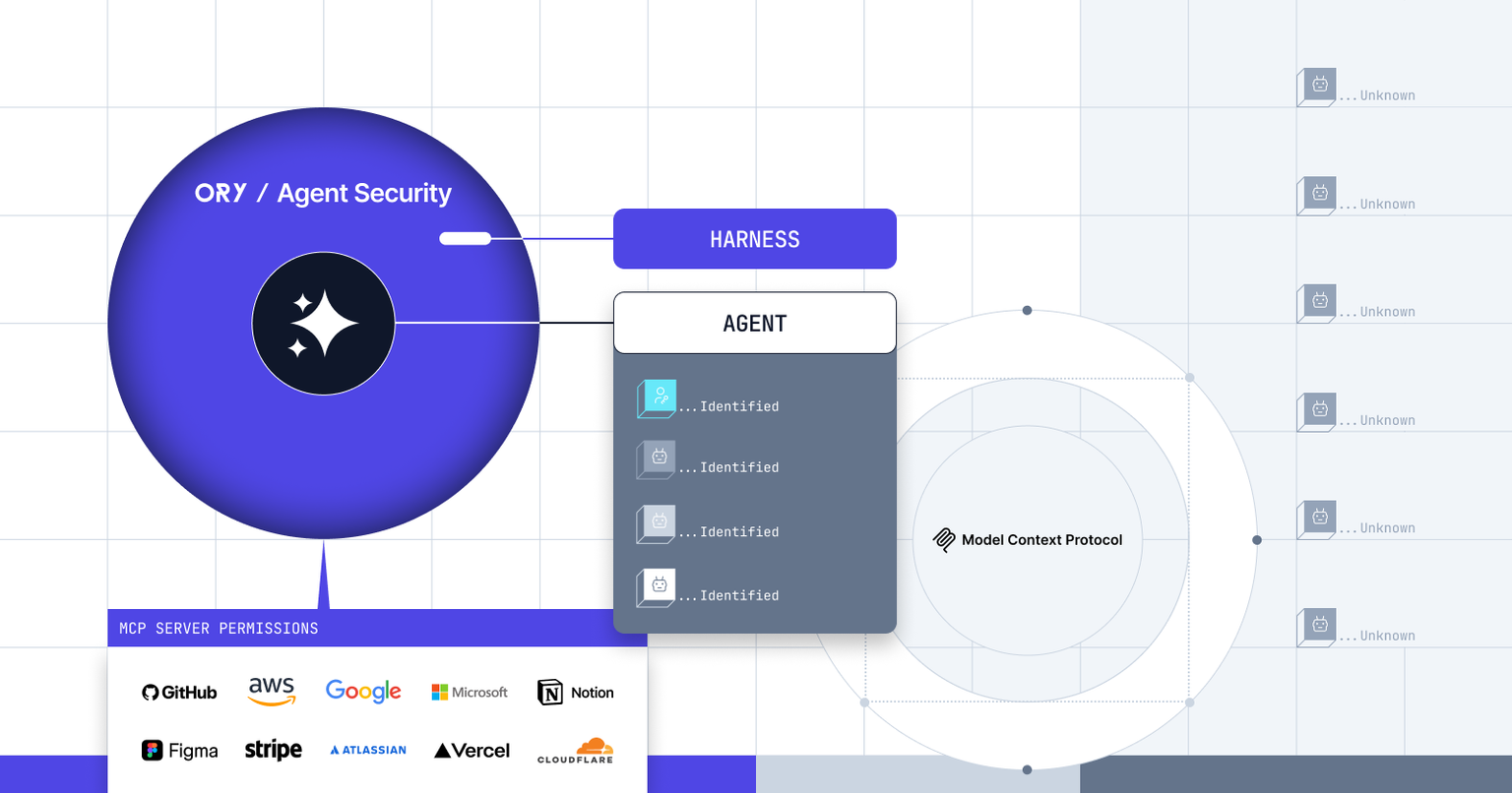
Ory Agent Security is a control plane that authenticates AI agents, authorizes each tool call, and records what agents do. It runs inside the agent harness through plugins and SDKs for coding agents such as Claude Code, OpenAI Codex, Gemini CLI, OpenClaw, and OpenCode, and for frameworks including CrewAI, LangGraph, LangChain, and Microsoft Agent Framework.
The product extends Ory’s identity stack to agents: Ory Kratos manages identities, Ory Hydra issues OAuth 2.1 and OpenID Connect tokens, and Ory Keto evaluates fine-grained permissions. Ory Talos provides secure machine to machine (M2M) and AI agent communication with hardened, non-human credentials. Ory Hydra also serves as the OAuth 2.1 authorization server for MCP servers. Ory can run on Ory Network or be self-hosted.
Key features include:
- Agent and sub-agent identity: Every agent and sub-agent authenticates with its own credentials before acting. Ory determines whether a session was started by a human, another agent, or a headless process, and records the delegation chain back to the user or upstream agent.
- Fine-grained tool authorization: Before an action runs, Ory checks the requested tool against Ory Keto using a Zanzibar-style permission model. Shell commands, file writes, web fetches, MCP tools, and API calls are governed by the same policy model used for human access.
- MCP server authorization: Ory adds OAuth 2.1 authorization for MCP servers, with PKCE verification and scoped bearer tokens. Access can be checked at the server level and, optionally, for individual tools within a server.
- Cross-server protection and tool pinning: Boundaries and dataflow controls between MCP servers prevent agents from escalating privileges across server instances. Tool and package pinning blocks unapproved changes to tool definitions.
- Graduated enforcement and revocation: Every agent action reaches a decision point before it runs. Teams can observe first and enforce later, by category or down to a single command, and cut off any agent immediately.
- Audit trails exported to SIEM: Each permission check, tool call, and sub-agent start is recorded with the session initiator, acting agent, attempted action, and deciding policy. Events are exported through OpenTelemetry, and the delegation chain remains in the record after tokens expire.
- Secure automated workflows: Ory Talos turns static API keys into short-lived capability tokens for service to service and agent to agent interactions. Token derivation and macaroon delegation enforces strict least-privilege guardrails.
Limitations (as reported by users on G2):
- Documentation gaps for self-hosting: Some users note that open source documentation leaves certain configuration fields and end-to-end setup scenarios under-described.
- Integration effort for composable services: Because Ory components run as independent services, self-hosted deployments require teams to connect them together.
- More than basic use cases need: One reviewer notes that simpler tools may be easier for very basic authentication projects.
2. Auth0 for AI Agents
Best for: Developers adding user auth and API access controls to AI agents
Strengths: Centralized fine-grained authorization and auditable agent actions
Things to consider: Users report costs rise as usage and features grow
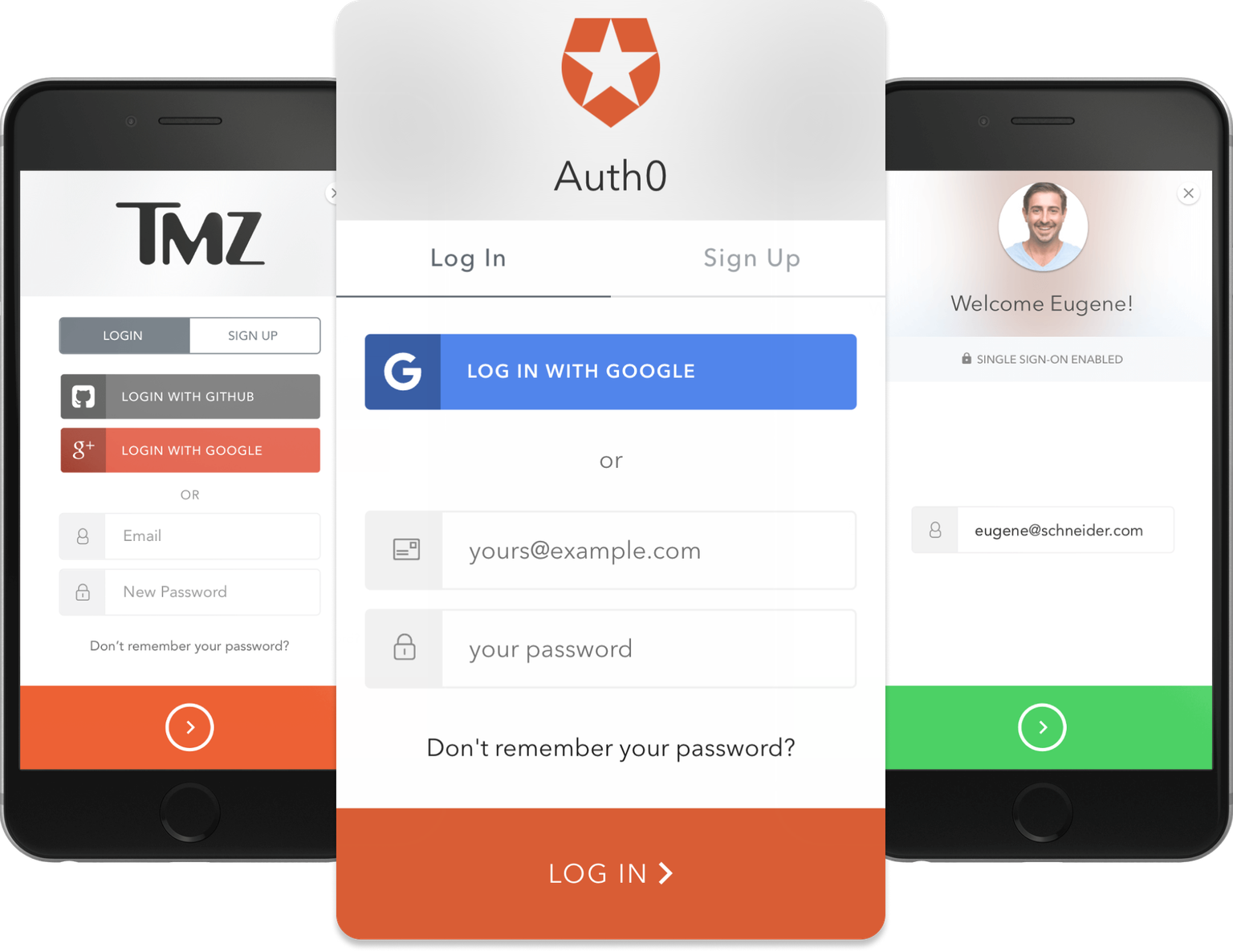
Auth0 for AI Agents extends Okta’s Auth0 customer identity platform to applications that include AI agents. It moves authentication, authorization, and permission logic for agents into a central identity layer, so agents can act on behalf of users without permissions hardcoded in application code.
The offering includes AI Identity for B2B and AI Identity for Commerce, and connects to Auth0 capabilities such as Fine-Grained Authorization, machine-to-machine authentication, and Token Vault.
Key features include:
- Centralized agent authorization: Permissions are defined once in the identity layer and applied across multiple systems. Policies can change without code changes to the agent.
- Distinct agent modelling: Auth0 provides patterns for modelling agents as distinct actors rather than as regular users, so each action acting on a user’s behalf is attributable.
- Fine-grained access to APIs: Agents request only the data and actions they need across first-party APIs, external services, and third-party AI platforms.
- Cross-application access: Agents can reach multiple applications and services under centralized policies, with traceable access across the stack.
- Audit trails and identity verification: Agent actions are tied to verified identities with audit trails, supporting regulatory requirements such as GDPR, HIPAA, and SOC 2.
- B2B and commerce offerings: AI Identity for B2B controls execution and authentication for customer-facing agents. AI Identity for Commerce covers verified checkout, loyalty integration, and fraud prevention in conversational assistants.
Limitations (as reported by users on G2):
- Pricing at scale: Reviewers report that costs rise quickly as user counts grow and that some advanced features require higher pricing tiers.
- Configuration complexity: Users describe many settings, rules, and configurations beyond basic authentication, which can be hard for newer teams.
- Learning curve: Some reviewers note that effective use requires significant technical expertise.
- Occasional responsiveness issues: One reviewer reports that the platform sometimes becomes unresponsive.
Source: Auth0
3. Aembit
Best for: Securing agent and workload access without stored secrets
Strengths: Blended identity, MCP gateway, short-lived scoped credentials
Things to consider: Few independent user reviews are available
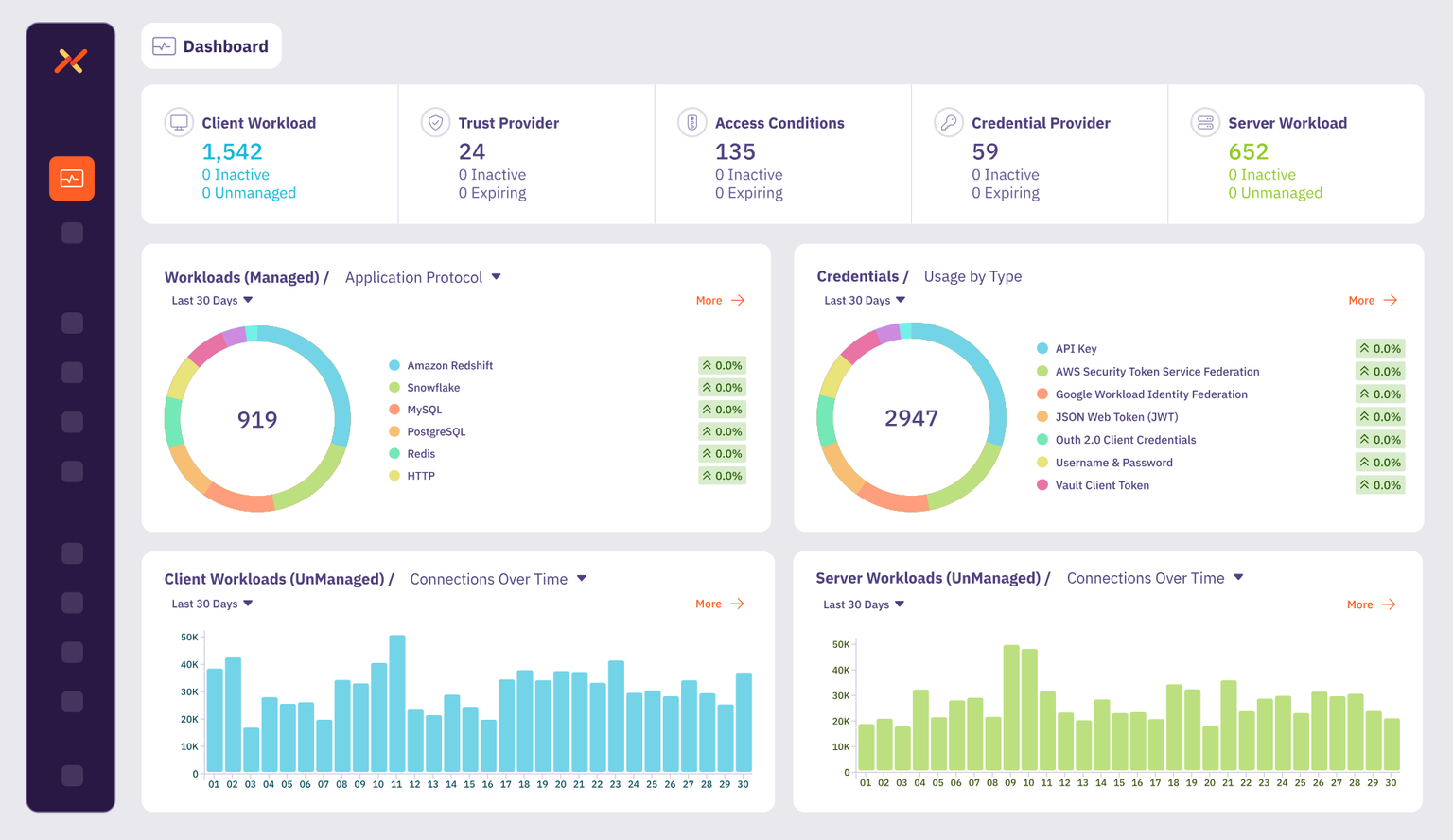
Aembit is an identity and access management platform for AI agents and non-human workloads. It verifies the identity of an agent or workload, evaluates policy and runtime context on each request, and issues short-lived, scoped credentials when access is approved, so agents do not store long-lived secrets.
The same control plane covers workforce, autonomous, B2B, consumer, and endpoint agents, along with workloads such as Kubernetes, AWS Lambda, and CI/CD pipelines. It works with OIDC, OAuth 2.1, SPIFFE, XAA/ID-JAG, and workload identity federation.
Key features include:
- Blended identity: For agents acting for a user, Aembit evaluates agent and user identity together in one access decision, so logs show which agent acted and for whom. Autonomous agents receive independently attested identities.
- Secretless credential issuance: Credentials are delivered just-in-time and per task, keeping downstream credentials out of the agent’s reach.
- MCP gateway: Aembit provides OAuth 2.1 authorization for MCP clients, including personal agents such as Claude and ChatGPT, with policy enforcement, token exchange, and credential isolation.
- Tool filtering and runtime policy: Authorization is decided per request based on user and task. Tool filtering allows or blocks individual tools, so agents cannot see tools outside their scope.
- Conditional access: Access rules use security posture, geography, and time windows, with integrations such as CrowdStrike and Wiz supplying posture signals.
- Kill switch and attributed logging: One click revokes an agent’s access without affecting the associated user’s sessions. Every access decision is logged against a single verified identity.
Limitations (based on publicly available sources):
- Limited independent reviews: Review platforms such as PeerSpot list few or no user reviews, so independent feedback on production use is limited.
- SaaS-delivered control plane: Aembit describes the platform as SaaS-delivered, so organizations with strict self-hosting requirements should confirm available deployment options.
- Additional layer in the access stack: Aembit positions itself to work alongside existing IAM, PAM, and secrets managers, which adds another component to manage.
Source: Aembit
Enterprise Agent Identity Governance and Privileged Access
4. Microsoft Entra Agent ID
Best for: Microsoft-centric enterprises governing agents with Entra controls
Strengths: Conditional Access, lifecycle governance, ID Protection for agents
Things to consider: Requires Agent 365 or Microsoft 365 E7 licensing
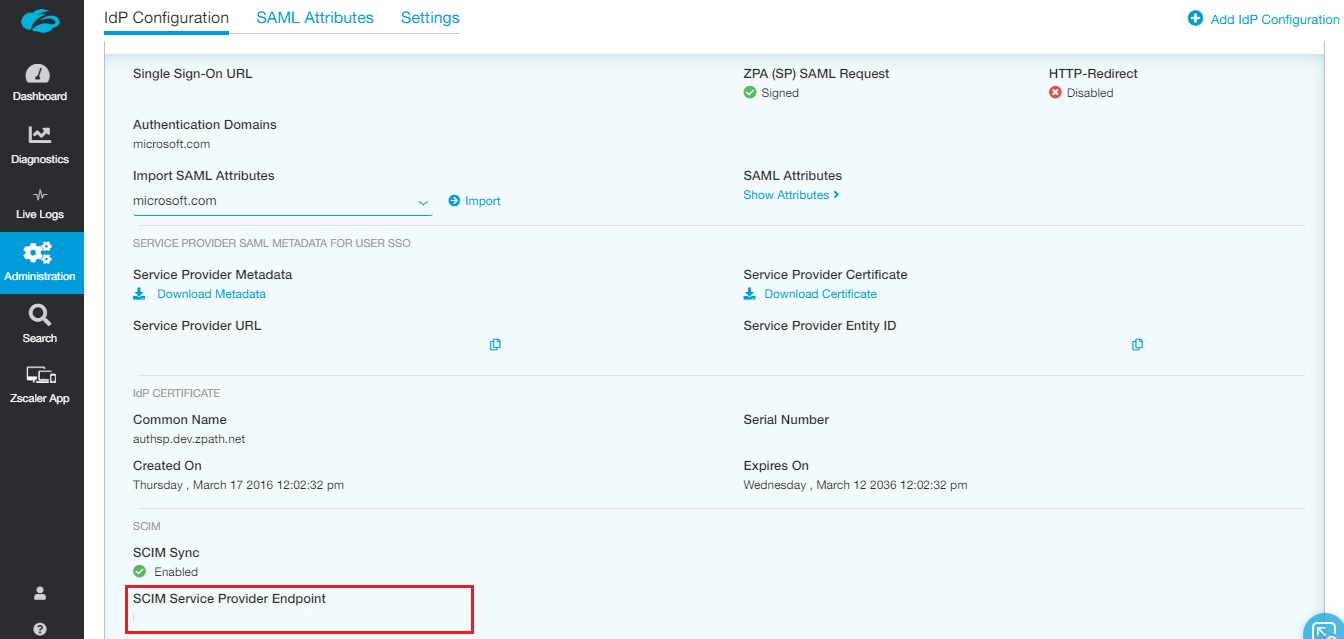
Microsoft Entra Agent ID extends Microsoft Entra identity and access management to AI agents. Agents receive their own managed identities, created from agent identity blueprints, instead of running under shared service accounts, and are governed with Entra Conditional Access, identity governance, ID Protection, and network controls.
Agent ID is generally available through Microsoft Agent 365 and Microsoft 365 E7. It supports agents built on Microsoft and third-party platforms, such as Amazon Bedrock and n8n, through the Entra ID Auth SDK sidecar or workload identity federation.
Key features include:
- Agent identities at scale: Agents are inventoried and provisioned with identities, including blueprints, tasks, and logs. Agent 365 provides a registry of agents from Microsoft and partner platforms.
- Conditional Access for agents: Real-time policies govern agent access to resources, block risky agents, and apply granular rules based on security attributes.
- Lifecycle governance: Governance automation covers deployment to expiration, assigns and maintains sponsors, and keeps access assignments time-bound and auditable.
- ID Protection for agents: Unusual or unauthorized agent activity is flagged, agents using compromised tokens can be traced, and compromised agents can be remediated.
- Network controls: Agent network activity is logged, web categorization applies to APIs and MCP servers, file transfers can be restricted, and malicious destinations are blocked.
- On-behalf-of agent coverage: Conditional Access and ID Protection for agents acting on behalf of users are evaluated against the user’s identity token, and governance covers the human-to-agent delegation relationship.
Limitations (as reported by users on G2, Microsoft Entra ID platform):
- Licensing cost: Reviewers describe premium tiers such as P2 as expensive, and note that using the full security feature set increases costs.
- Licensing complexity: Licensing issues appear repeatedly in user feedback.
- Fragmented portal experience: Some users report that the admin portal feels fragmented and that changes are not always clearly communicated.
Source: Microsoft
5. Okta for AI Agents

Best for: Enterprises discovering and governing workforce AI agents
Strengths: Shadow agent discovery, Agent Gateway, kill switch, XAA support
Things to consider: Some agent governance features remain in early access
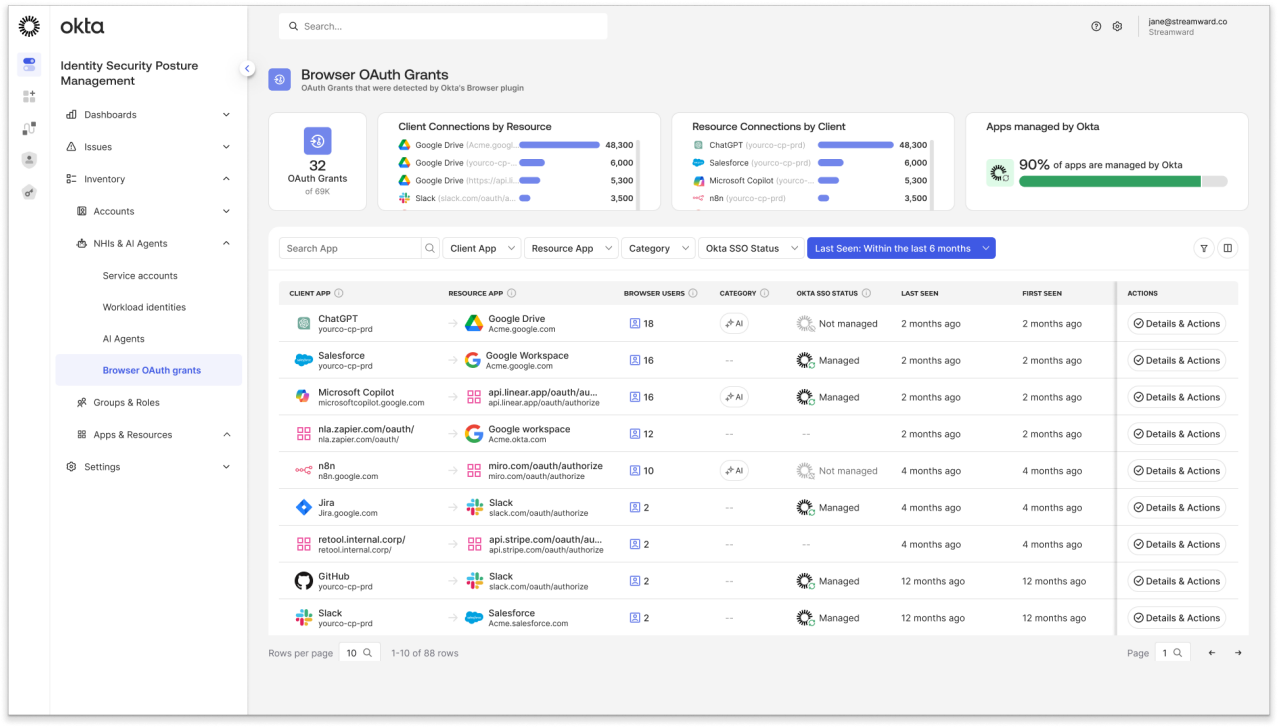
Okta for AI Agents treats AI agents as first-class identities in Okta’s Universal Directory. It discovers agents across browsers, endpoints, and cloud environments, registers them with human owners, issues short-lived cryptographic credentials, and places policy evaluation in the path of each tool call.
A Core edition provides agent registration, authentication, lifecycle provisioning, and SIEM audit logging for FedRAMP Moderate, FedRAMP High, and DoD Impact Level 5 environments.
Key features include:
- Shadow agent discovery and registry: Okta scans browsers, managed endpoints, and cloud environments for unvetted agents and unauthorized OAuth consent grants, then registers agents with owners and business purpose.
- Agent Gateway: The gateway verifies the agent, brokers credentials at runtime, and logs each tool call without code changes to agents or tools.
- Agent SSO and Cross App Access: Agents using the Cross App Access (XAA) protocol are managed with centralized single sign-on policies.
- Identity-scoped tool filtering: MCP tools are filtered based on the delegating user’s identity before the model runs, limiting which databases and APIs an agent can reach.
- Human-in-the-loop approvals: High-risk actions such as financial transactions, bulk exports, or permission changes require step-up approval before execution.
- Lifecycle governance and kill switch: Access requests and user access certifications cover agents, with resource access certifications in early access. A kill switch revokes an agent’s access with a full audit trail.
Limitations (as reported by users on G2, Okta platform):
- Pricing for advanced features: Reviewers note that pricing can become expensive, especially for smaller organizations or when many advanced features are needed.
- Setup and configuration complexity: Users report difficult setup and complex configuration.
- Usability for non-technical users: Some reviewers say the experience could be simpler for people less familiar with technology.
Source: Okta
6. Idira Secure AI Agents
Best for: Applying privileged access controls to enterprise AI agents
Strengths: Agent registry, identity broker, just-in-time access, kill switch
Things to consider: PAM heritage can mean complex architecture and setup
Idira Secure AI Agents is the agentic identity security component of Idira, the identity security platform Palo Alto Networks built on CyberArk after completing that acquisition. It applies privileged access management controls to AI agents, covering discovery, task-scoped access, and auditing of agent actions.
The Idira platform covers human, machine, and agentic identities, and its agent identity capabilities are also available natively to Prisma AIRS customers.
Key features include:
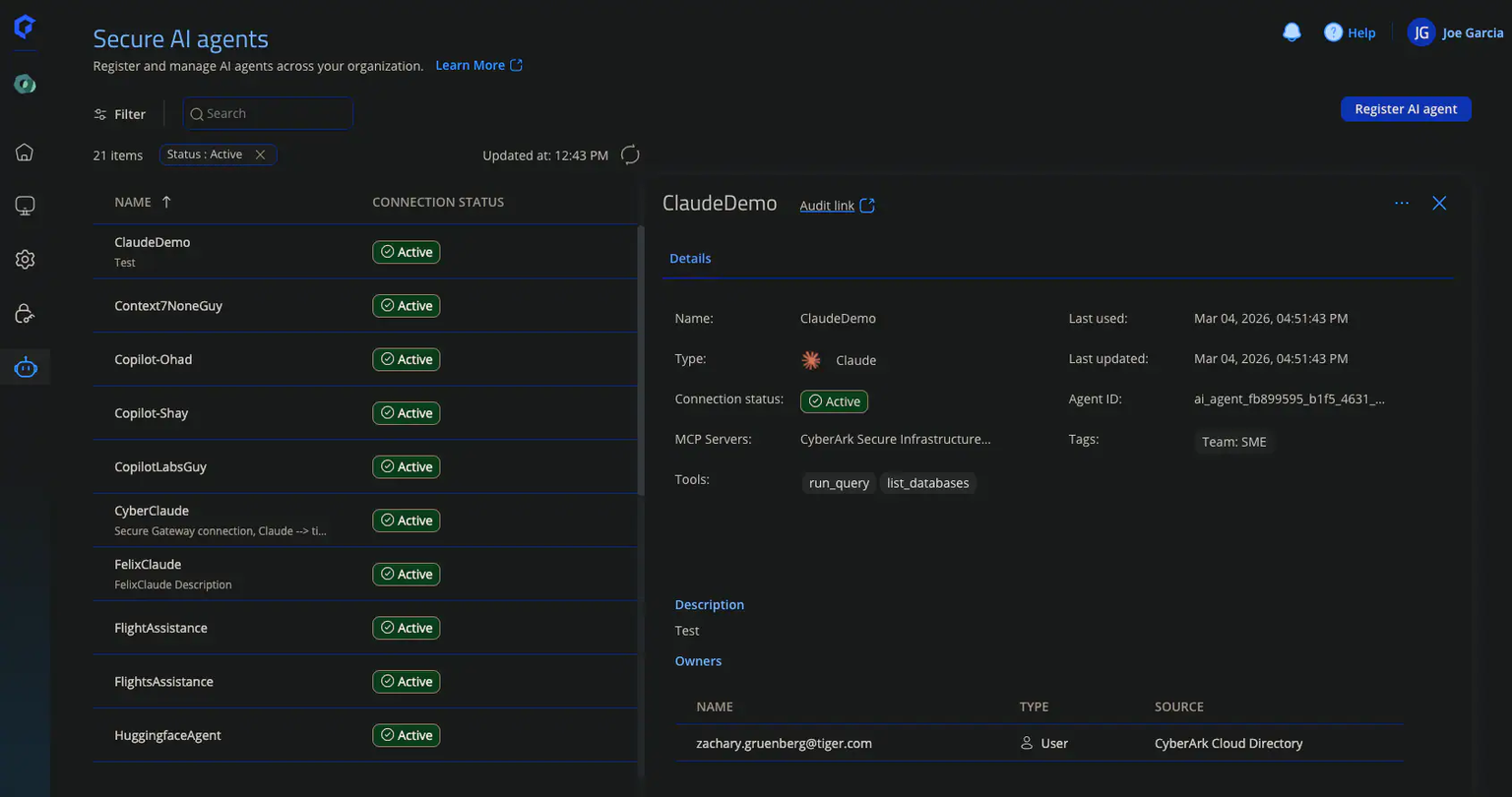
- Agent discovery and registry: The product scans SaaS, cloud, and developer environments for active agents and onboards them into a centralized repository.
- Agent context: Each agent is enriched with ownership, purpose description, status, and permission levels.
- Agent Identity Broker: A dedicated broker enforces dynamic access policies, granting agents access only for the duration of a task and revoking permissions when the task is done.
- Kill switch: When an agent deviates from its mission, the broker can deny access in real time.
- Lifecycle management: Automated ownership workflows cover onboarding through decommissioning, with visibility into which permissions are in use.
- Audit and governance: Audits show which user initiated an agent, which agent identity acted, which tools ran, and which resources were touched, along with access reviews.
Limitations (as reported by users on G2, CyberArk Privileged Access Manager):
- High cost: Reviewers describe the PAM product as one of the more expensive options in its category.
- Complex architecture: Users report that administration and maintenance can be difficult due to the number of components.
- Longer implementation projects: Some reviewers note that projects take longer because of the multiple components involved.
Source: Palo Alto Networks
7. SailPoint Agentic Fabric
Best for: Identity governance teams adding AI agents to access reviews
Strengths: Agent aggregation, multi-owner accountability, access reviews
Things to consider: Users report licensing complexity and costly customization
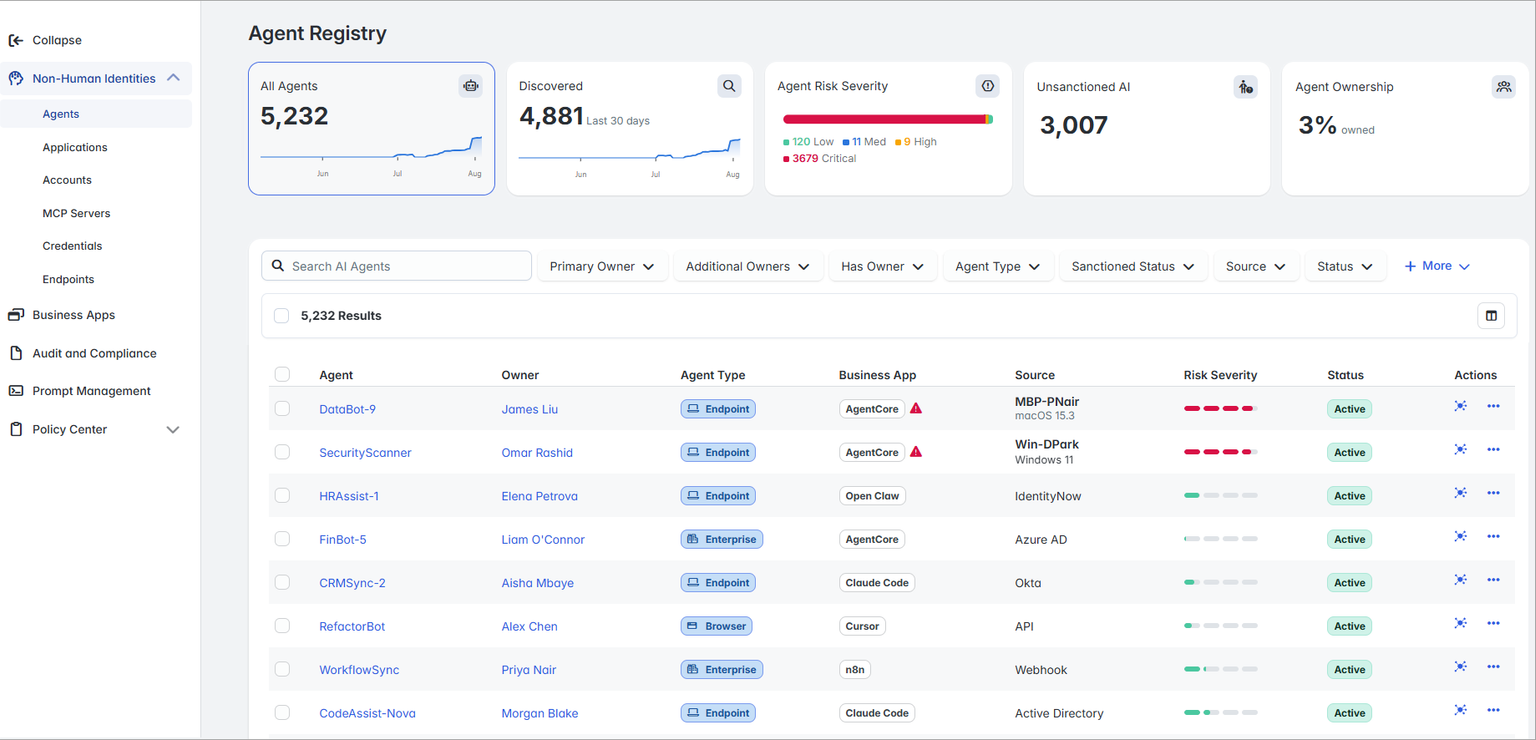
SailPoint Agent Identity Security, which SailPoint has evolved into SailPoint Agentic Fabric, brings AI agents into SailPoint’s identity governance processes. It aggregates agents from cloud and agent platforms, registers each with a unique identity, and enriches it with business and access context.
The product unifies AI agents, the people who use them, and the tools they access in one governed view.
Key features include:
- Agent aggregation: Direct connections to AWS, Azure, Google Cloud Platform, Salesforce, and other systems onboard AI agents and other non-human identities automatically.
- Ownership and succession: One or more human owners can be assigned to each agent, with ownership updated automatically as roles change.
- Access reviews and revocation: Agent access is reviewed against business needs, and inappropriate or excessive permissions can be revoked.
- Indirect access detection: The product detects when human identities gain new entitlements or data access through AI agents.
- Shadow AI visibility: Unmonitored AI tool usage is surfaced, with remediation that guides users to approved alternatives.
- Tool and credential governance: Service accounts, credentials, and secrets used by agents are governed from creation to retirement. A SailPoint MCP server lets third-party agents interact with the platform.
Limitations (as reported by users on G2, SailPoint platform):
- Customization costs: Reviewers note that customization often requires expert assistance and additional cost.
- Licensing clarity: Some users report that licensing lacks a clear structure, particularly for certain modules.
- Caching issues: Users mention recurring cache-related issues.
Source: SailPoint
AI Agent Runtime Security and Governance Platforms
8. Zenity

Best for: Enterprises governing SaaS, cloud, and endpoint AI agents
Strengths: Agent discovery, AISPM, intent-based detection and response
Things to consider: Few independent user reviews published so far
Zenity is a security and governance platform for AI agents running in SaaS platforms, homegrown cloud environments, and end-user devices. It discovers agents, assesses their configurations and permissions, enforces guardrails, and detects threats by analyzing each agent’s execution path.
Supported platforms include Microsoft Copilot Studio, Microsoft 365 Copilot, Salesforce Agentforce, ServiceNow, ChatGPT Enterprise, Claude Enterprise, Amazon Bedrock, and Google Vertex AI.
Key features include:
- AI observability: Zenity identifies which agents exist, who owns them, what they can access, and how they behave across the environment.
- AI security posture management: Guardrails flag risky configurations and over-permissioned agents before they reach runtime.
- Agentic identity and boundaries: Policies define what agents are allowed to do, steering them toward appropriate actions and stopping harmful ones.
- MCP security: The platform covers MCP connections as part of the agent’s tool layer.
- Intent-based detection and response: Zenity examines tool calls, memory access, data usage, and control flow to identify malicious or unintended outcomes, with detections mapped to OWASP and MITRE ATLAS.
- Correlated threat signals: Configuration, permissions, and runtime behavior are correlated to surface risk with execution context for incident response.
Limitations (based on publicly available sources):
- Limited independent reviews: Review platforms such as Gartner Peer Insights list very few user reviews.
- Platform-dependent coverage: Depth of coverage depends on Zenity’s integrations with each supported agent platform.
9. Prisma AIRS

Best for: Palo Alto Networks customers securing AI apps, models, and agents
Strengths: AI gateway, runtime security, red teaming, agent identity
Things to consider: Credit-based pricing and vCPU-based runtime sizing
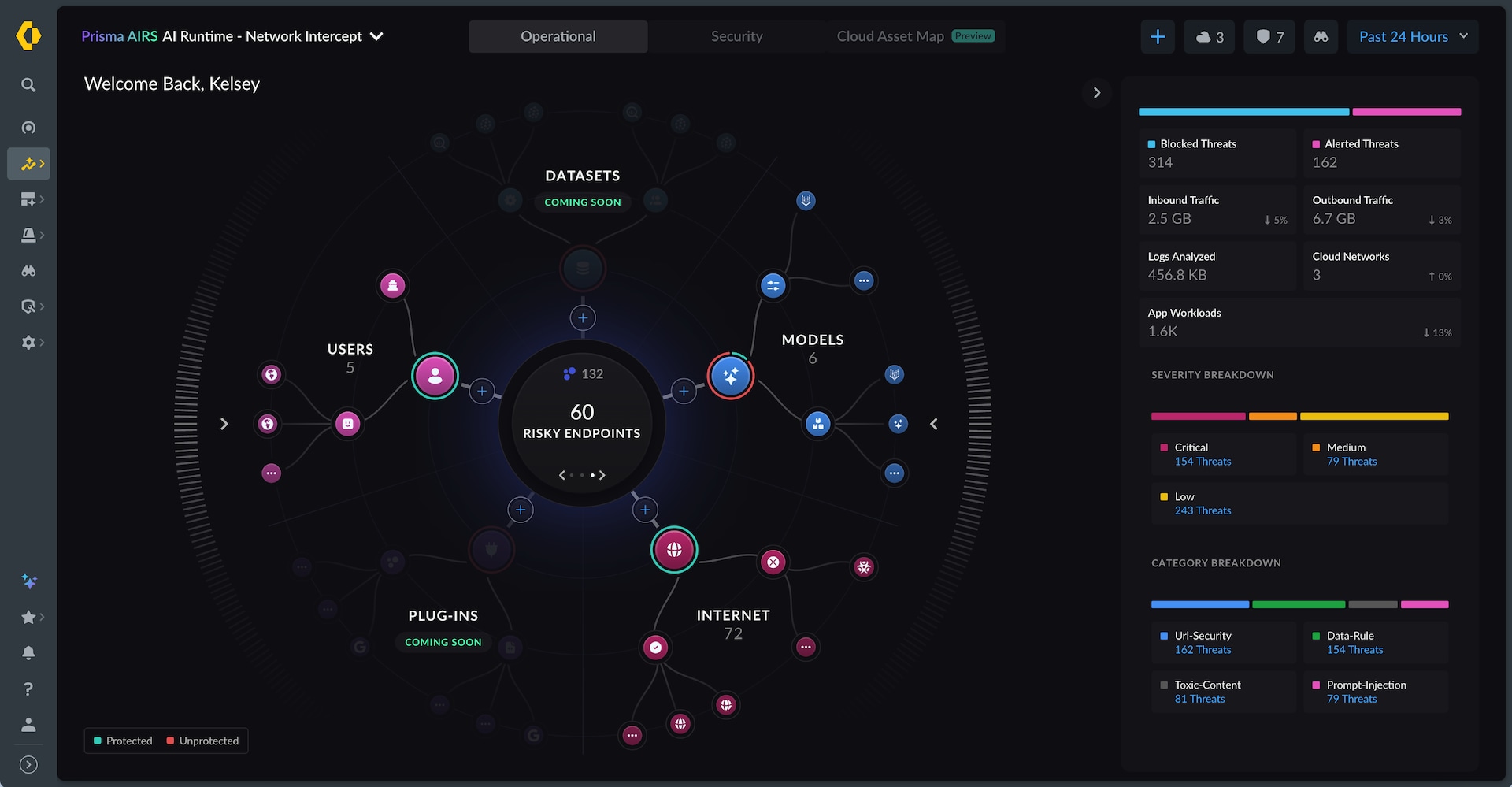
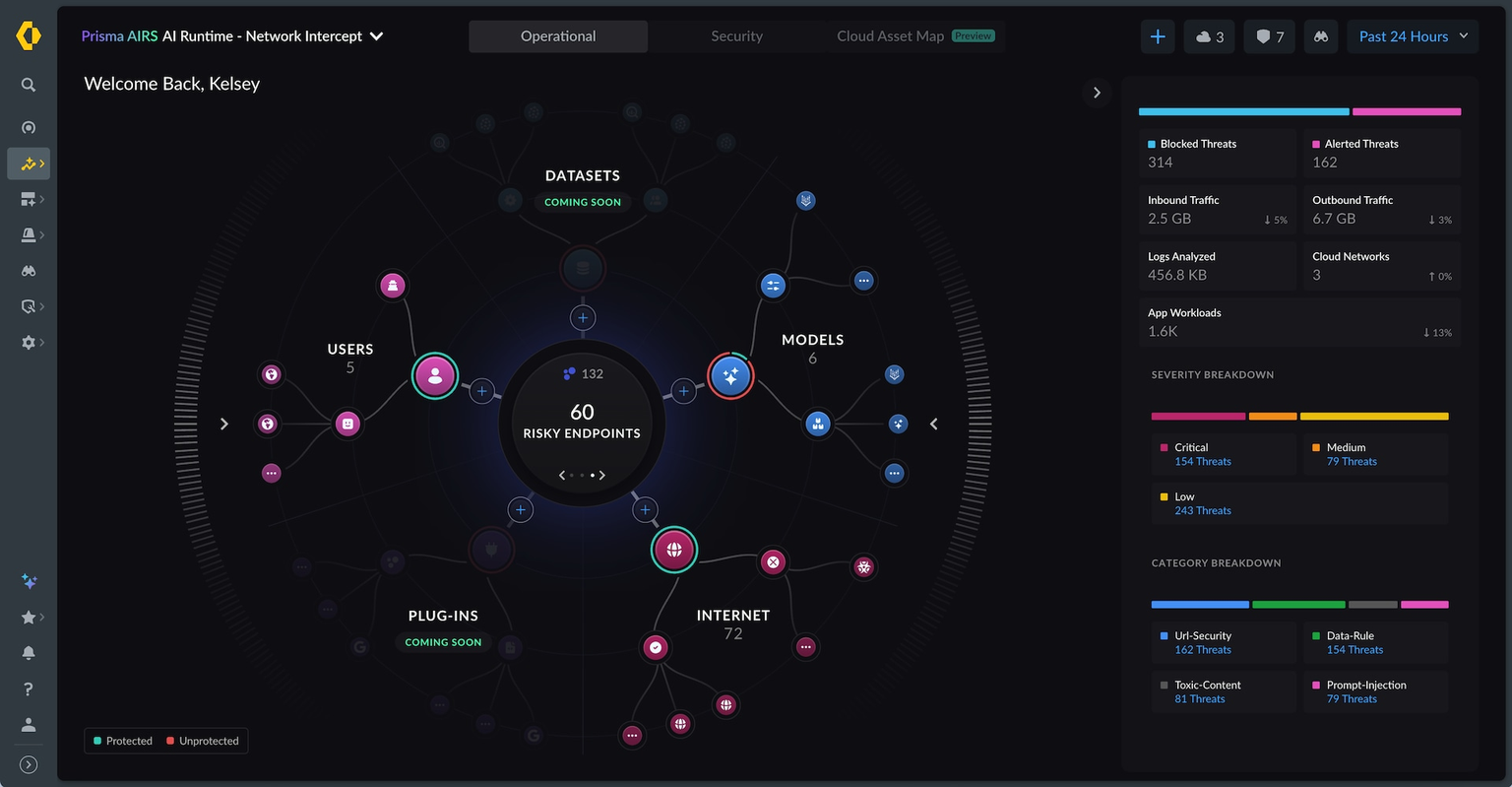
Prisma AIRS is Palo Alto Networks’ AI security platform. It discovers AI applications and agents, assesses AI risk, protects AI interactions at runtime, and governs agents, covering models, data, and agents from development to deployment.
It offers Network Intercept and API Intercept deployment modes and integrates with Palo Alto Networks firewalls and SASE products.
Key features include:
- AI Gateway: A control plane discovers, governs, and secures AI activity across the enterprise.
- AI runtime security: Traffic is monitored for prompt injection, sensitive data exposure, malicious URLs, and toxic content.
- AI agent security: Dedicated controls address risks such as memory manipulation and tool misuse.
- AI red teaming: Simulated attacks test AI agents and applications for weaknesses before deployment.
- AI supply chain security: Third-party models are scanned for tampering, malicious scripts, and deserialization attacks.
- Posture management and agent identity: AI posture management covers data, agents, and model access, and agent identity security applies identity controls to agent deployments.
Limitations (based on publicly available sources):
- Credit-based pricing: Costs depend on the selected service plan and usage level.
- Runtime sizing: Documentation lists per-vCPU transaction limits and minimum vCPU requirements for network intercept deployments.
- Region constraints: Documentation notes region restrictions for management and log storage in some network intercept deployments.
Source: Palo Alto Networks
10. Noma Security
Best for: Security teams governing agents across endpoint, SaaS, and cloud
Strengths: Runtime behavior control, agent access control, AI red teaming
Things to consider: Few independent user reviews published yet
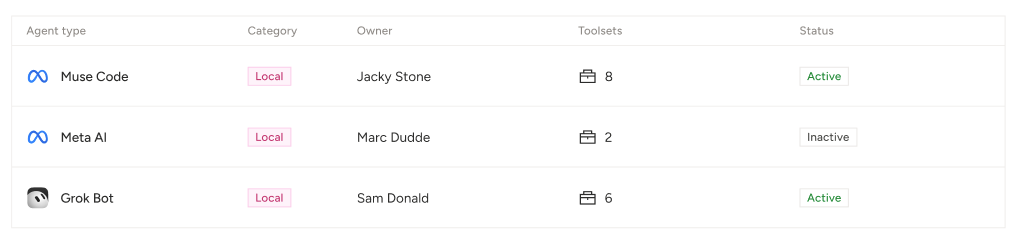
Noma Security is an agent security and governance platform for agents running on endpoints, in SaaS platforms, and in cloud environments. It weighs each agent action against the full session, including who the agent acts for, what data it can reach, and how it normally behaves.
Its Open Enforcement approach defines policy once and applies it at existing agent control points.
Key features include:
- AI detection and response (AI-DR): Noma can stop destructive actions, steer an agent, alert a human, mask data, or trigger a kill switch.
- Agent access control: Teams approve, review, or block agents, MCP servers, and skills, and scope actions by user, team, or tool sensitivity.
- AI security posture management: The platform discovers agents, MCP servers, skills, and tools, and surfaces risk.
- MCP security: MCP servers, tools, and connections are inventoried and secured.
- AI red teaming: Multi-turn attacks test AI applications for weaknesses.
- AI supply chain security: Models, tools, data, and dependencies are checked for risks and misconfigurations.
Limitations (based on publicly available sources):
- Limited independent reviews: Gartner Peer Insights lists no user reviews yet.
- Usage-based pricing: Pricing varies with the number of protected endpoints, enabled features, and support level.
- Dependence on existing control points: Enforcement plugs into gateways and platforms already deployed, so coverage depends on that infrastructure.
Source: Noma Security
11. Lakera

Best for: Teams adding runtime guardrails to LLM apps and agents
Strengths: Prompt attack detection, data leak prevention, red teaming
Things to consider: Policies may need tuning to limit false positives
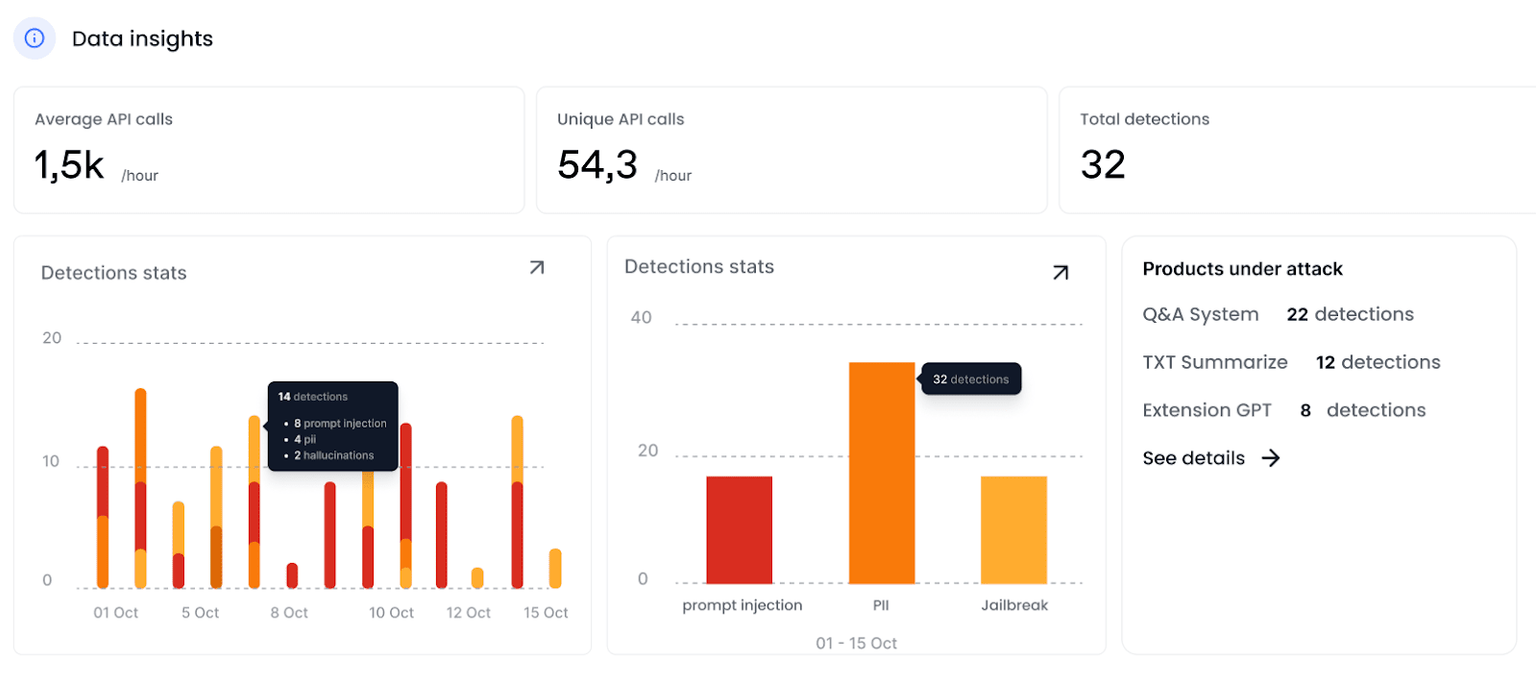
Lakera, now part of Check Point, provides runtime security for generative AI applications and agents. Its AI Agent Security product screens model inputs and outputs for prompt attacks and data leakage, while Workforce AI Security governs employee AI usage.
The platform is API-first and supports more than 100 languages.
Key features include:
- Prompt attack prevention: Lakera detects direct and indirect prompt injection and jailbreak attempts in real time.
- Data leakage protection: Context-aware checks stop sensitive data from appearing in prompts and responses.
- Workforce AI security: Shadow AI is discovered across apps and browsers, with policy controls by user, app, and action.
- AI red teaming: Risk-based testing simulates direct and indirect attacks, with remediation guidance.
- Central policy control: Policies apply across applications without code changes.
- Multilingual and multimodal coverage: Protection extends across languages and modalities, independent of the underlying model.
Limitations (based on publicly available sources):
- Policy tuning: Lakera’s documentation recommends tuning policies rather than using the strictest default, since stricter settings can flag more content.
- Input preprocessing sensitivity: Documentation notes that artifacts added during preprocessing can cause false positives.
- Limited independent reviews: PeerSpot lists no user reviews yet.
Source: Lakera
12. Proofpoint Agentic AI Security
Best for: Enterprises auditing whether agent actions match user intent
Strengths: Intent-based access control, MCP governance, forensic audit
Things to consider: New offering with few independent user reviews
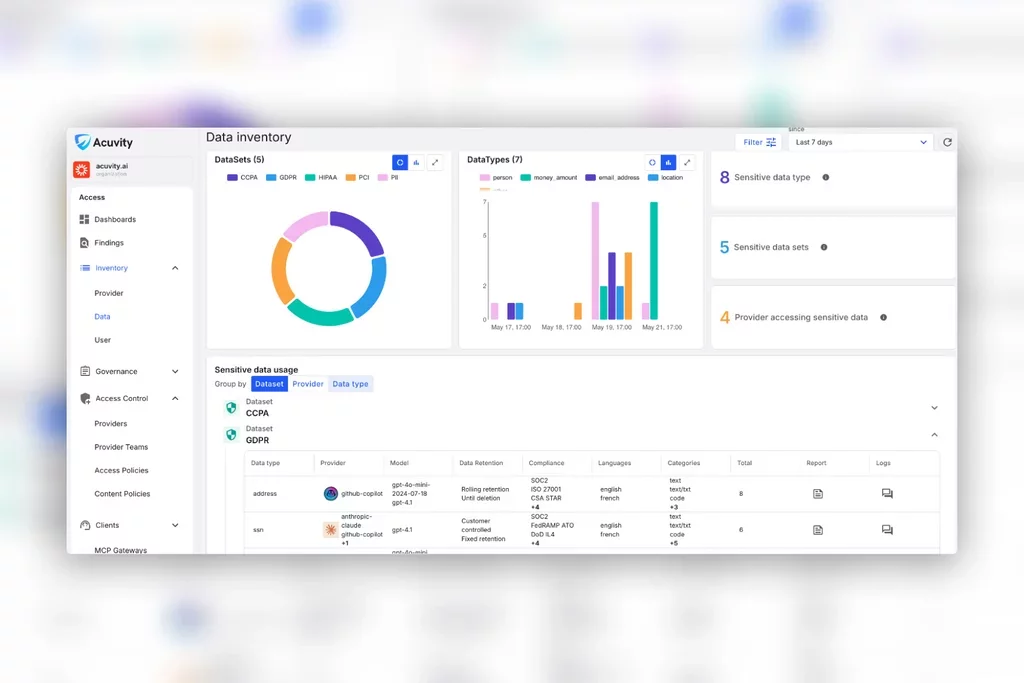
Proofpoint Agentic AI Security governs autonomous agents by monitoring what they can access, what they are asked to do, and what they actually do. It evaluates agent actions against the original user request and approved task scope, in addition to identity and permissions.
The product is part of Proofpoint’s AI security portfolio, alongside offerings for employee AI usage and enterprise MCP security.
Key features include:
- Agent and MCP discovery: Custom and managed agents are discovered along with their toolchains, MCP connections, and external services.
- Runtime observability: Telemetry across multi-step and multi-agent workflows identifies behavioral drift.
- Intent-based access control (IBAC): Agent actions that go beyond the original request are flagged, even when permissions allow them.
- MCP governance: Authentication and content inspection are enforced at the MCP boundary for tool connections.
- AI supply chain visibility: A registry tracks the tools, services, and MCP servers agents depend on, with risk assessment.
- Forensics and audit: Each action is reconstructed from user request to outcome, with an audit trail for investigations.
Limitations (based on publicly available sources):
- Limited independent reviews: No product-specific user reviews were found on major review platforms.
- Flagging versus blocking: IBAC is described as flagging out-of-scope actions, so teams should confirm which actions are blocked automatically.
- Separate products for full coverage: Workforce AI usage and enterprise MCP security are offered as separate Proofpoint products.
Source: Proofpoint
Conclusion
Securing agentic AI requires a comprehensive security strategy that combines agent identity management, strict access controls, and real-time runtime protection. As autonomous agents become increasingly integrated into business workflows, establishing robust authorization boundaries and continuous monitoring is essential. Implementing multi-layered governance ensures organizations can safely harness the capabilities of AI agents while protecting sensitive data and systems.