Identity and Access Management (IAM): Complete 2027 Guide
What IAM is, how it works, the main types and standards, and how to choose and implement the right one.
What Is Identity and Access Management (IAM)?
Identity and Access Management (IAM) is a security framework of policies, processes, and technologies that ensures the right individuals and non-human entities have appropriate access to technology resources. IAM also helps organizations verify identities, enforce access policies, and maintain visibility into how resources are accessed.
Modern IAM platforms also extend beyond human users to manage service accounts, workloads, APIs, and other non-human identities. This is increasingly important as organizations adopt cloud infrastructure, automated workflows, and AI agents that require controlled access to enterprise resources.
Types of IAM:
- Workforce IAM: Secures employee and contractor access through SSO, MFA, role-based permissions, and automated identity lifecycle management.
- Customer identity and access management (CIAM): Protects consumer accounts at scale while enabling convenient registration, authentication, and account recovery.
- B2B identity and access management (B2B IAM): Secures access for business customers and partners through enterprise SSO, delegated administration, and tenant-specific controls.
- Non-human identity (NHI) management: Secures applications, workloads, and AI agents through credential lifecycle management and least-privilege access.
Core components of an IAM framework:
- User management systems and the identity lifecycle: Automate identity creation, permission updates, and access removal as users join, change roles, or leave.
- Single sign-on (SSO) and federated identity: Enable access to connected applications through a single authentication experience and established trust relationships.
- IAM authentication methods: MFA, passwordless, and passkeys: Strengthen identity verification using multiple factors, cryptographic credentials, and risk-based requirements.
- Identity governance, access reviews, and audit logs: Validate access rights, enforce approvals and segregation of duties, and maintain records for investigations and compliance.
The Crucial Role of IAM In Identity Security and Compliance
IAM has become a core component of cybersecurity and access management strategies. Let’s explore the role it plays in a modern organization’s security posture.
Reduces the Risk of Credential-Based Attacks and Data Breaches
Compromised credentials are a common entry point for attackers seeking unauthorized access to enterprise systems. IAM reduces this risk by enforcing strong authentication, restricting permissions, and monitoring suspicious access activity. Capabilities such as MFA, conditional access, and risk-based authentication make it harder for attackers to exploit stolen passwords or access sensitive resources from unfamiliar devices and locations.
IAM also limits the potential impact of compromised accounts through least-privilege access controls. Users receive only the permissions necessary for their responsibilities, while automated provisioning and deprovisioning help prevent former employees and inactive accounts from retaining access. Continuous monitoring and periodic access reviews can identify excessive privileges, unusual sign-in patterns, and other identity-related risks before they lead to larger incidents.
Supports Compliance With GDPR, HIPAA, SOX, PCI DSS, and Financial Services Regulations
Many regulatory frameworks require organizations to protect sensitive information, restrict unauthorized access, and maintain evidence of security controls. IAM helps organizations address these requirements through centralized access policies, authentication controls, audit trails, and periodic access certifications. It also provides visibility into who can access regulated data and whether those permissions remain appropriate.
IAM supports compliance with several major regulations and standards:
- GDPR: Helps restrict access to personal data, enforce appropriate security measures, and maintain accountability for data processing activities.
- HIPAA: Supports access controls, unique user identification, authentication, and audit logging for systems containing electronic protected health information (ePHI).
- SOX: Helps enforce segregation of duties, maintain access records, and control privileged access to financial reporting systems.
- PCI DSS: Supports requirements for restricting access to cardholder data, assigning unique identities, enforcing MFA where required, and monitoring access to payment environments.
- Financial services regulations: Helps institutions implement access governance, privileged access controls, identity verification, and audit capabilities required by applicable frameworks, such as the NYDFS Cybersecurity Regulation and DORA.
IAM does not guarantee regulatory compliance on its own. Organizations must configure controls correctly, maintain supporting policies, and demonstrate that access restrictions operate effectively. However, centralized IAM reduces the manual effort required to gather audit evidence and identify compliance gaps.
Cuts IT Workload and Improves the Login Experience
Managing user accounts manually across multiple applications creates significant administrative overhead. IT teams must provision accounts, assign permissions, reset passwords, process access requests, and remove access when employees leave. IAM automates many of these processes through identity lifecycle workflows, directory integrations, and role-based provisioning, reducing repetitive tasks and the likelihood of configuration errors.
IAM also improves the user experience by simplifying authentication and access requests. SSO reduces the number of separate credentials employees need to manage, while passwordless authentication and self-service account recovery can reduce login friction and password-related support tickets. Automated access workflows help users obtain approved permissions faster without requiring IT administrators to handle every request manually.
How IAM Works
Identity and Access Management (IAM) works by establishing digital identities, verifying their authenticity, and controlling which resources they can access. It connects identity providers, enterprise directories, applications, and security policies to create a centralized framework for managing access. IAM systems evaluate identity information, authentication factors, assigned permissions, and contextual signals before granting or denying access.
The IAM process typically involves five stages:
- Identity creation and provisioning: When a user joins an organization or a new service account is created, the IAM system establishes a digital identity. It assigns attributes such as department, job role, and group membership, which help determine initial access permissions.
- Authentication: When an identity attempts to access an application or system, IAM verifies its legitimacy. Authentication methods may include passwords, MFA, passkeys, biometrics, or cryptographic credentials. SSO can extend an authenticated session across multiple integrated applications.
- Authorization: After authentication, IAM evaluates whether the identity has permission to access the requested resource. Authorization decisions typically rely on RBAC, ABAC, least-privilege policies, and contextual conditions such as device security posture or location.
- Access monitoring and auditing: IAM platforms record authentication attempts, access decisions, and permission changes. Security teams can analyze these events to identify suspicious behavior, investigate incidents, and maintain evidence for compliance audits.
- Access updates and deprovisioning: As employees change roles or leave the organization, IAM workflows modify or revoke their permissions. Automated lifecycle management helps prevent orphaned accounts, excessive privileges, and unauthorized access through inactive identities.
How IAM handles authentication and authorization:
- Authentication with IAM: IAM verifies an identity before allowing access to a system or application. When a user signs in, the IAM platform checks their credentials using methods such as passwords, MFA, passkeys, or biometrics.
- Authorization with IAM: After authentication, IAM determines which resources the verified identity can access and what actions it can perform. It evaluates assigned roles, permissions, resource attributes, and contextual access policies using models such as RBAC or ABAC.
Core Components of an IAM Framework
User Management Systems and the Identity Lifecycle
User management systems handle the creation, modification, and removal of digital identities across an organization's applications and infrastructure. They typically integrate with HR platforms, enterprise directories, and cloud services to maintain consistent identity records. Automated provisioning ensures that new users receive appropriate access based on their roles, while centralized management reduces duplicate accounts and inconsistent permissions.
The identity lifecycle is commonly organized around the Joiner, Mover, Leaver (JML) model:
- Joiner: Creates accounts and provisions access when an employee, contractor, or other user joins the organization.
- Mover: Updates permissions when a user changes departments, responsibilities, or employment status.
- Leaver: Revokes access, disables accounts, and terminates active sessions when a user leaves the organization.
Automating these workflows helps prevent orphaned accounts, excessive privileges, and delays in access removal. Modern IAM systems can also manage non-human identity lifecycles, including service accounts and application identities, although these require different ownership and credential management processes.
Single Sign-On (SSO) and Federated Identity
Single Sign-On (SSO) allows users to authenticate once and access multiple connected applications without entering separate credentials for each service. An identity provider (IdP) handles authentication and issues trusted assertions or tokens that applications use to recognize the authenticated user. This simplifies access management while enabling organizations to enforce consistent authentication requirements across their application environments.
Federated identity extends this model across organizational or security boundaries by establishing trust between identity providers and external applications or organizations. Common standards include SAML 2.0 and OpenID Connect (OIDC), which support federated authentication. Federation reduces the need to maintain separate credentials in every application and helps organizations provide controlled access to SaaS platforms, business partners, and external users.
IAM Authentication Methods: MFA, Passwordless and Passkeys
Authentication verifies that a user or another identity is who it claims to be before access is granted. IAM platforms support multiple authentication methods, allowing organizations to apply different levels of assurance based on resource sensitivity, user risk, and security requirements. Strong authentication reduces reliance on passwords, which can be stolen through phishing, credential stuffing, and other attacks.
Common IAM authentication methods include:
- Multifactor authentication (MFA): Requires two or more independent authentication factors, such as a password and a hardware security key, to strengthen identity verification.
- Passwordless authentication: Allows users to authenticate without entering a traditional password, using methods such as passkeys, hardware security keys, or one-time codes.
- Passkeys: Use FIDO2 and WebAuthn standards to authenticate through cryptographic key pairs. They are phishing-resistant when properly implemented because credentials are bound to the legitimate service.
- Adaptive authentication: Adjusts authentication requirements based on contextual signals such as device posture, sign-in location, unusual behavior, or assessed session risk.
Organizations can combine these methods with conditional access policies to require stronger verification for sensitive applications or high-risk sessions. However, authentication must be supported by effective authorization and session management to prevent users from gaining access beyond their assigned permissions.
Identity Governance, Access Reviews and Audit Logs
Identity Governance and Administration (IGA) helps organizations define, manage, and verify access rights throughout the identity lifecycle. While IAM authentication and authorization controls determine how identities access resources, identity governance focuses on whether those permissions are appropriate, who approved them, and whether they remain justified.
Key identity governance capabilities include:
- Access reviews and certifications: Require managers, application owners, or other designated reviewers to periodically verify that users still need their assigned permissions.
- Access request and approval workflows: Provide structured processes for requesting, approving, modifying, and revoking access.
- Segregation of duties (SoD): Identifies and helps prevent conflicting permissions, such as allowing the same employee to create and approve financial transactions.
- Role and entitlement management: Organizes access permissions into manageable roles and entitlements to simplify provisioning and reduce privilege accumulation.
- Audit logging and reporting: Maintains records of authentication events, access changes, approvals, and other identity-related activities to support investigations and compliance requirements.
Understanding IAM Standards and Protocols
Security Assertion Markup Language (SAML 2.0)
Security Assertion Markup Language (SAML) 2.0 is an XML-based standard used primarily for federated authentication and enterprise Single Sign-On (SSO). It allows an identity provider (IdP) to authenticate a user and send a digitally signed assertion to a service provider (SP), confirming the user's identity and potentially including relevant attributes.
SAML is widely used to connect corporate identity systems with SaaS applications, enabling employees to access multiple services through a centralized authentication process. Organizations can enforce MFA and other authentication policies at the identity provider while reducing the need for separate application passwords.
OAuth 2.0 for Delegated Authorization
OAuth 2.0 is an authorization framework that allows applications to access protected resources on behalf of users or through their own service identities without sharing user passwords. Instead, an authorization server issues access tokens that represent specific permissions, or scopes, granted to the requesting application.
OAuth 2.0 is commonly used for API access, third-party application integrations, and machine-to-machine communication. For example, an application can receive permission to access selected files in a cloud storage service without obtaining the user's credentials. Security depends on appropriate token handling, limited scopes, and secure authorization flows.
OpenID Connect (OIDC) for Modern Authentication
OpenID Connect (OIDC) is an identity layer built on top of OAuth 2.0 that provides standardized user authentication. It allows applications to verify a user's identity through an identity provider and receive an ID token containing information about the authentication event and authenticated identity.
OIDC is commonly used for SSO in modern web applications, mobile applications, and cloud-native environments. Unlike OAuth 2.0 alone, which focuses on delegated authorization, OIDC explicitly supports authentication. Its use of JSON Web Tokens (JWTs) and web-friendly integration patterns makes it particularly suitable for modern application architectures.
System for Cross-Domain Identity Management (SCIM)
System for Cross-Domain Identity Management (SCIM) is a standard designed to automate identity provisioning and management between systems. It defines REST-based APIs and standardized identity schemas that allow IAM platforms to create, update, disable, and manage users and groups across connected applications.
SCIM helps organizations automate Joiner, Mover, Leaver (JML) processes by synchronizing identity changes between directories, identity providers, and SaaS services. For example, when an employee leaves the organization, an IAM platform can use SCIM to deactivate the employee's account in integrated applications, reducing manual administration and the risk of lingering access.
Lightweight Directory Access Protocol (LDAP)
Lightweight Directory Access Protocol (LDAP) is a protocol used to access and manage directory information, including users, groups, organizational units, and identity attributes. It is commonly associated with enterprise directory services such as Microsoft Active Directory and OpenLDAP.
LDAP enables applications to query centralized directories and, where supported, authenticate users against stored identity records. It is particularly relevant in on-premises and hybrid IT environments where legacy applications depend on directory-based authentication. Organizations should use encrypted connections, such as LDAP over TLS, to protect credentials and directory communications.
FIDO2 and WebAuthn for Passwordless Authentication
FIDO2 is a set of authentication standards that includes WebAuthn and the Client to Authenticator Protocol (CTAP). Together, they enable passwordless and phishing-resistant authentication using public-key cryptography instead of traditional shared passwords.
WebAuthn allows websites and applications to authenticate users through passkeys, hardware security keys, or platform authenticators integrated into devices. During authentication, the authenticator proves possession of a private key without exposing it to the application. Because credentials are bound to the legitimate service's domain, FIDO2 significantly reduces the risk of credential phishing and password reuse.
4 Types of IAM Compared
The following table compares the main types of IAM solutions: workforce IAM, CIAM (supporting a large number of end-customers), B2B IAM (supporting B2B scenarios like SaaS platforms), and non-human identities (NHI). We explore each of the types in more detail below.
1. Workforce IAM for Employees and Contractors
Workforce IAM manages access for employees, contractors, partners, and other personnel who need to use an organization's internal applications and infrastructure. Its primary goal is to ensure that users can access the resources required for their responsibilities while preventing unauthorized access and excessive permissions.
Workforce IAM platforms commonly integrate with HR systems, enterprise directories, and SaaS applications to automate identity provisioning and deprovisioning. They also provide SSO, MFA, conditional access, and role-based access controls to enforce consistent security policies across on-premises and cloud environments.
A key capability is Joiner, Mover, Leaver (JML) automation, which adjusts permissions as employees enter the organization, change roles, or leave. Workforce IAM can also integrate with privileged access management (PAM) and identity governance tools to support access reviews, segregation of duties, and compliance reporting.
2. Customer Identity and Access Management (CIAM)
Customer Identity and Access Management (CIAM) manages authentication, authorization, registration, and account security for individual consumers accessing customer-facing applications and digital services. Unlike workforce IAM, which serves a relatively defined population of internal users, CIAM platforms are designed to support potentially millions of identities while maintaining convenient, secure authentication experiences.
Common CIAM capabilities include self-service registration, social login, passkeys, passwordless authentication, MFA, account recovery, and consent management. These features help organizations protect customer accounts against credential stuffing, account takeover, and other identity-based attacks while minimizing friction during registration and login.
CIAM platforms also support customer profile management, privacy preferences, and integration with customer-facing applications. Organizations can use adaptive authentication and risk-based access policies to apply additional security checks when suspicious behavior is detected without unnecessarily disrupting legitimate users.
CIAM vs IAM

Discover the major differences and similarities between CIAM and IAM, and which is right for your identity management.
3. B2B Identity and Access Management (B2B IAM)
B2B Identity and Access Management (B2B IAM) manages identities and access for external business customers, partners, suppliers, and other organizations that interact with enterprise applications and SaaS platforms. Unlike CIAM, which primarily focuses on individual consumers, B2B IAM must support organizational account structures, enterprise authentication requirements, and access controls that differ between business customers.
Key B2B IAM capabilities include enterprise SSO using SAML or OpenID Connect (OIDC), automated provisioning through SCIM, multi-tenant organization management, delegated administration, and granular authorization. These capabilities allow business customers to authenticate through their existing identity providers and manage employee access without requiring the application provider to administer every external user directly.
B2B IAM also supports organization-specific roles, permissions, and security policies while maintaining tenant isolation. For example, a B2B SaaS platform may allow each customer organization to configure its own SSO connection, invite users, assign administrative roles, and manage access to shared resources. Centralized governance and audit logging help the SaaS provider maintain visibility and enforce security boundaries across customers.
4. Non-Human Identities (NHI): Machine Identities and AI Agents
Non-human identity management focuses on digital identities used by applications, services, workloads, devices, automation tools, and AI agents. These identities often authenticate through API keys, certificates, service accounts, managed identities, or short-lived tokens rather than interactive user logins.
Machine identities are essential for automated communication between systems, but they introduce security challenges. Service accounts may retain excessive privileges, credentials can be embedded in application code, and automated workloads can operate without direct human supervision. Organizations must therefore manage credential issuance, rotation, expiration, access permissions, and ownership throughout the identity lifecycle.
Comparing IAM Deployment Models
Identity and access management (IAM) solutions are available through different deployment models, each offering different levels of operational control, customization, scalability, and maintenance responsibility.
SaaS IAM Solutions
Software-as-a-Service (SaaS) IAM solutions are hosted and maintained by third-party providers, allowing organizations to deploy identity management capabilities without operating the underlying infrastructure. These platforms typically provide centralized authentication, single sign-on (SSO), multi-factor authentication (MFA), identity lifecycle management, and access governance through cloud-based interfaces.
SaaS IAM platforms are often suitable for organizations seeking rapid deployment, automatic updates, and simplified administration. Many solutions integrate with enterprise identity providers, cloud services, and business applications through APIs and standard protocols. However, organizations should evaluate data residency requirements, provider dependencies, integration capabilities, and support for enforcing access policies across hybrid environments.
Self-Hosted Commercial IAM Solutions (On-Premises or Private Cloud)
Self-hosted commercial IAM solutions are licensed from vendors but deployed within infrastructure controlled by the organization, such as on-premises data centers or private cloud environments. This approach provides greater control over infrastructure configuration, data storage, network connectivity, and security enforcement while retaining access to commercial support and vendor-developed capabilities.
These solutions are particularly relevant for organizations with strict data sovereignty requirements, regulated workloads, or legacy systems that cannot easily integrate with cloud-hosted identity services. However, deployment and maintenance may require dedicated infrastructure, specialized personnel, and ongoing management of patches, upgrades, and availability.
Open-Source IAM Solutions
Open-source IAM solutions provide access to publicly available source code, allowing organizations to inspect, modify, and deploy identity management capabilities within their own environments. These solutions may support authentication, identity federation, user management, and authorization through standards such as OAuth 2.0, OpenID Connect (OIDC), and SAML.
Open-source platforms can offer flexibility, customization, and reduced dependence on proprietary vendors. However, organizations are typically responsible for deployment, infrastructure security, patch management, monitoring, and ongoing maintenance unless they purchase commercial support. Advanced capabilities such as identity governance, privileged access management, just-in-time access, and automated entitlement reviews may require additional tools, custom development, or third-party integrations.
The following table compares the three models.
How to Choose IAM and Access Management Software
Choosing the right Identity and Access Management (IAM) software requires evaluating security capabilities, integration flexibility, scalability, and operational requirements. Organizations should select a solution that supports their current identity infrastructure while accommodating future growth, new applications, and evolving authentication and authorization needs.
Key factors to consider include:
- Authentication and passwordless capabilities: Look for support for MFA, passkeys, FIDO2/WebAuthn, SSO, and adaptive authentication. The platform should allow organizations to configure authentication flows based on user needs and security requirements.
- Fine-grained authorization: Evaluate whether the solution supports RBAC, ABAC, and relationship-based access control (ReBAC). Fine-grained authorization is especially important for multi-tenant applications, complex permission hierarchies, and systems requiring resource-level access decisions.
- Standards and interoperability: Prioritize platforms supporting established standards such as OAuth 2.0, OpenID Connect, SAML, and SCIM. Standards-based integration reduces dependence on proprietary authentication mechanisms and simplifies connectivity with existing applications.
- Scalability and performance: Assess the platform's ability to support growing identity populations, high authentication volumes, and frequent authorization requests. Consider login latency, permission-check performance, availability, and behavior during peak traffic.
- Developer experience and customization: Look for well-documented APIs, SDKs, customizable authentication flows, and reusable UI components. These capabilities help development teams integrate identity services without building authentication and user management functionality from scratch.
- Human and non-human identity support: Determine whether the solution can manage employees, customers, service accounts, APIs, and automated workloads. Support for OAuth 2.0 client credentials, scoped permissions, and machine-to-machine authentication is important for cloud-native environments.
- Deployment flexibility and data control: Compare managed cloud services, self-hosted platforms, and hybrid deployment options. Evaluate data residency requirements, infrastructure responsibilities, configuration control, and the ability to migrate identity data between environments.
- Security, governance, and compliance: Verify the availability of audit logs, access policies, session management, credential protection, and integrations with governance and monitoring tools. Organizations with regulatory obligations should also assess the vendor's security documentation and compliance capabilities.
- Pricing and total cost of ownership: Compare pricing models based on monthly active users, authentication requests, enterprise features, and infrastructure requirements. Include implementation, maintenance, support, and scaling costs rather than evaluating subscription fees alone.
- Migration and vendor support: Assess the availability of migration tools, documentation, technical support, and professional services. A suitable platform should allow organizations to transition existing identities and applications while minimizing authentication disruptions.
Common IAM Security Challenges and How to Overcome Them
Excessive Permissions and Privilege Creep
Privilege creep occurs when users accumulate access rights without losing permissions they no longer need. An employee who changes departments, for example, may retain access to applications and sensitive data associated with their previous role. As permissions spread across applications, cloud environments, and administrative systems, enforcing least privilege becomes harder, increasing the potential impact of compromised accounts and insider threats.
How to overcome:
- Implement role-based access control (RBAC) to align permissions with job responsibilities.
- Automate access reviews to identify and remove unnecessary permissions.
- Use just-in-time (JIT) access to limit the duration of elevated privileges.
- Update access rights when employees change roles or departments.
Credential Theft, Phishing and Account Takeovers
Attackers steal credentials through phishing, credential stuffing, malware, and social engineering to gain unauthorized access to enterprise resources. Organizations that rely on passwords or weak authentication methods are particularly vulnerable to account takeovers. Although multifactor authentication (MFA) reduces this risk, some methods remain susceptible to phishing and adversary-in-the-middle attacks, potentially exposing sensitive applications and information.
How to overcome:
- Prioritize phishing-resistant MFA, such as FIDO2 passkeys and hardware security keys.
- Apply conditional access policies based on signals such as device compliance and sign-in risk.
- Monitor authentication activity and sessions for suspicious behavior.
- Automate responses to suspected compromise, including session revocation and account recovery.
Orphaned Accounts and Incomplete Identity Deprovisioning
Orphaned accounts remain active after their owners no longer need access or when no accountable owner exists. They often result from incomplete employee offboarding, expired contractor engagements, application migrations, or neglected service accounts. When these identities retain valid credentials and permissions across disconnected systems, attackers may exploit them to access resources while avoiding the scrutiny applied to actively managed accounts.
How to overcome:
- Automate joiner, mover, and leaver (JML) workflows to keep access aligned with identity lifecycle changes.
- Use SCIM integrations, where supported, to synchronize account provisioning and deprovisioning.
- Reconcile accounts regularly to identify inactive, unmanaged, or ownerless identities.
- Assign owners to service accounts and revoke unnecessary access, credentials, and active sessions.
Fragmented Identity Visibility Across Cloud and SaaS Environments
Organizations often manage identities across multiple identity providers, directories, cloud platforms, and SaaS applications, each with different access controls. An employee may have a centrally managed corporate identity alongside separate local accounts in business applications. This fragmentation makes it difficult to maintain a complete identity inventory, uncover excessive permissions, and detect gaps in authentication policies or MFA enforcement.
How to overcome:
- Integrate identity systems and centralize authentication where feasible.
- Continuously discover accounts, service identities, and entitlements across environments.
- Correlate local application accounts with their owners and centrally managed identities.
- Monitor for unmanaged accounts, excessive privileges, and inconsistent access policy enforcement.
Best Practices for Successful IAM Implementation
Enforce Least Privilege and Review IAM Permissions Regularly
The principle of least privilege requires granting users, applications, and non-human identities only the permissions necessary to perform their authorized tasks. Organizations should use role-based access control (RBAC), attribute-based access control (ABAC), and relationship-based access control (ReBAC) to enforce granular authorization. RBAC assigns permissions based on predefined roles, ABAC evaluates attributes such as identity, resource sensitivity, and operational context, while ReBAC determines access based on relationships between users, organizations, and resources.
Permissions should also be reviewed regularly to identify excessive privileges, inactive accounts, and access rights that are no longer required. Automated access certifications and entitlement monitoring can simplify this process, while just-in-time (JIT) access helps reduce standing privileges for administrative tasks. Reviews should be triggered when users change roles, organizational relationships change, projects end, or identity risk levels increase.
Replace Passwords With Phishing-Resistant MFA and Passkeys
Traditional passwords are vulnerable to phishing, credential stuffing, and reuse across multiple services. Organizations should prioritize phishing-resistant authentication methods such as FIDO2 passkeys and hardware security keys, which use public-key cryptography to verify identities without transmitting reusable passwords.
IAM platforms should support WebAuthn and passwordless authentication flows across relevant applications and devices. Organizations can encourage adoption by offering passkey enrollment during sign-in, supporting multiple authenticators per account, and providing secure recovery mechanisms. Where passwords remain necessary, phishing-resistant MFA should protect sensitive applications and privileged access.
Automate Provisioning and Deprovisioning With SCIM
Manual identity provisioning creates administrative overhead and increases the risk of inconsistent permissions or accounts remaining active after users leave. Organizations should automate Joiner, Mover, Leaver (JML) workflows by integrating IAM platforms with HR systems, enterprise directories, and business applications.
The System for Cross-Domain Identity Management (SCIM) standard enables automated user and group synchronization across supported applications. When employees join, change roles, or leave, IAM workflows can create accounts, update attributes, and revoke access without requiring separate manual changes in each system. Organizations should also monitor provisioning failures and periodically reconcile accounts to identify synchronization gaps.
Apply Zero Trust by Verifying Every Request at the API Layer
Zero Trust security assumes that no identity or request should be trusted solely because it originates from an internal network or has previously authenticated. Organizations should evaluate access requests using verified identity information, resource-specific permissions, contextual signals, and applicable security policies.
At the API layer, applications should validate access tokens and enforce authorization for every protected operation. Centralized policy engines can support fine-grained decisions using RBAC, ABAC, or relationship-based access control (ReBAC). Authorization checks should account for the requested action and specific resource, rather than relying only on whether the user has an active session. Default-deny policies help prevent unauthorized access when permissions are missing or unclear.
Plan IAM Platform Migration Without Forcing User Password Resets
Migrating between IAM platforms can disrupt authentication, particularly when organizations need to transfer large numbers of existing users. Requiring every user to reset their password can increase support requests, create login friction, and reduce customer satisfaction. Organizations should evaluate migration capabilities before selecting a replacement IAM provider.
Where technically supported, identity migration can preserve existing credentials through compatible password hash imports or just-in-time migration during successful authentication. A just-in-time approach validates credentials against the legacy system and transfers the identity to the new platform without requiring an immediate password reset. Organizations should use secure migration mechanisms, test compatibility, and maintain rollback procedures.
Migration planning should also cover MFA enrollment, passkeys, user attributes, federated identities, application integrations, and existing sessions. A phased rollout with monitoring and clear fallback procedures helps minimize authentication failures while maintaining security throughout the transition.
Auth0 Migration: Your Best Practices Guide to a Smooth Transition
Considering moving off Auth0? Learn the best practices for a seamless migration, including how to avoid broken logins, reduce downtime, and gain full control of your identity stack without breaking anything.
5 Best Practices for Migrating Ping Identity to Ory
Reduce migration complexity, modernize your CIAM architecture, and avoid carrying legacy constraints with your next identity stack.
Achieving Identity and Access Management for Customers, Partners, and AI Agents With Ory
Ory delivers identity and access management (IAM) for applications, enterprises, and AI agents through a cloud-native, API-first platform. It provides secure, low-friction access for customers, business partners, machines, and agents, combining authentication, granular permissions, and real-time protection. Organizations can run Ory as open source, self-host it under the Ory Enterprise License, or use Ory Network as a fully managed cloud service, keeping control over their infrastructure, data, and compliance without vendor lock-in.
Key capabilities of Ory:
- Customer identity (CIAM): Provides secure, frictionless signup and login for customer-facing applications, built for scale, privacy, and a seamless customer experience.
- B2B identity (B2B IAM): Delivers enterprise-grade single sign-on, SAML, SCIM, and granular permissions so business customers can onboard their teams in minutes rather than weeks.
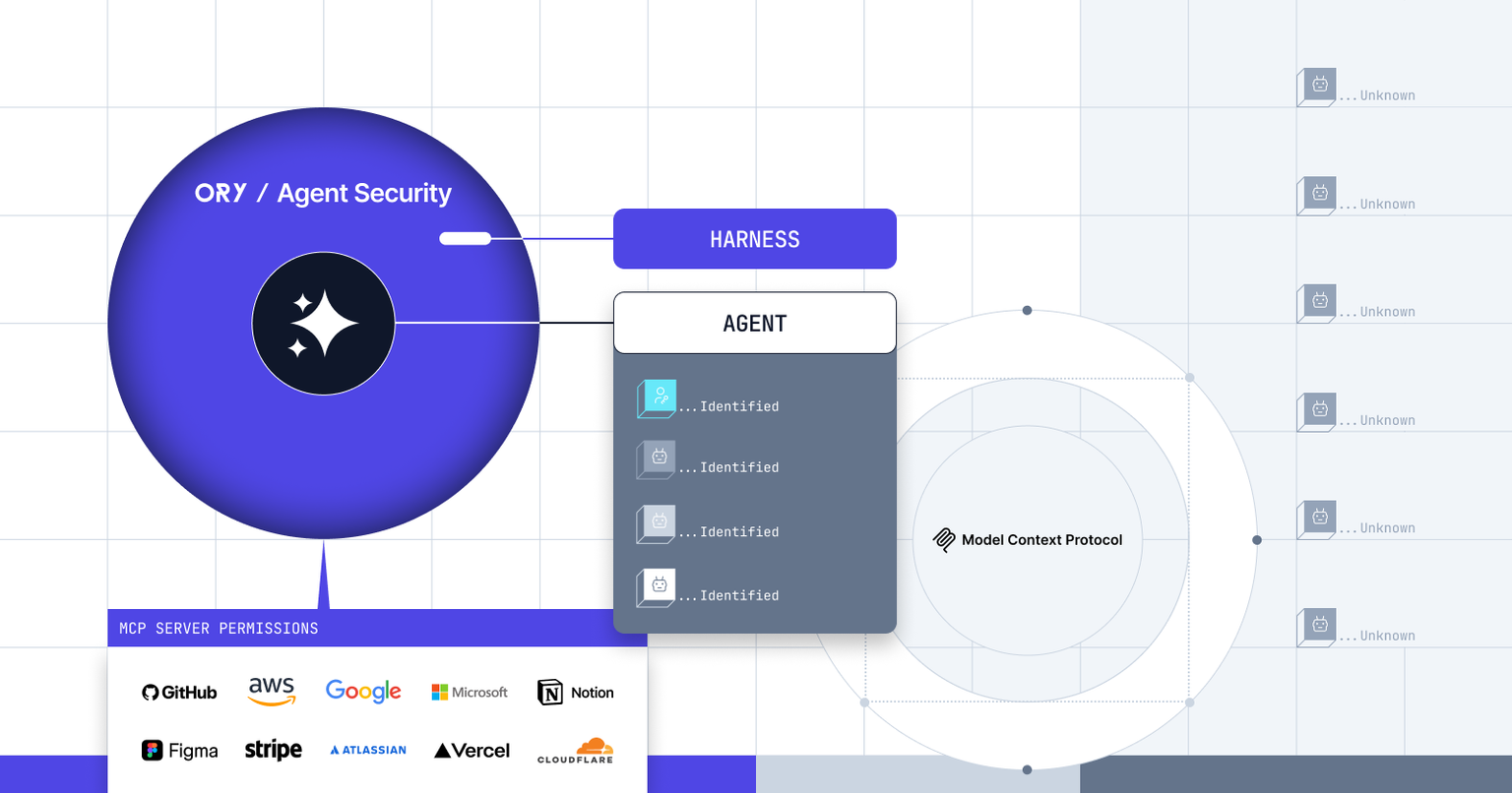
- AI agent identity (Agent IAM): Extends identity and access management to AI agents, autonomous workflows, and machine-to-machine systems, with the authentication, audit, and authorization controls agentic systems require.
- Flexible deployment options: Supports open-source deployment on your own infrastructure, self-hosted enterprise deployments on-premises, in private clouds, or in air-gapped environments with enterprise SLAs, and a fully managed SaaS option with built-in compliance and automatic scaling.
- Modular, headless architecture: Uses a cloud-native "mix and match" design that lets teams adopt individual components or the full platform, with complete ownership of the UI and user experience.
- Trillion-scale performance: Achieves high performance through stateless horizontal scaling with zero dependencies, plus global edge performance with smart caching.
- Production-ready observability: Offers comprehensive metrics, trace-level log correlation, and built-in performance intelligence for transparent monitoring of identity operations.
Learn more about Ory's identity and access management solutions