What Is Customer Identity and Access Management (CIAM)?
What CIAM is, how it differs from IAM, how it works, and how to choose, deploy and implement it.
Customer Identity and Access Management (CIAM) is a set of technologies and processes used to manage and secure customer identities across digital applications and services. Users demand seamless, secure digital experiences, but businesses struggle to balance ease of access with ironclad security. The stakes are high: 81% of breaches are caused by compromised credentials. Without a modern CIAM strategy, companies risk customer churn, compliance failures, and security breaches.
What is CIAM?
Customer Identity and Access Management (CIAM) is a set of technologies, processes, and policies used to manage and secure customer identities across digital applications and services. CIAM solutions enable organizations to register, authenticate, and authorize customers while providing secure, convenient access to websites, mobile apps, and online platforms.
Unlike traditional Identity and Access Management (IAM), which primarily focuses on employees and internal users, CIAM is designed to support large volumes of external users, including customers, partners, and subscribers.
CIAM platforms typically provide capabilities such as user registration, single sign-on (SSO), multi-factor authentication (MFA), passwordless authentication, social login, and user profile management. They also help organizations manage customer consent, enforce access policies, and protect sensitive personal information. Modern CIAM solutions can incorporate adaptive authentication and risk-based access controls.
Key features of modern CIAM platforms include:
- Passwordless, passkeys, and social login: Simplify sign-in with magic links, OTPs, phishing-resistant passkeys, and existing social accounts.
- Adaptive MFA and risk-based authentication: Evaluate contextual risk signals to apply additional verification when needed, including before sensitive actions.
- Single sign-on and identity federation: Enable seamless access across connected applications and integrate external identity providers through established standards.
- Fine-grained authorization: Control access to resources and actions using roles, attributes, and relationships between customers and resources.
- Progressive profiling and self-service account management: Collect customer information gradually and let users manage profiles, authentication methods, and account recovery.
- Consent management and data residency: Record privacy preferences and consent histories, and control where identity data is stored and processed.
CIAM vs. IAM: How CIAM Goes Beyond Basic IAM
Customer Identity and Access Management (CIAM) and Identity and Access Management (IAM) both manage digital identities, authenticate users, and control access to applications and resources. However, they differ in their target users, security priorities, scalability requirements, and user experience considerations.
CIAM is a specialized branch of Identity and Access Management (IAM) that focuses on securely managing external users, such as customers, partners, and vendors. Unlike traditional IAM, which is often designed for workforce access, CIAM prioritizes:
- Seamless user experiences: Fast, frictionless login flows with social authentication and passwordless login options.
- Scalable security: Flexible authentication, fraud prevention, and granular permissions across millions of users.
- Privacy and compliance: Secure handling of customer PII while meeting GDPR, CCPA, and other regulatory requirements.
IAM primarily focuses on securing workforce identities, including employees, contractors, and internal administrators. It helps organizations enforce access policies, manage permissions, automate user provisioning and deprovisioning, and maintain compliance with internal security requirements.
How CIAM Works
Customer Identity and Access Management (CIAM) works by providing a centralized system for managing customer identities, authenticating users, and controlling access to digital applications and services. It integrates with websites, mobile applications, and other customer-facing platforms to streamline registration and login processes while enforcing security and privacy policies.
CIAM platforms typically use identity protocols such as OAuth 2.0, OpenID Connect (OIDC), and SAML to support secure authentication, authorization, and identity federation. They also integrate with customer databases, CRM systems, and other business applications to maintain consistent identity information across digital channels.
The CIAM process generally involves the following stages:
- User registration and identity creation: A customer creates an account using an email address, phone number, social identity provider, or another supported registration method. The CIAM platform establishes a unique customer identity and stores associated profile information, preferences, and applicable consent records.
- Authentication and identity verification: When a customer signs in, the CIAM platform verifies their identity using authentication methods such as passwords, passkeys, biometrics through supported authenticators, or multi-factor authentication (MFA). Risk-based authentication can evaluate factors such as device characteristics, location, and unusual login behavior to determine whether additional verification is necessary.
- Token issuance and session management: After successful authentication, the CIAM system establishes an authenticated session or issues tokens through protocols such as OpenID Connect. Applications use these tokens to verify the customer's authenticated identity and maintain access without requiring repeated logins. Session expiration, token rotation, and revocation mechanisms help reduce the risk of unauthorized access.
- Authorization and access control: The application or authorization service determines which resources and actions the authenticated customer can access. Policies may consider account ownership, subscription tiers, user roles, and other contextual attributes. For example, a customer may be allowed to view their own billing information but not another customer's account details.
- Profile, preference, and consent management: CIAM enables customers to update personal information, manage communication preferences, and provide or withdraw consent where applicable. These capabilities help organizations maintain accurate customer records and support privacy requirements under regulations such as GDPR and CCPA.
- Continuous monitoring and identity lifecycle management: CIAM platforms monitor authentication events, detect suspicious activity, and support processes such as account recovery, credential updates, and account deletion. Integration with security monitoring tools can help identify credential stuffing, account takeover attempts, and other identity-related threats.
By coordinating these processes, CIAM creates a consistent identity layer across customer-facing applications. This allows organizations to deliver convenient digital experiences while maintaining centralized visibility, strong authentication, granular access controls, and protection of customer data.
Key Features of a CIAM Platform
A Customer Identity and Access Management (CIAM) platform provides the capabilities needed to securely manage customer identities, authenticate users, and control access across digital applications. Modern CIAM solutions combine authentication, authorization, privacy management, and user experience features to support large customer populations without introducing unnecessary friction.
Passwordless, Passkeys, and Social Login
Modern CIAM platforms support passwordless authentication methods that allow customers to access applications without creating or remembering traditional passwords. These methods include email magic links, one-time passcodes (OTPs), and passkeys based on FIDO2 and WebAuthn standards. Passkeys use public-key cryptography and can enable authentication through device biometrics or PINs, providing phishing-resistant protection while simplifying the login experience.
Social login allows customers to authenticate using existing accounts from identity providers such as Google, Apple, or Microsoft. This reduces registration friction and eliminates the need to maintain separate credentials for every application. CIAM platforms should support multiple authentication methods, enabling organizations to accommodate different customer preferences, accessibility requirements, and device capabilities.
Adaptive MFA and Risk-Based Authentication
Adaptive multi-factor authentication (MFA) adjusts authentication requirements based on the risk associated with individual login attempts. Rather than requiring every customer to complete the same verification steps, the CIAM platform evaluates contextual signals such as device characteristics, IP reputation, geographic location, login history, and unusual behavioral patterns.
For example, a customer signing in from a familiar device and location might receive immediate access, while an attempt from an unfamiliar device or suspicious network could trigger additional verification. Risk-based authentication helps organizations balance security and convenience by applying stronger controls when necessary while minimizing interruptions for legitimate customers. Advanced CIAM solutions may also reevaluate risk during active sessions and require step-up authentication before sensitive actions, such as changing account credentials or payment information.
Single Sign-On and Identity Federation
Single sign-on (SSO) allows customers to authenticate once and access multiple connected applications without repeatedly entering their credentials. For example, a customer might sign in to an organization's main website and then access its support portal, subscription dashboard, and mobile application through the same identity system. This creates a consistent experience across digital channels while reducing password fatigue.
Identity federation extends this functionality by establishing trust relationships between different identity providers and applications. CIAM platforms typically support standards such as OpenID Connect (OIDC), OAuth 2.0, and SAML, enabling organizations to integrate external identity providers and manage authentication across multiple services. Centralized authentication and federated identity management can simplify integration, improve consistency in security policy enforcement, and reduce the need to maintain duplicate customer credentials.
Fine-Grained Authorization
Authentication verifies a customer's identity, while authorization determines which resources and actions that customer can access. CIAM platforms can support multiple authorization models to enforce permissions across applications and services. Role-Based Access Control (RBAC) assigns permissions according to predefined roles, such as standard user, premium subscriber, or account administrator. Attribute-Based Access Control (ABAC) evaluates additional factors, such as subscription status, account ownership, resource sensitivity, or environmental context.
For applications with complex relationships between users and resources, CIAM platforms may integrate with fine-grained authorization systems based on Google Zanzibar-style relationship models. These systems use relationships between subjects, objects, and permissions to determine access. For example, a customer might be authorized to edit a shared workspace because they belong to a team that owns it, while another customer receives read-only access through a separate relationship.
Progressive Profiling and Self-Service Account Management
Progressive profiling allows organizations to collect customer information gradually rather than requiring extensive registration forms during initial sign-up. A CIAM platform might initially request only an email address and then collect additional information, such as preferences, contact details, or account-related attributes, when relevant to the customer's interactions. This approach reduces registration friction while helping organizations build more complete customer profiles over time.
Self-service account management gives customers direct control over their identity information and account settings. Common capabilities include updating profile details, changing authentication methods, managing connected devices, recovering accounts, and reviewing active sessions. CIAM platforms may also support account linking, allowing customers to connect multiple login methods to a single identity without creating duplicate profiles.
Consent Management and Data Residency
CIAM platforms help organizations manage customer consent and privacy preferences across digital applications. Consent management capabilities can record when and how customers agreed to specific data processing activities, maintain consent histories, and allow users to update or withdraw applicable permissions. These records can support compliance efforts under privacy regulations such as the General Data Protection Regulation (GDPR) and the California Consumer Privacy Act (CCPA), although meeting regulatory obligations requires controls beyond the CIAM platform itself.
Data residency controls help organizations determine where customer identity information is stored and processed. Some CIAM providers offer regional hosting options, configurable data storage locations, and policies for handling personal information across geographic boundaries. These features can be important for multinational organizations operating under different privacy, contractual, and regulatory requirements.
CIAM Deployment Models
Managed CIAM (Identity as a Service)
Managed CIAM solutions are cloud-based platforms operated and maintained by third-party identity providers. The provider typically handles infrastructure management, software updates, availability, and platform-level security, allowing organizations to focus on configuring authentication workflows, authorization policies, and customer experiences. These solutions are generally delivered through a subscription or usage-based pricing model.
Managed CIAM platforms are particularly suitable for organizations that need rapid deployment and scalable identity services without maintaining dedicated authentication infrastructure. They typically provide built-in capabilities such as single sign-on (SSO), multi-factor authentication (MFA), social login, passwordless authentication, and identity federation. Many also offer APIs, SDKs, and prebuilt integrations for connecting customer-facing applications.
However, managed CIAM can introduce dependencies on the provider's infrastructure, pricing structure, and available customization options. Organizations should evaluate data residency requirements, service-level agreements (SLAs), integration flexibility, and potential vendor lock-in before selecting a managed solution.
Self-Hosted CIAM
Self-hosted CIAM platforms run within infrastructure controlled by the organization, such as on-premises servers, private clouds, or dedicated cloud environments. This deployment model provides greater control over identity data storage, network configurations, security policies, and platform customization. Organizations are generally responsible for deploying, maintaining, securing, and scaling the CIAM infrastructure.
Self-hosted CIAM is often preferred by organizations with strict data governance requirements, complex integration needs, or specialized security architectures. It can support direct integration with internal applications, databases, and existing identity infrastructure while allowing teams to customize authentication and authorization workflows according to business requirements.
The main trade-off is operational complexity. Self-hosted deployments require technical expertise to manage software updates, security patches, monitoring, high availability, disaster recovery, and capacity planning. Organizations must also ensure that their infrastructure can handle traffic spikes and growing customer populations without disrupting authentication services.
Open-Source CIAM
Open-source CIAM solutions provide access to publicly available source code that organizations can deploy, modify, and integrate into their applications, subject to the project's licensing terms. This model offers flexibility for organizations that want to customize identity functionality, avoid dependence on proprietary technologies, or build specialized authentication workflows.
Open-source CIAM platforms can reduce software licensing costs and provide greater transparency into identity management components. Organizations can inspect the code, extend supported authentication methods, and integrate the platform with existing systems. However, this deployment model requires the most internal resources, including personnel, time, and infrastructure.
Why open-source CIAM solutions like Ory give you more control
Traditional CIAM providers lock businesses into rigid, expensive licensing models. CIAM platforms like Ory, which provide both open source and licensed options, offer unmatched flexibility, allowing businesses to customize authentication, scale globally, avoid vendor lock-in, ensure security and compliance with:
- Modular & API-First Architecture: Easily integrates into any tech stack.
- Self-Hosted or Managed CIAM: Choose between full control or a managed cloud solution.
- Cost-Effective Scalability: Pay only for what you use without inflated licensing fees, and guarantee a positive customer experience. Scalable CIAM solutions like Ory ensure that even a large number of concurrent logins can be served with low latency.
Ory is the only provider that gives you true flexibility, allowing you to start with open-source, scale with enterprise support, and seamlessly transition to a fully managed solution when needed.
- Self-hosted CIAM (Ory Open Source) → Get complete control over data privacy, security, and compliance by running CIAM yourself. Perfect for teams that want full customization and sovereignty over their infrastructure.
- Self-hosted Enterprise CIAM (Ory Enterprise License) → Keep control while gaining enterprise-grade support, testing, and SLA-backed guarantees. Ideal for organizations that want to own their deployment.
- Managed CIAM (Ory Network) → A fully hosted, globally scalable CIAM solution with built-in security updates, compliance, and zero maintenance. Great for teams that want to offload operational overhead and focus on business growth.
Learn more about Ory Deployment Options
Common CIAM Challenges and How to Overcome Them
Implementing Customer Identity and Access Management (CIAM) introduces challenges related to security, user experience, legacy system integration, and emerging identity requirements. Organizations must protect customer accounts without creating unnecessary friction, migrate existing identities without disrupting access, and adapt authentication and authorization controls to support new technologies such as autonomous AI agents.
Balancing Login Friction Against Security
Customers expect registration and login to be fast, convenient, and consistent across applications. However, organizations must also protect accounts against credential stuffing, account takeover, and unauthorized access. Requiring additional verification at every login can frustrate legitimate customers and increase abandonment.
Making authentication too permissive creates the opposite problem, leaving sensitive information and transactions exposed. The challenge is to apply stronger safeguards when risk increases without adding unnecessary steps to routine interactions. A well-designed CIAM strategy combines contextual risk assessment, secure authentication methods, and consistent access policies to balance customer convenience with account protection.
How to overcome:
- Apply adaptive authentication: Evaluate device familiarity, unusual behavior, and other risk signals to determine when additional verification is necessary.
- Offer phishing-resistant authentication: Support passkeys to simplify sign-in and reduce reliance on passwords, while securing enrollment and account recovery.
- Use single sign-on: Let customers access connected applications without repeated authentication, while requiring fresh verification for sensitive actions.
- Introduce progressive profiling: Collect essential information during registration, then request additional details when relevant instead of presenting lengthy forms upfront.
- Measure customer friction: Monitor abandonment, authentication failures, recovery requests, and fraud outcomes to refine policies without weakening protection.
Migrating From Legacy Identity Systems Without Password Resets
Moving customer identities to a modern CIAM platform involves more than transferring account records. Organizations must preserve credentials, profile information, and account relationships while maintaining reliable access. Legacy systems may use password hashes or credential formats that the destination platform cannot verify.
Because hashes cannot simply be converted into another format, direct migration is not always possible. Requiring every customer to reset their password can increase support demand and cause abandonment. A successful migration therefore needs a staged approach that accommodates legacy credentials, protects sensitive data, and maintains continuity throughout the transition.
How to overcome:
- Assess credential compatibility: Inventory hashing algorithms, salts, work factors, and account structures to identify which credentials and relationships the new platform can support.
- Import compatible password hashes: Transfer supported hashes through protected migration processes, preserving required metadata so customers can continue using their existing passwords.
- Use just-in-time migration: Validate a customer’s first login against the legacy system, then securely establish credentials in the new platform without retaining plaintext passwords.
- Preserve account relationships: Map identifiers, verified attributes, linked accounts, and organization memberships carefully to prevent duplicate profiles or incorrect account associations.
- Plan a controlled transition: Pilot migration, monitor failures, and define recovery options for inactive accounts before retiring legacy authentication services.
Securing AI Agents That Act on Behalf of Customers
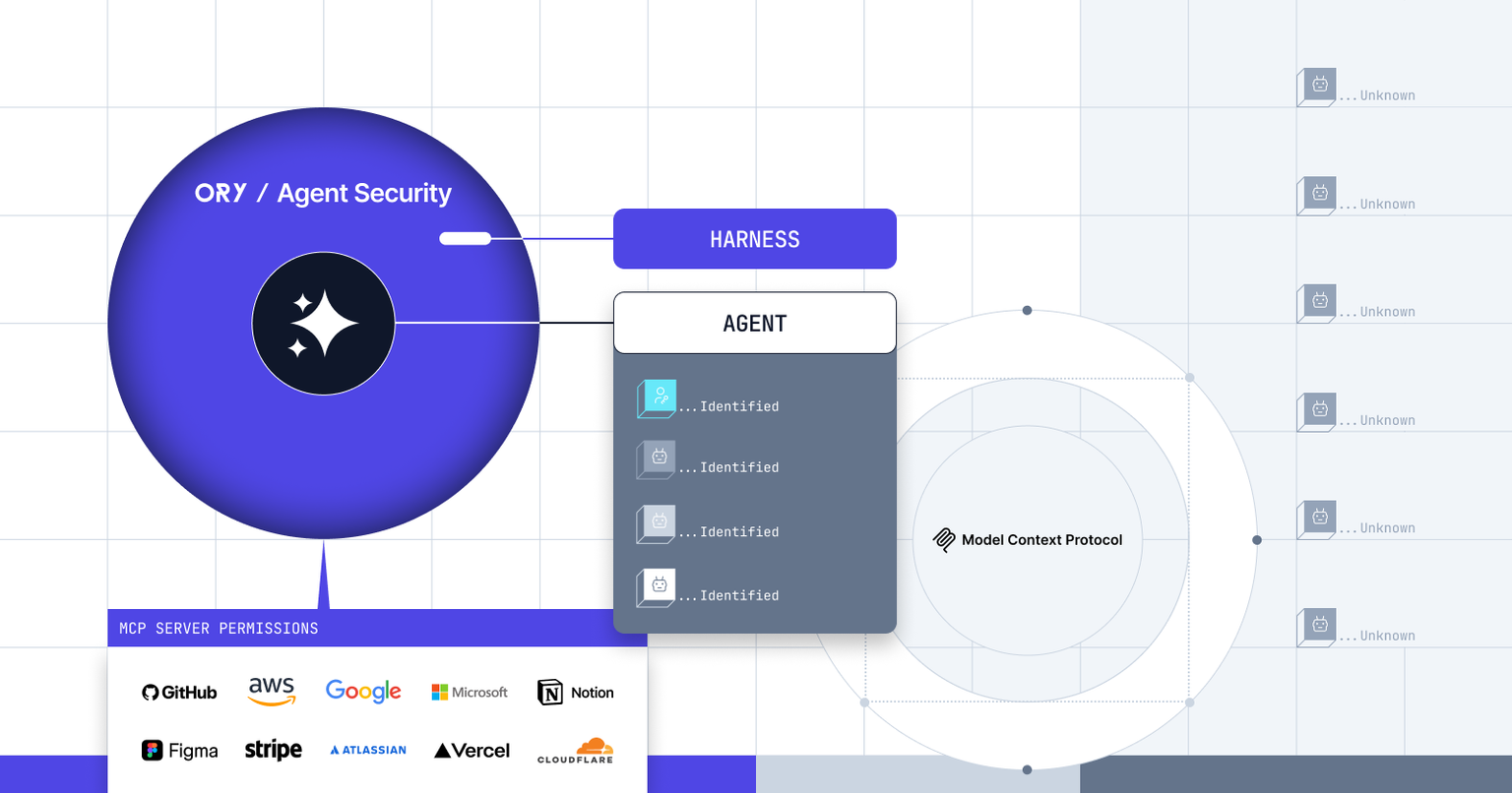
AI agents can help customers manage subscriptions, retrieve account information, book services, and initiate transactions. Unlike conventional application workflows, these agents may perform several actions across multiple services with limited human involvement. This introduces questions about identity, delegated permissions, and accountability.
Organizations must know which customer authorized an agent, what that authorization permits, and when it expires. Without clear boundaries, an agent could expose sensitive information or perform actions beyond the customer’s intent. CIAM must therefore support distinct agent identities, constrained delegation, and enforceable authorization controls throughout each interaction.
How to overcome:
- Establish distinct agent identities: Identify the agent separately from the customer so services can evaluate both the acting system and the person granting authority.
- Use constrained delegated authorization: Apply OAuth-based delegation and, where supported, token exchange to issue short-lived credentials restricted to necessary permissions and intended services.
- Enforce authorization at each service: Validate the customer, agent, requested action, and resource rather than trusting an agent’s interpretation of its instructions.
- Require approval for sensitive actions: Obtain explicit customer confirmation for high-impact operations, such as nonrefundable purchases, and bind approval to the specific transaction.
- Maintain visibility and revocation: Record agent actions and delegated permissions, and let customers review or withdraw access without disrupting their own accounts.
Best Practices for Implementing CIAM
Implementing Customer Identity and Access Management (CIAM) requires balancing strong authentication, granular authorization, privacy protection, and a frictionless customer experience. Organizations should choose an architecture that supports their current applications while remaining flexible enough to accommodate new authentication methods, growing user populations, and changing security requirements.
Adopt an API-First, Modular Identity Architecture
Choose a CIAM platform that separates identity management, authentication, and authorization into modular services. This approach allows organizations to integrate identity functionality into existing websites, mobile applications, and APIs without tightly coupling security processes to application code. It also makes it easier to update individual components, customize customer experiences, and introduce new authentication methods.
An API-first architecture supports consistent identity policies across multiple applications and technology stacks. For example, organizations can use separate services for customer registration and profile management, OAuth 2.0 and OpenID Connect authentication, and fine-grained authorization. These components can be deployed and managed independently while communicating through standardized APIs, reducing dependencies between identity infrastructure and application development.
Prioritize Passwordless Authentication and Secure Account Recovery
Offer customers modern authentication options, including passkeys, social login, magic links, and one-time passcodes. Passkeys based on FIDO2 and WebAuthn provide phishing-resistant authentication while eliminating the need to remember passwords. Supporting multiple authentication methods also helps organizations accommodate different devices, customer preferences, and accessibility requirements.
Account recovery deserves equal attention because attackers may exploit recovery workflows to bypass otherwise strong authentication controls. Implement appropriate identity verification, secure recovery codes, rate limiting, and additional verification for sensitive credential changes. Use configurable authentication workflows to maintain consistent security policies across registration, login, multi-factor authentication (MFA), account verification, and recovery without requiring developers to build every mechanism from scratch.
Enforce Fine-Grained Authorization Across Applications
Apply the principle of least privilege to customer access by granting users only the permissions necessary for their roles and activities. Basic role-based access control (RBAC) may be sufficient for simple applications, but complex SaaS environments often require permissions based on resource ownership, team membership, subscription levels, or relationships between users and resources.
Centralizing authorization decisions helps prevent inconsistent permissions across applications and APIs. Organizations can use relationship-based access control (ReBAC) and authorization models inspired by Google Zanzibar to define permissions at the resource level. For example, rather than granting broad editing privileges to every user with a particular role, an application can verify whether a customer belongs to a specific organization and has permission to modify an individual document or workspace.
Use Standard Protocols for Authentication and Delegated Access
Implement established identity standards such as OpenID Connect (OIDC), OAuth 2.0, and SAML where appropriate to support interoperability between applications and identity providers. These protocols help organizations avoid proprietary authentication mechanisms, simplify integrations, and securely support third-party applications and services.
OAuth 2.0 is especially important when customers authorize external applications or AI agents to access resources on their behalf. Define narrowly scoped permissions, validate access tokens, and establish appropriate token expiration and revocation policies. Dedicated OAuth 2.0 authorization servers can manage token issuance, client authorization, and consent workflows separately from customer identity management, providing more consistent control over delegated access.
Design CIAM for Scalability and Deployment Flexibility
Plan identity infrastructure around peak authentication demand rather than average usage. Customer-facing applications may experience sudden traffic increases during product launches, promotional campaigns, or seasonal events. CIAM systems should support horizontal scaling, reliable session management, database performance optimization, and monitoring to maintain availability during these periods.
Organizations should also evaluate whether managed, self-hosted, or hybrid deployment best fits their operational and data governance requirements. Managed CIAM services reduce the burden of maintaining authentication infrastructure, while self-hosted solutions provide greater control over deployment environments, configurations, and data storage. Platforms built around portable, independently deployable components can make it easier to adapt infrastructure as business, compliance, and security requirements evolve.
Monitor Authentication Activity and Continuously Improve Security
Collect and analyze authentication events, failed login attempts, account recovery requests, session activity, and authorization failures to identify suspicious behavior and operational problems. Integrate relevant identity logs with security information and event management (SIEM) systems to investigate potential account takeover, credential stuffing, and unauthorized access attempts.
Track customer experience metrics alongside security indicators, including registration completion rates, login failures, and account recovery success rates. Use these findings to refine authentication policies, identify unnecessary friction, and strengthen vulnerable workflows. Choose CIAM solutions that expose structured audit logs, event APIs, and operational metrics to support automated monitoring, incident response, and ongoing identity lifecycle management.
How Ory’s CIAM Solution Supports Security, Compliance, and Growth
CIAM solutions provide robust security while enabling frictionless user experiences. Here’s why businesses rely on CIAM:
1. Stronger Security, Lower Fraud Risk
- Flexible Authentication: Ory supports multi-factor authentication (MFA) methods, including TOTP, FIDO2, and WebAuthn, allowing for adaptive authentication strategies based on user risk profiles.
- Zero-Trust Security Principles: Ory's architecture is built around a zero-trust model, ensuring that every request is authenticated and authorized, minimizing the risk of unauthorized access.
- Federated Identity & Single Sign-On (SSO): Ory enables integration with various identity providers through OpenID Connect (OIDC) and SAML, facilitating federated identity management and SSO capabilities out-of-the-box.
- Role-Based and Attribute-Based Access Control (RBAC/ABAC): Ory provides fine-grained authorization and access control mechanisms, allowing for both RBAC and ABAC implementations.
- Ory goes beyond traditional models by offering a Zanzibar-based permission system, combining the best of both for scalable, fine-grained access control.
- This enables precise, real-time authorization that adapts dynamically across millions of users and complex permissions.
2. A Seamless Customer Experience
Customers expect a seamless login experience, and security should not come at the cost of usability. CIAM enables:
- Passwordless Authentication and Social Sign-Ins: Ory supports various authentication methods, including passwordless flows and social logins via OIDC, enhancing user convenience and reducing friction during login.
- Omnichannel Identity Management: Ory’s flexible APIs allow consistent identity management across multiple platforms and devices, ensuring a unified user experience.
- Progressive Profiling: Ory’s customizable identity schema enables user data collection over time, supporting progressive profiling strategies.
3. Compliance & Privacy By Design
With evolving data privacy laws (e.g., GDPR, CCPA, PSD2), businesses must handle personal information responsibly. CIAM ensures:
- Data Sovereignty and Regional Hosting: Ory offers deployment flexibility, allowing organizations to host identity data in specific regions to comply with local data residency requirements.
- User Consent Management and Data Encryption: Ory provides features for managing user consent and ensures data security through encryption, aiding compliance with regulations like GDPR and CCPA.
- Secure API-Driven Identity Storage: Ory’s API-first approach ensures secure handling and storage of identity data, reducing the risk of data breaches.
- Self-Service Account Management: Ory enables users to manage their profiles and account settings through self-service interfaces, enhancing user autonomy and compliance readiness.
- Data Residency Controls: Ory’s flexible deployment options allow organizations to maintain control over data residency.
Future-Proof Your Customer Identity Strategy
With the rise of zero-trust security, privacy regulations, and AI-driven fraud detection, businesses need CIAM solutions that go beyond traditional authentication.
A modern CIAM platform should balance security, user experience, and scalability—empowering businesses to grow without compromising trust.
Struggling to balance security, scalability, and user experience? Ory’s open-source CIAM solution gives you the control and flexibility you need.
Explore Ory’s capabilities or Connect with our team to find the best CIAM approach for your business.