4 AI Agent Integration Patterns, Requirements, and Best Practices
How AI agents connect to data and tools, the four integration patterns and approaches, and how to choose and secure the right one.
AI agent integration is the process of connecting autonomous agents to external data sources, applications, and tools so they can retrieve information, reason over context, and take action across systems. Without integration, an agent is limited to whatever you paste into a prompt. With it, that same agent can pull customer records, update a ticket, and trigger a workflow with no manual steps in between.
What Is AI Agent Integration?
AI agent integration connects autonomous LLM agents to external APIs, databases, and enterprise systems (such as CRMs and ERPs), allowing them to look up live data and execute real-world actions. Think of it as giving an agent hands and eyes. Without integration, an agent works only with what you paste into a prompt. With it, the same agent can read a record from your CRM, update a ticket in your support system, and send a follow-up email in one flow.
Two pillars make this work:
- Data integration (read): gives agents access to structured and unstructured data so they can build context before deciding.
- Action integration (write): lets agents execute commands like updating records, triggering workflows, or sending notifications.
When both pillars are in place, AI moves from a conversational assistant to an operational tool. The agent stops being something you talk to and becomes something that works alongside your team, which is exactly when its permissions start to matter.
4 core AI integration patterns:
- Tool definitions and function calling: Define available operations so agents can request structured tool calls that a runtime validates and executes.
- Reading data to build agent context: Retrieve authorized information from databases, documents, and applications to inform responses and decisions.
- Writing data to execute actions in external systems: Use authorized tools to update records, trigger workflows, and complete tasks, with safeguards for sensitive actions.
- Agent-to-agent communication with the A2A protocol: Enable specialized agents to discover capabilities, delegate tasks, and exchange results across platforms.
Why AI Agents Need Integrations
An agent without integrations is a new hire with no system access: possibly capable, but unable to see what is happening or do anything about it. Integrations unlock three capabilities that matter.
- Powers RAG pipelines: retrieval-augmented generation depends on agents reaching knowledge bases and documents to ground responses in your data rather than general training data.
- Enables real-time context: agents can react to live changes, a new ticket, an inventory alert, a calendar update, instead of working from stale snapshots.
- Supports autonomous action: multi-step workflows become possible when an agent reads from one system and writes to another without a human approving each hop.
Without connectivity, you are back to copying context into prompts by hand, which defeats the point of automation. The catch is that every new connection is also a new place an over-permissioned agent can do damage.
How AI Agent Integration Works: 4 Core Integration Patterns
AI agent integration works by connecting an AI model to external systems through APIs, connectors, and standardized communication protocols. The agent interprets a user's request, determines which information or tools it needs, and invokes the appropriate integrations. External systems execute the requested operations and return results, which the agent uses to decide its next step or generate a response.
1. Tool Definitions and Function Calling
Tool definitions specify the operations an AI agent can perform through external systems. Each tool describes its purpose, required parameters, and expected input format, typically using a structured schema such as JSON Schema. When an agent determines that a task requires an external operation, the model generates a function call containing the tool name and arguments. An application runtime validates the request, executes the operation through the appropriate API or service, and returns the result to the agent.
Example: An agent asked to check an order's delivery status might select a get_order_status tool and provide the order ID as an argument. The runtime validates the ID, authenticates the API request, and retrieves the shipment details from the order management system. The agent then uses the returned information to answer the user. If additional information is needed, it can invoke another tool based on the first result.
Security considerations: Tool definitions describe available capabilities but do not establish authorization. The execution layer must independently verify that the agent is permitted to invoke each tool and access the requested resources. Integrations should validate arguments against strict schemas, enforce least-privilege permissions, and restrict access to sensitive operations.
2. Reading Data to Build Agent Context
Data integration allows AI agents to retrieve information from external sources instead of relying entirely on knowledge embedded in the model or supplied in the user's prompt. Sources can include relational databases, document repositories, customer relationship management platforms, knowledge bases, and internal business applications. The agent accesses this information through APIs, database queries, search tools, or retrieval-augmented generation (RAG) pipelines.
Example: An agent handling a customer support request might retrieve the customer's purchase history, recent support tickets, and relevant product documentation. It can combine these results to understand the issue and determine an appropriate response. Agents may perform multiple retrieval operations, refining their queries as new information becomes available.
Security considerations: Access to external data introduces security concerns because retrieved content may contain personal information, confidential records, or instructions designed to manipulate the agent. Integrations should enforce authorization at the data source, limit retrieval to information the requesting user or agent is permitted to access, and treat retrieved content as untrusted input rather than executable instructions.
3. Writing Data to Execute Actions in External Systems
Action integration enables AI agents to make changes in external applications rather than simply retrieving information or generating recommendations. Through authorized API calls and tool executions, agents can update database records, create support tickets, schedule meetings, trigger automation workflows, or initiate business transactions.
Example: A sales agent might identify an opportunity that requires follow-up, update its status in a CRM, create a task for the account manager, and draft a personalized email. Each action involves a tool call that the connected application processes using the agent's authorized permissions. The agent can then inspect execution results to verify whether the operation succeeded and decide whether additional steps are required.
Security considerations: Because write operations can affect business systems and sensitive information, they require stronger safeguards than read-only integrations. Organizations should implement least-privilege authorization, validate action parameters, and require human approval for sensitive or irreversible operations. Additional controls, such as idempotency keys, transaction limits, audit logs, and error-handling mechanisms, help prevent duplicate actions and limit the impact of agent failures.
4. Agent-to-Agent Communication With the A2A Protocol
The Agent2Agent (A2A) protocol enables AI agents to communicate and collaborate across different applications, platforms, and agent frameworks. Instead of requiring every agent to connect directly to every external system, A2A allows specialized agents to delegate tasks, exchange information, and coordinate workflows through standardized interfaces.
Example: A customer service agent might delegate a refund eligibility check to a finance agent and request shipment information from a logistics agent. Each specialized agent performs its assigned task using its own tools and permissions, then returns the results. A2A supports agent discovery through Agent Cards that describe available capabilities, along with structured task exchanges and mechanisms for handling long-running operations.
Security considerations: A2A complements protocols such as MCP, which primarily standardize how agents access tools and external resources. However, communication between agents introduces additional trust boundaries. Integrations should authenticate participating agents, authorize delegated operations, restrict the information shared between them, and preserve traceable records of cross-agent actions. An agent receiving a delegated task should not automatically inherit unrestricted access to the requesting agent's systems or credentials.
Types of Data Sources AI Agents Connect To
Agents connect to four broad categories of data, and each carries a different authentication and risk profile.
Structured Data Sources CRMs, ERPs, relational databases, and spreadsheets, anything with rows, columns, and a schema. Agents can query these precisely, filtering by date, customer ID, or category. A sales agent pulling pipeline data from Salesforce and a finance agent querying invoices from NetSuite both rely on structured sources.
Unstructured Data Sources PDFs, emails, meeting transcripts, Slack threads, and internal wikis. Agents use embedding and retrieval to extract meaning here. A support agent searching past resolutions and a legal agent reviewing contract language both depend on unstructured access.
Streaming Data Sources Event streams, IoT feeds, and real-time logs let agents react to live change. A logistics agent watching shipment events and a security agent watching authentication logs both need streaming data to act in the moment rather than after the fact.
Third-Party SaaS Applications Salesforce, HubSpot, Workday, Slack, Zendesk, and hundreds more hold critical business data. Connecting to them requires authenticated API access for both read and write, which is where identity and authorization stop being optional. An agent touching a third-party system carries real risk if its permissions are not scoped tightly, and machine-to-machine authentication is the mechanism that scopes it.
Approaches to AI Agent Integration
The right approach depends on your team's capacity, your scale, and how much control you want over authentication and permissions. Four options dominate, and they compare like this.
Native Custom Builds Building from scratch with API wrappers and webhooks gives you complete control over logic and data flow. You decide how authentication works, how errors are handled, how data is transformed. You also own the maintenance: token refresh, rate limits, API versioning, and breaking changes are all yours. Standards help here, and running your own OAuth 2.0 server for API security is a well-trodden path for teams that want that control without reinventing the protocol.
Embedded iPaaS Platforms Tools like Workato or Tray.io offer pre-built connectors and visual builders. Setup is fast, and non-engineers can wire up basic flows. The catch is that embedded iPaaS is usually tuned for human-driven automation, not autonomous agent tool-calling, which creates friction when agents operate at high volume.
Model Context Protocol The Model Context Protocol (MCP) is an open standard for connecting AI models to data sources and tools through a common interface, so agents can discover and call systems without a custom integration per tool. It is still maturing, but teams planning for the long term are watching it closely. The security question with MCP is authentication, and pairing it with OAuth is the answer, as our guide to MCP server authentication with Ory Hydra walks through in detail.
Unified API Platforms Platforms like Merge or Nango aggregate many third-party APIs under one interface, handling OAuth flows and normalization. This cuts integration complexity significantly. The tradeoff is that the abstraction layer can hide the fine-grained control you occasionally need over a specific API's behavior.
Key Features of an AI Agent Integration Platform
When you evaluate tooling, weigh connectivity and governance together. Five capabilities separate a production-ready stack from a proof of concept.
- Managed authentication: handles OAuth flows, token refresh, and credential storage so you are not building auth from scratch.
- Pre-built API connectors: cut the time to connect common SaaS tools like Salesforce, Slack, and Google Workspace.
- Observability and logging: track tool calls, API requests, and multi-step actions for debugging and compliance.
- Scalability: support high-volume, low-latency requests at machine scale, since a single complex workflow can fire thousands of API calls a minute.
- Security and governance: enforce permissions and block unauthorized access to sensitive data or actions.
A proof of concept can tolerate thin observability. A production deployment needs full audit trails and granular access control, because that is what an auditor and an incident responder both ask for first.
See How Ory Secures Agent Integrations
How to Choose the Right AI Agent Integration Approach
Choosing well is a sequencing exercise: map the work, then size it, then weigh identity, build-versus-buy, and standards, in that order. Five questions get you there.
1. Map the Agent's Required Actions and Data Inventory exactly what the agent will read and write. List specific systems, data types, and operations before picking an approach. An agent that only reads a knowledge base has a very different risk profile than one that updates customer records and triggers billing.
2. Evaluate Scale, Latency, and Volume Estimate how many requests you expect, acceptable response times, and whether the approach survives production load. A single agent completing one task can make dozens of API calls in sequence. Multiply by hundreds of concurrent users and volume compounds fast.
3. Assess Identity, Permissions, and Auditability Decide whether you need fine-grained access control, audit trails, and instant revocation. Agents in regulated environments, healthcare, finance, legal, typically require detailed logging of every action. This is where fine-grained authorization stops being a nice-to-have, and it is the exact capability most teams are missing today.
4. Weigh Build Versus Buy Custom builds offer control but demand ongoing maintenance. Platforms offer speed but can introduce lock-in. Match the choice to your team's capacity and your tolerance for external dependencies. A small team with limited bandwidth often benefits from managed tooling, while a larger platform team may prefer to own the build.
5. Plan for Open Standards and Emerging Protocols Prioritize approaches compatible with OAuth 2.0, OpenID Connect, and MCP. Standards-based integrations are easier to audit and extend, and less likely to need rework as the ecosystem shifts. For the underlying model, our explainer on OAuth 2.0 and OpenID Connect use cases is a useful primer before you commit.
Common Challenges of AI Agent Integration
Integrating AI agents with enterprise applications introduces challenges related to security, performance, reliability, and operational visibility. Unlike conventional integrations, which typically follow predefined workflows, autonomous agents dynamically select tools, retrieve information, and initiate actions. This makes integrations more difficult to secure and maintain, particularly when agents interact with multiple systems or operate on behalf of different users.
Authentication and Authorization Gaps
AI agents often need access to multiple APIs, databases, and enterprise applications, each with different authentication and authorization requirements. Traditional identity and access management approaches may not adequately distinguish between human users, autonomous agents, and agents acting on behalf of users. Organizations sometimes address this complexity by giving agents shared service accounts or long-lived API keys, creating excessive permissions and making individual actions difficult to attribute.
Another challenge is maintaining authorization boundaries across delegated workflows. An agent authorized to retrieve customer information should not automatically receive permission to modify records or access unrelated resources. Organizations need unique agent identities, short-lived credentials, scoped access tokens, and fine-grained authorization policies. Delegated access should preserve the requesting user's permissions without allowing agents to exceed them.
Scalability and Latency Constraints
AI agent integrations frequently involve multiple sequential operations, including LLM inference, API requests, database queries, and tool executions. A single user request might trigger dozens of interactions across different services, increasing end-to-end latency. These delays become more significant when agents operate concurrently or rely on external APIs with unpredictable response times.
Scalability challenges also arise from API rate limits, infrastructure capacity, and resource contention. Organizations can address these issues through asynchronous execution, connection pooling, caching, and parallel processing of independent tasks. Rate limiting, request queues, circuit breakers, and retry policies with exponential backoff help maintain reliability when external services become overloaded or temporarily unavailable.
Observability and Audit Trails
AI agents make dynamic decisions about which tools to call, what information to retrieve, and which actions to execute. This makes their behavior harder to trace than conventional applications with predefined execution paths. Without sufficient observability, teams may struggle to determine why an agent selected a particular tool, whether an external API returned incorrect information, or which operation caused a workflow to fail.
Effective monitoring requires tracing agent decisions, tool invocations, API responses, authorization outcomes, and interactions between agents. Organizations should correlate these events using consistent trace identifiers and maintain audit logs that record the agent's identity, delegated user identity, requested operation, and execution result. Integrating agent telemetry with existing observability platforms, including those using OpenTelemetry, helps teams investigate failures and identify suspicious activity while minimizing exposure of sensitive information in logs.
Versioning and API Drift
AI agent integrations depend on external APIs, tool definitions, and data schemas that may change over time. An API provider might rename a field, modify authentication requirements, introduce new parameters, or deprecate an endpoint. Even relatively small changes can cause an agent to generate invalid tool calls or misinterpret responses, disrupting workflows that previously operated correctly.
Managing these dependencies becomes more complex when agents connect to many services maintained by different teams or vendors. Organizations should maintain versioned tool definitions, validate API schemas, and implement contract tests that detect incompatible changes before deployment. Compatibility layers, automated regression testing, and monitoring for deprecated endpoints help reduce integration failures. Agents should also receive clear error responses when an operation is unsupported rather than attempting potentially unsafe workarounds.
Context Window Overload From Tool Responses
External tools can return substantial amounts of information, including large database results, lengthy documents, detailed API responses, and application logs. When agents repeatedly include these outputs in their conversation context, they can approach the model's context window limit. Excessive context also increases token consumption, processing costs, and response latency.
Large tool responses may contain irrelevant or redundant information that makes it harder for an agent to identify important details. Instead of passing complete responses directly to the model, integrations should filter unnecessary fields, paginate large datasets, and retrieve only the records needed for the current task. Structured summaries, selective retrieval, and external state storage can help preserve essential information across longer workflows without overwhelming the agent's context window.
Prompt Injection Through Tool Outputs
AI agents frequently process external information retrieved from websites, documents, databases, and third-party APIs. Attackers can embed malicious instructions within these sources, attempting to manipulate the agent into ignoring its original instructions, disclosing sensitive information, or executing unauthorized operations. This creates a prompt injection risk because information retrieved through an otherwise legitimate tool may still contain attacker-controlled content.
For example, an agent retrieving a support ticket might encounter text instructing it to export customer records to an external endpoint. If the agent treats this content as authoritative instructions rather than untrusted data, it could attempt an unauthorized action. The risk increases when agents have access to sensitive information and powerful write-enabled tools.
Organizations should enforce clear trust boundaries between external content, system instructions, and authorized user requests. Retrieved information should never independently grant permissions or override established policies. Strong authorization checks at the tool execution layer, restricted tool access, output validation, and human approval for high-risk operations help limit the impact of successful prompt injection attempts.
Best Practices for Securing AI Agent Integrations
Securing AI agent integrations requires controls that account for autonomous decision-making, delegated access, and interactions with external systems. Organizations should enforce authentication, authorization, and monitoring at the integration layer rather than relying on the AI model to determine which actions are safe or permitted.
1. Treat Agents as First-Class Identities
AI agents should have distinct identities rather than relying on shared service accounts or credentials belonging to human users. Unique identities allow organizations to authenticate each agent, assign permissions, track its actions, and revoke access independently.
This is especially important when multiple agents operate across enterprise applications, because shared credentials make it difficult to identify which agent performed an action or isolate a compromised agent.
Key actions:
- Assign a unique identity to each agent.
- Avoid shared service accounts.
- Manage agent credentials centrally.
- Track actions by agent identity.
- Support independent access revocation.
2. Apply Least Privilege and Fine-Grained Permissions
AI agents should only have access to the systems, data, and operations required for their assigned tasks. Fine-grained authorization allows organizations to restrict permissions at the resource and action level, rather than granting broad access to an entire application.
For example, an agent that summarizes support tickets may need permission to read ticket records but should not be able to modify billing information. These restrictions also limit the damage caused by prompt injection or compromised agents.
Key actions:
- Define permissions for each agent.
- Separate read and write access.
- Restrict access to specific resources.
- Enforce authorization for every tool call.
- Review permissions as agent tasks change.
3. Use Open Standards Like OAuth and OpenID Connect
Standards-based authentication and authorization help organizations secure agent connections without developing proprietary identity mechanisms. OAuth 2.0 supports scoped access tokens that allow agents to access approved APIs without exposing user credentials.
OpenID Connect provides an identity layer for authentication, while OAuth-based authorization can also secure connections to Model Context Protocol (MCP) servers. These standards simplify integration with existing identity infrastructure and support consistent credential management across services.
Key actions:
- Use OAuth 2.0 for API authorization.
- Use OpenID Connect for authentication.
- Issue short-lived access tokens.
- Secure MCP connections with OAuth.
- Support token expiration and revocation.
4. Require Human Approval for High-Risk Actions and Scope Tokens Per Tool
AI agents can execute actions across connected systems without human intervention at every step. However, operations such as financial transactions, deleting records, changing production configurations, or accessing sensitive information may require additional authorization.
Organizations should define approval requirements based on the potential impact of each action. Access tokens should also be limited to the specific tools, resources, and operations an agent needs, preventing authorization for one integration from granting unnecessary access to others.
Key actions:
- Classify high-risk agent operations.
- Require approval for sensitive actions.
- Scope tokens to specific tools.
- Limit permitted API operations.
- Validate authorization before execution.
- Reject actions outside approved permissions.
5. Log and Audit Every Agent Action
AI agents may perform multiple operations across different applications during a single workflow, making it difficult to investigate failures or unauthorized activity without detailed records.
Organizations should log tool calls, API requests, authorization decisions, and execution results. Each record should identify the agent responsible, the operation performed, and the affected resource. Centralized audit trails help security teams investigate incidents, verify compliance, and understand how agents interact with enterprise systems.
Key actions:
- Record every agent tool invocation.
- Log API requests and responses.
- Capture authorization decisions.
- Associate actions with agent identities.
- Track operations across connected systems.
- Retain logs for audits and investigations.
Securing AI Agent Integrations with Identity and Access Management
Robust agent integration treats identity as a foundational layer, not an afterthought. Agents operate at machine scale with autonomous decision-making, so without identity controls their access expands in ways that are hard to track or reverse. IAM supplies the missing pieces: centralized credential management, granular permission policies, real-time revocation, and full audit trails.
Organizations deploying agents at scale benefit from IAM that governs human and machine identities under one model, applying zero trust and least privilege consistently. Look for tooling that supports emerging protocols like MCP alongside established ones, and treat agentic AI security as its own design surface rather than a reused human-IAM config. For a look at where this is heading, our take on the future of IAM for agentic AI and the pattern behind the agentic economy both go deeper.
62% of organizations report that their existing IAM stack cannot scale to handle AI agents, and 59.4% say their current stack is not secure enough for agentic requirements.
- EMA Survey Results - Agentic AI Identities: The Unsecured Frontier of Autonomous Operations
Building a Future-Ready AI Agent Integration Stack With Ory
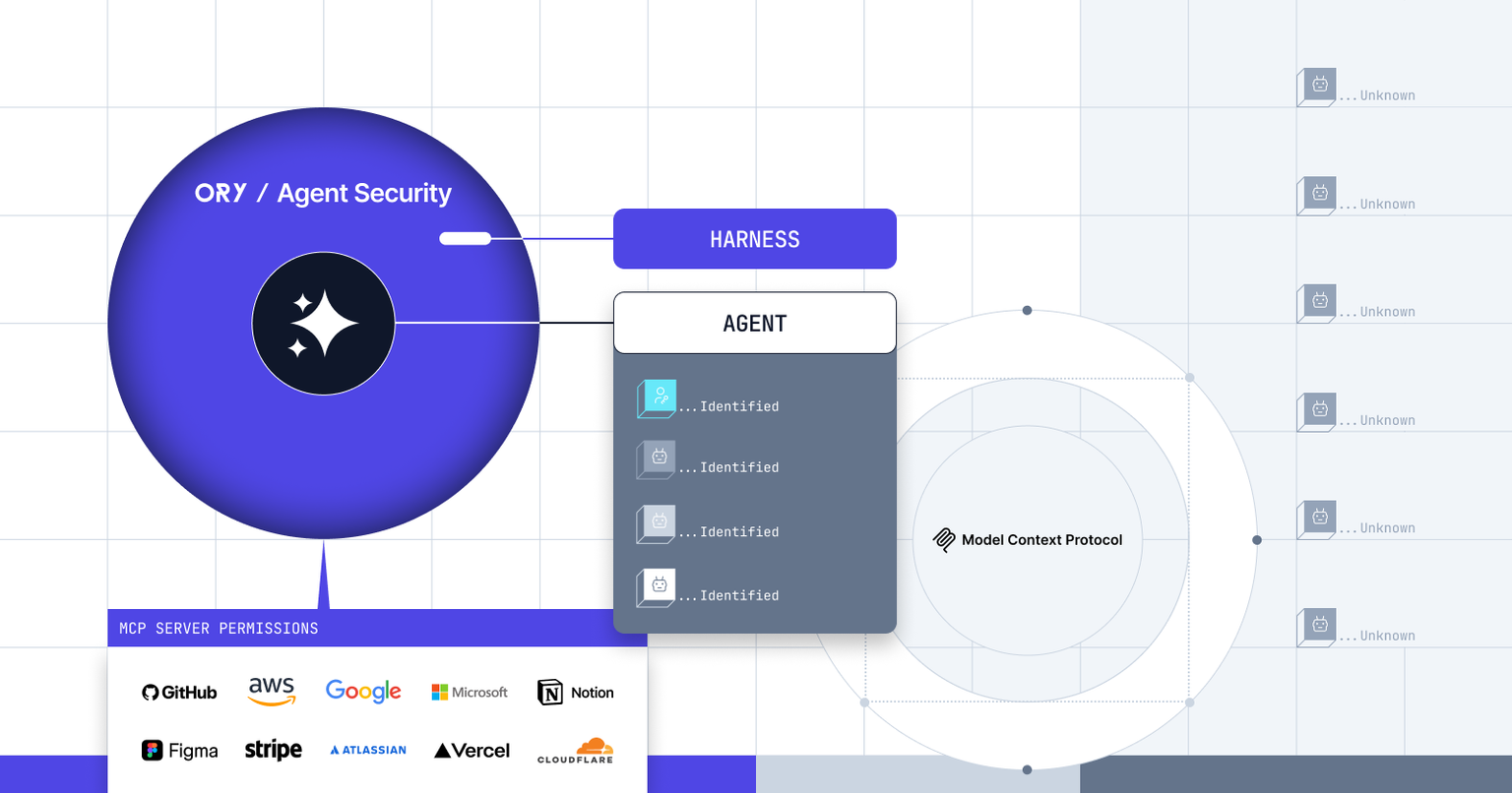
Ory treats agents as first-class identities with granular, Zanzibar-inspired authorization, supports high-volume and low-latency agent registration and authentication, and builds on standards (OAuth 2.0, OpenID Connect) with MCP readiness. The components are modular, so you adopt only what a given integration needs rather than a monolith.
Whether you run open-source components, a self-hosted Ory Enterprise License, or the fully managed Ory Network, the identity layer stays consistent as your agent fleet grows. That is the layer that keeps integrations secure, auditable, and scalable when the agent count goes from five to five hundred.
Secure Your Agent Infrastructure With Ory
Frequently Asked Questions About AI Agent Integration
How Is AI Agent Integration Different From Traditional API Integration? Traditional API integration connects systems for predefined data exchange with fixed logic. AI agent integration lets autonomous systems reason about context and execute multi-step actions dynamically based on goals rather than hardcoded rules. The agent decides the next step from the situation, not a predetermined workflow.
What Is the Model Context Protocol and How Does It Relate to AI Agent Integration? MCP is an open standard that gives AI models a standardized way to connect securely to data sources, tools, and internal servers. It simplifies how agents discover and interact with external systems without a custom integration per tool, and it works best when paired with an OAuth authorization server that handles agent identity.
How Do You Authenticate an AI Agent When Connecting to External Systems? Agents are typically authenticated with OAuth 2.0 flows using dedicated client credentials or service accounts, so each agent has its own identity that can be managed, monitored, and revoked independently. Pairing this with agentic AI security controls keeps token scope tight.
What Is the Difference Between an AI Agent Integration Platform and an Embedded iPaaS? An embedded iPaaS focuses on workflow automation and pre-built connectors for human-driven processes. An agent integration approach is optimized for autonomous tool-calling, managed authentication, and observability at machine scale, where agents decide and act without a human in each loop.
Integration decides what an agent can reach. Identity decides what it should be allowed to do once it gets there. Teams get the first part working in a week and discover the second part in an incident review, usually the day a shared service account did something no one can attribute. The order that actually holds up at scale is the reverse: give every agent an identity you can scope and revoke, then connect it to everything.